 Doctor's Column
 Staff Blog
 campaign
 News
News





2023.12.15
double incision
Upper eyelid sagging excision
double-entry burial
Blepharoplasty
Eyelid Weight

Dr Kuroda
One complaint is, "My eyelids feel heavy."
Since "heavy" is a subjective expression by the patient, the medical professional needs to objectively determine what is making the patient feel "heavy. In this article, we will discuss the conditions that cause heaviness and their treatment.
CONTENTS
Cause 1: Ptosis
When you think of heavy eyelids, the first thing that comes to mind is a droopy eyelid. A droopy eyelid is a condition in which the eyelid does not open properly and the black eye appears small. As ptosis progresses, various complaints such as headaches and stiff shoulders may occur.
The treatment is blepharoplasty, a procedure that improves the opening of the eyelid by performing an anterior elevator muscle rotation, which allows the movement of the eye-opening muscles to be transmitted more easily to the eyelid plate.
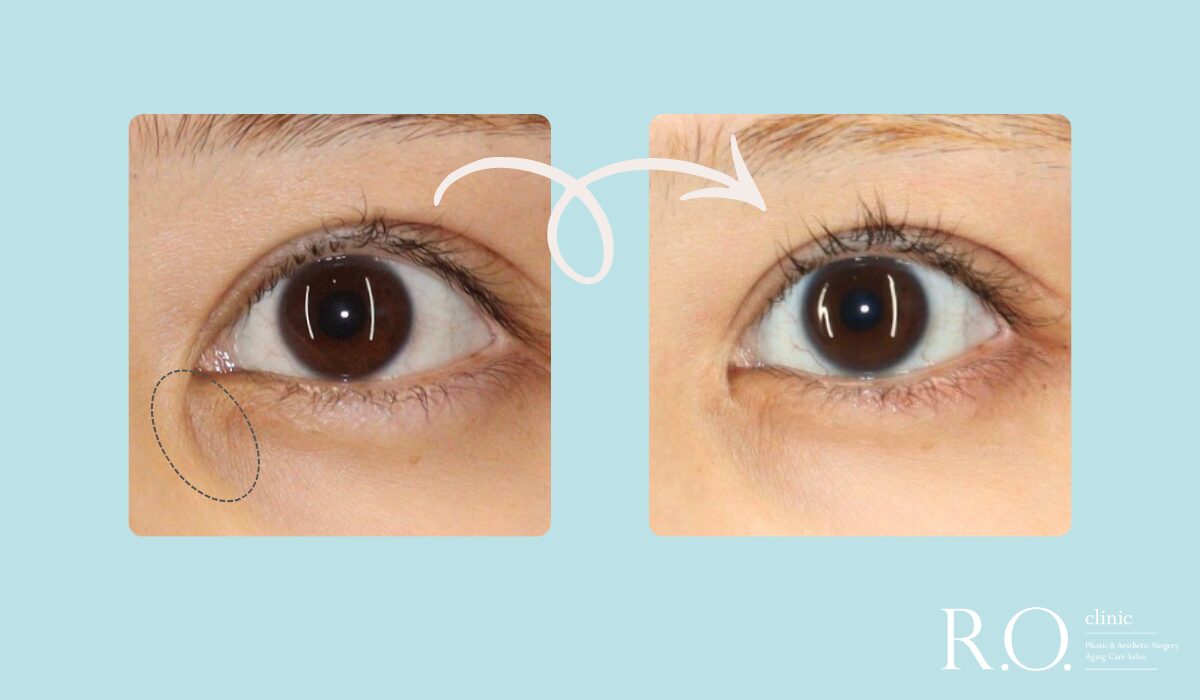
Let's take a look at a case study of a patient monitored for ptosis surgery.
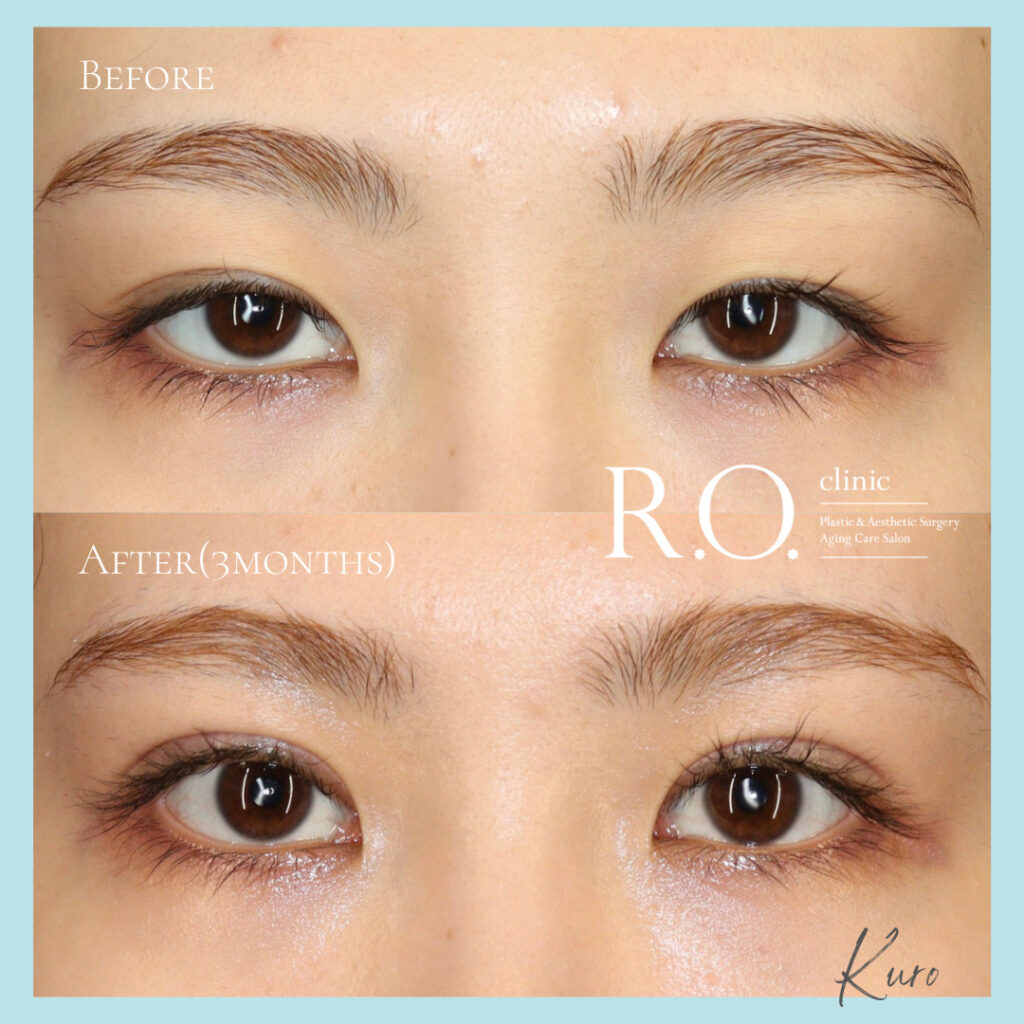
After the surgery, the eyelid opening has improved and the appearance of the black eye is normal. If the eyelid opening is not as good as it was before the surgery, the subjective symptom is "heaviness.
As an aside, my alma mater, Shinshu University, is a mecca for eyelid ptosis treatment, and when I was a student there, the plastic surgery lectures were mainly on ptosis. I remember that they had their own unique approach, such as having an exam question that asked students to explain the mechanism by which the sympathetic nervous system is heightened by a droopy eyelid.
Cause 2: Pseudoptosis due to a single eyelid
Not all people with a single eyelid have the above eyelid drooping, even if their black eyes appear smaller. Unlike people with a double eyelid, when the eye is opened, the skin slips down below the eyelashes. This causes the dark eye to be hidden even though the eyelid is firmly open. The eyelid feels "heavy" because the upper part of the field of vision is obstructed by the skin even though the eyelid is open.
The treatment can be a normal double blepharoplasty, but if there is excess skin, an incisional double blepharoplasty is better than a buried blepharoplasty. Since people with a single eyelid often have a mild congenital ptosis lurking in the eyelid, it is necessary to examine the patient to determine if ptosis surgery is necessary or if only a blepharoplasty can be performed.
Let's take a look at a case study of a monitored patient who had a condition of pseudo-ptosis
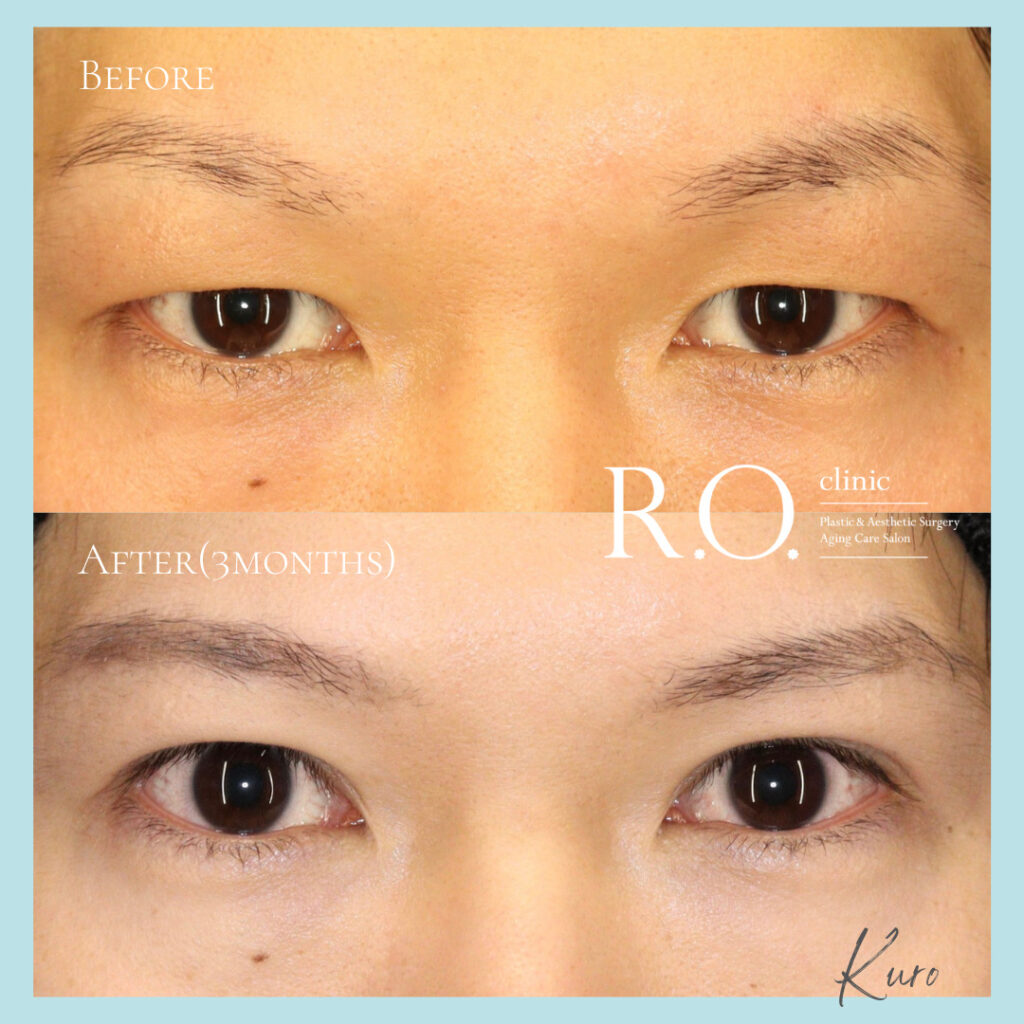
At first glance, it looks like a droopy eyelid, but the black eye is now well visible with only double surgery without anterior elevator muscle rotation. The eyes were well open before the surgery, but the black eyes were hidden by the skin covering them.
Cause 3: The skin of the eyelid is stretching.
It is inevitable that the skin of the eyelid stretches as it ages. Think of the eyelids of an elderly person. The skin at the corners of the eyes covers the triangle of the eye, and the eyebrows are raised to pull up the stretched eyelid skin, giving the forehead a wrinkled look.
The progression of eyelid sagging varies from person to person due to the effects of ultraviolet rays and the habit of rubbing the eyelids, but early sufferers may begin to feel their eyelids "heavy" around their late 30s. When the eyebrows are raised unconsciously, the frontalis muscles are constantly strained, resulting in a feeling of heaviness, fatigue, and headaches.
The most common treatment is to remove the stretched skin under the eyebrows. There is also the method of excising the skin at the double fold line, but if too much skin is excised at the double fold line, the result is an unnatural double fold that looks like a plastic surgery.
Let's take a look at a case study of a monitored patient with a submental incision.

The habit of eyebrow elevation is caused by excess skin on the eyelid. The habit of eyebrow elevation was improved by excising the stretched skin under the eyebrow.
Cause 4: Effects of the implantation method
Ptosis symptoms due to the elevator technique are a well-known complication. It has been explained in past columns ( https://ro-clinic.com/doctors_column/9453/ ). After repeated implantation, scarring occurs under the skin. Scarring around the tissues that open the eyelid, such as the levator tendon membrane and Müller's muscle, can cause the eyelid to feel "heavy.
Let's take a look at a monitored case study.

The patient has a history of multiple implantation procedures. During the incisional bifoveal incision, the implant was removed and the levator tendon membrane was carefully peeled away from the scar tissue. Although no anteversion of the levator anterior muscle was performed, the postoperative eye opening has improved.
The complaint of "heavy eyelids" may be related to more than one of these causes.
We analyze the cause of "heaviness" and try to propose appropriate treatment methods.
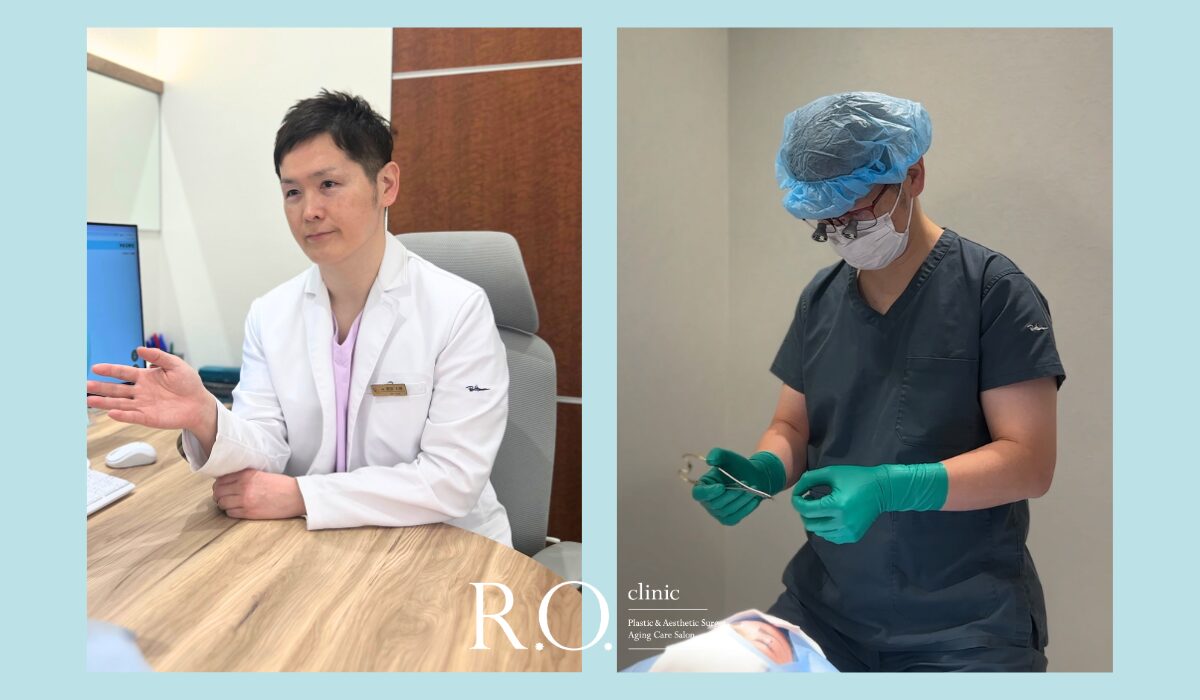
Deputy Director:Hiroki Kuroda
# Dr. K's In-Depth Commentary Series
See details of the treatment related to ▼ column here.
Supervisor of this article
vice president (of a hospital, clinic, etc.)
Daiki Kuroda
OHKI KURODA
Share Article