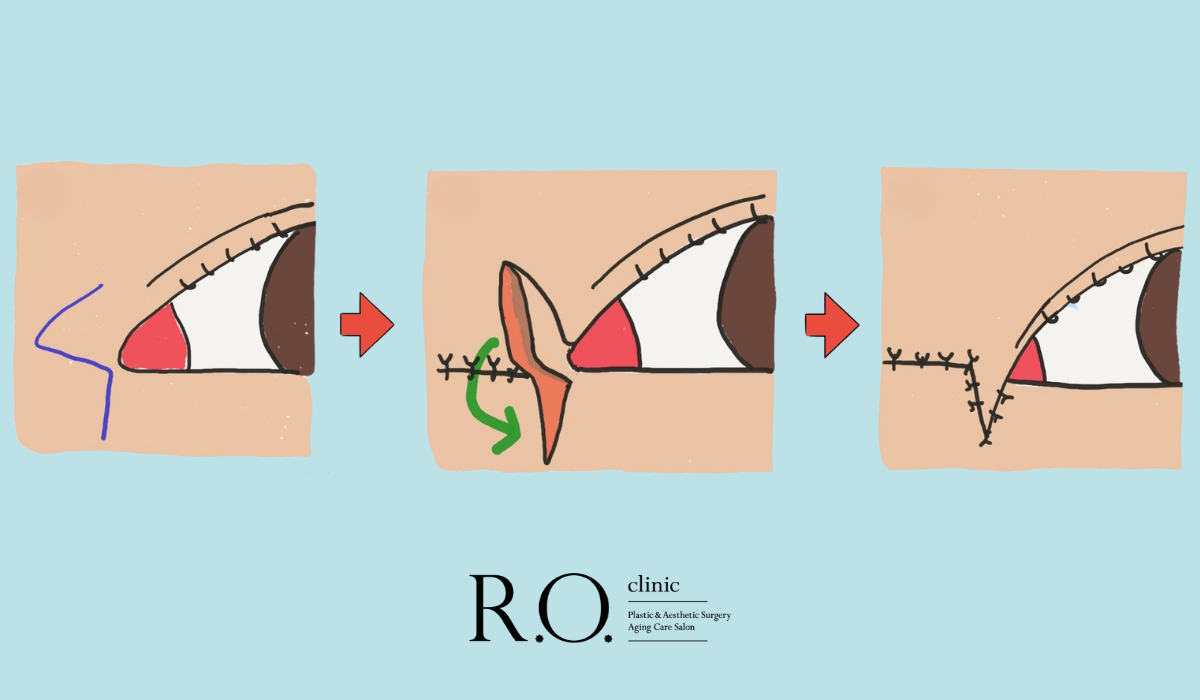
 Doctor's Column
 Staff Blog
 campaign
 News
News





2025.12.03
epicanthus
craniotomy
Scar after craniotomy

Dr Kuroda
After undergoing a craniotomy, the eye socket may be left with a concave or wrinkled skin.
Fat injections or dermal fat grafting may be indicated if the indentation is large.
However, in cases where the concavity is mild or the skin crease is caused by an incision at the eye socket, Mongolian fold formation may improve the situation. This is what we will discuss in this issue.
The cause of the concavity in the eye socket is,
Unnecessary damage to skin and orbicularis oculi muscle.
Sewn skin is not tightly adhered to.
These may include.
Wrinkles in the skin after a craniotomy are often caused by excess or imbalance of skin that occurs during suturing.
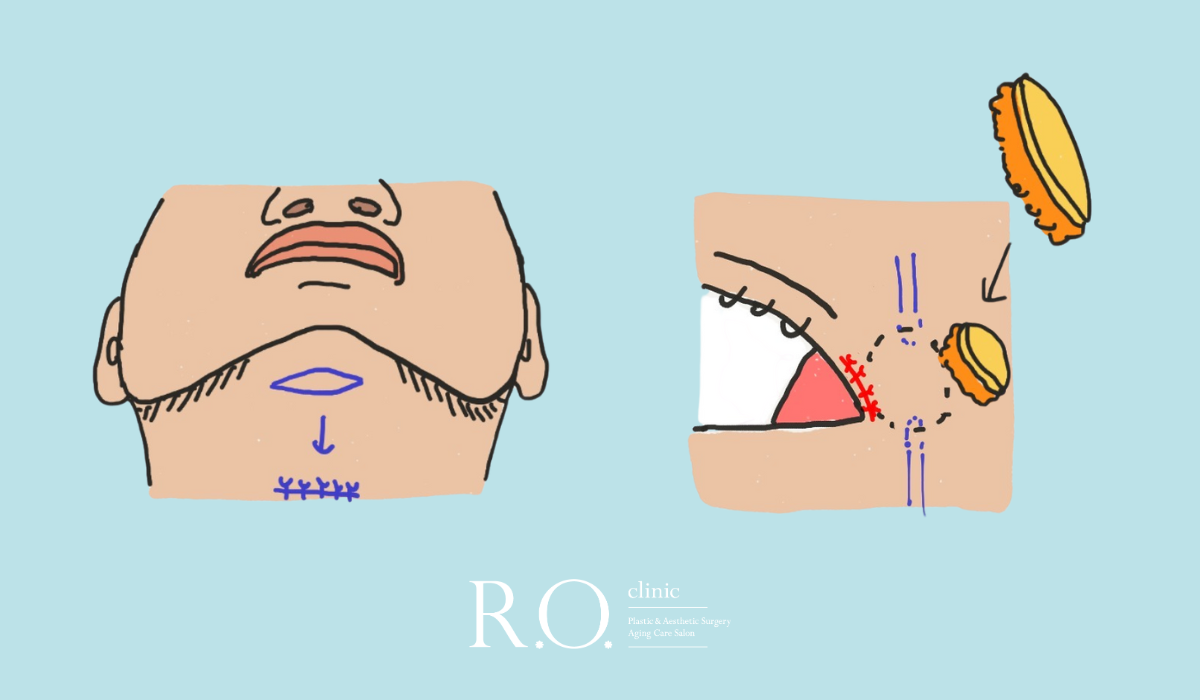
Hard tissue called scarring occurs under the skin of scars caused by craniotomy. In the mongolian fold formation, the scar is removed from the deep tissue under the skin. This is essential because without this operation, the skin of the eye socket cannot move freely.
The operation to remove this scar is expected to lift the indentation and make it less noticeable.

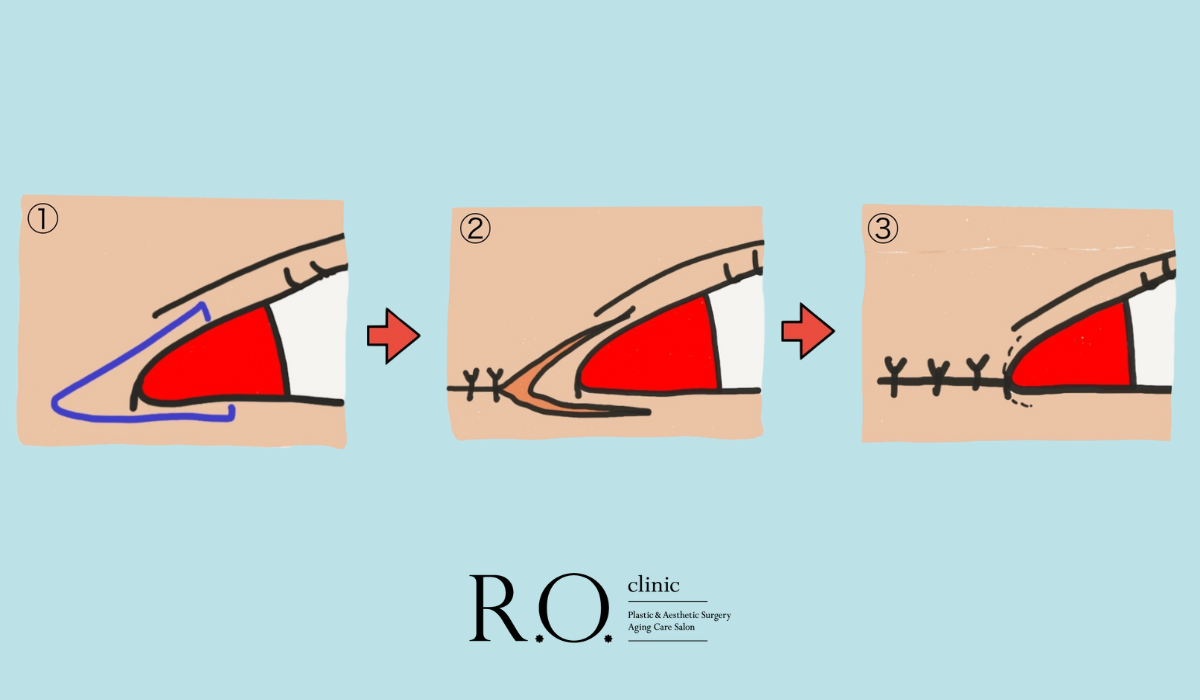
A wrinkle caused by a craniotomy is, to put it plainly, a yawing of the skin. When the skin is stitched together during mongolian fold formation, it is possible to improve the wrinkles by finding the point where the skin is less prone to sagging. To use an analogy, it is like re-stitching wrinkled sheets when making up the bed.
Seeing is believing, so let's take a look at an actual case.
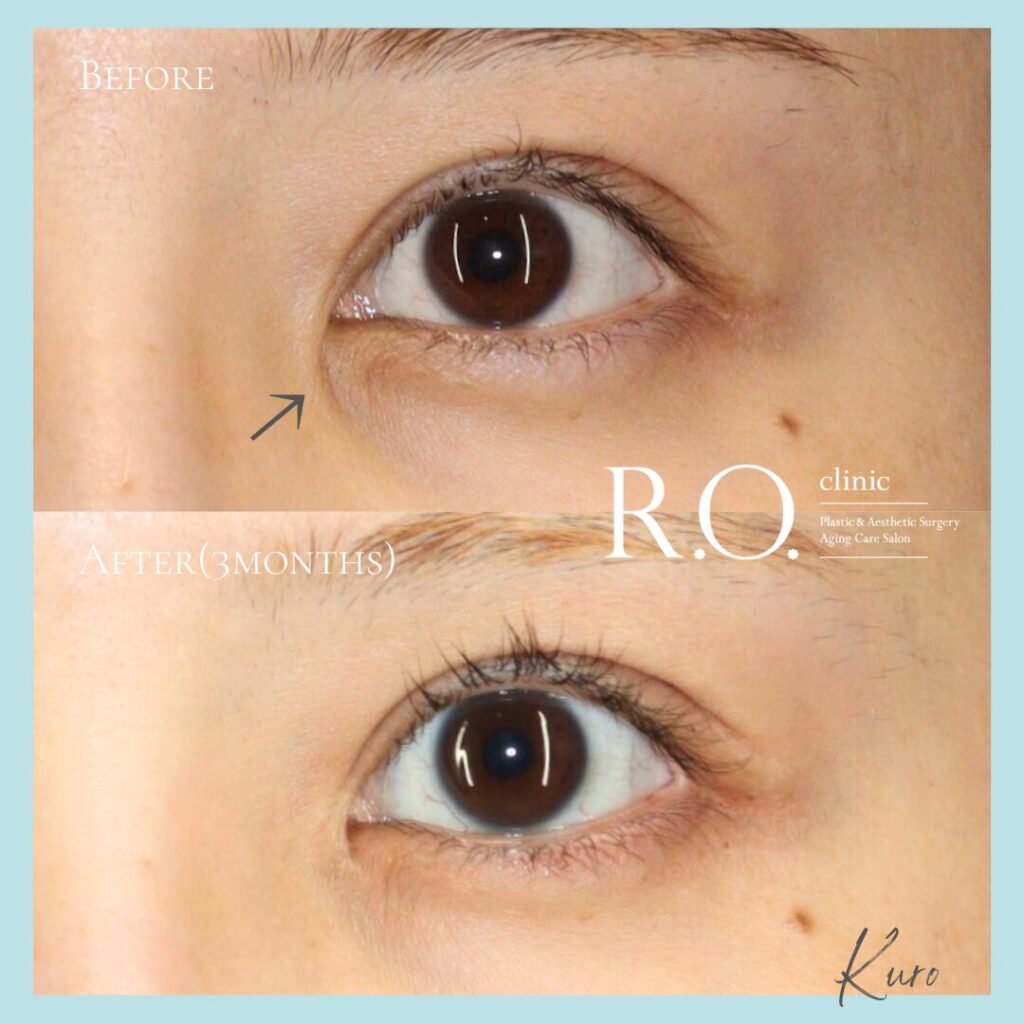
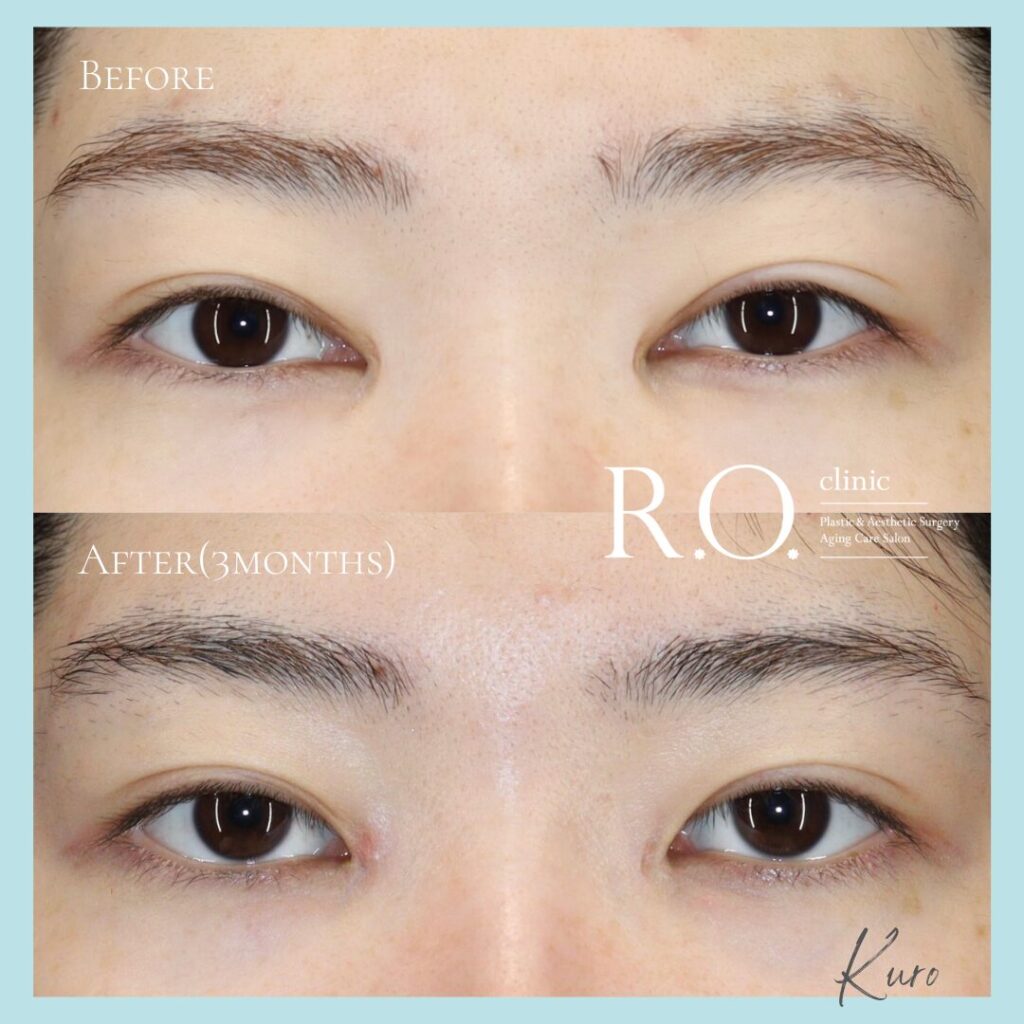
He said that a craniotomy had resulted in a scowl from the inner corner of the eye to the lower eyelid.
After the VY mongolian fold formation surgery, the lower eyelid crease is improved.
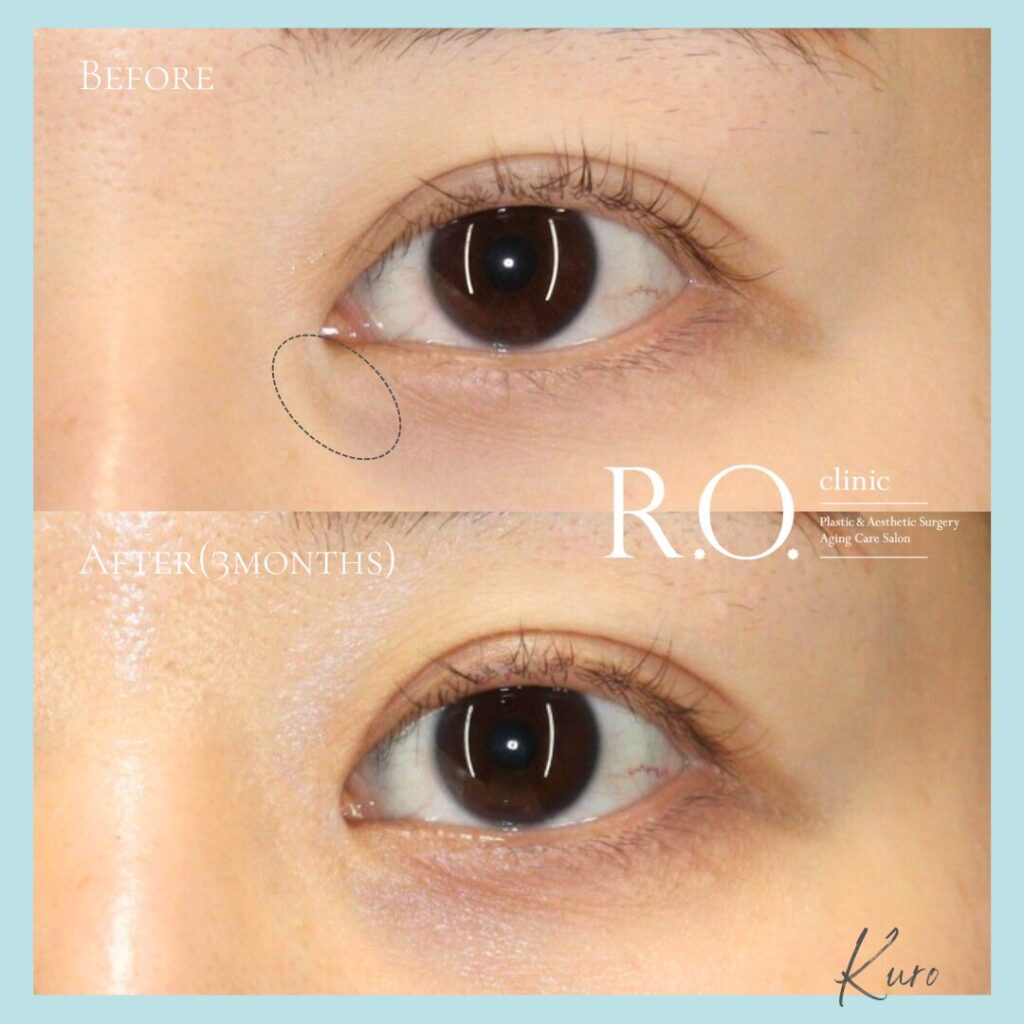
In the post-incision state, a mild concavity develops from the inner corner of the eye to the lower eyelid.
In the postoperative period of the VY method of mongolian fold formation, the concavity is shallower.
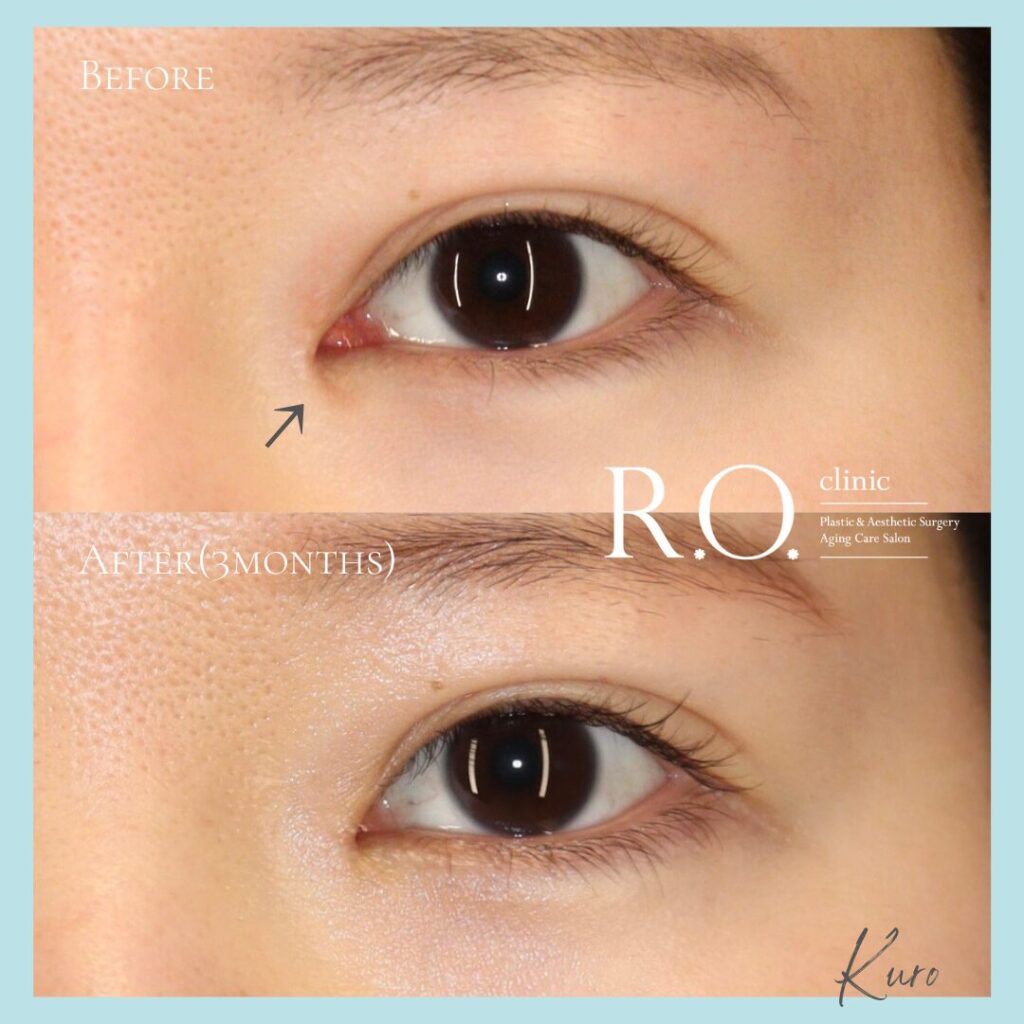
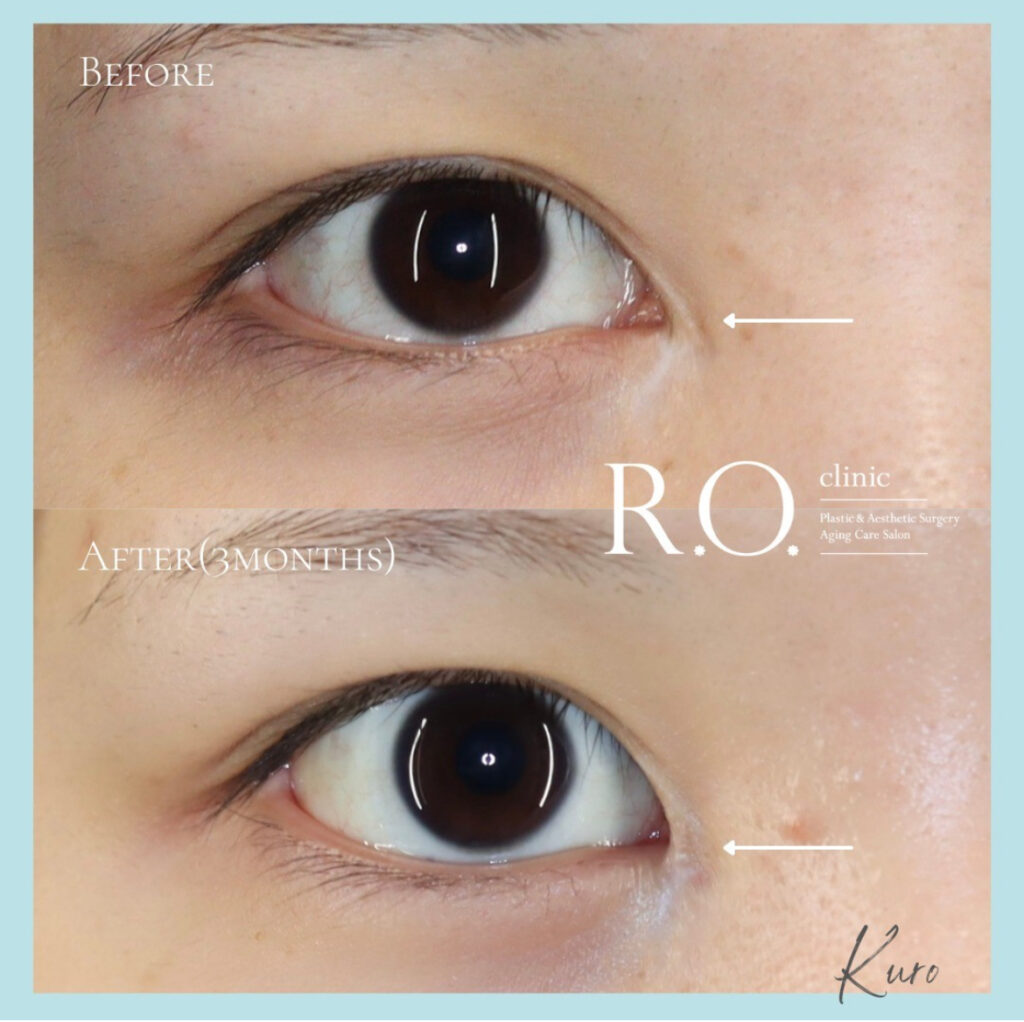
After the craniotomy, there is a scowl and mild concavity from the inner corner of the eye to the lower eyelid.
After the VY mongolian fold formation surgery, both the scars and depressions show improvement.
Consistent with the scarring from the craniotomy, a prominent vertical stripe has developed at the corner of the eye.
After the VY mongolian fold formation surgery, you can see that the vertical striations have lightened.
At 3 months postoperatively, there is still some redness in the scar at the right eye socket, but this is expected to improve over the next 6 months to 1 year.
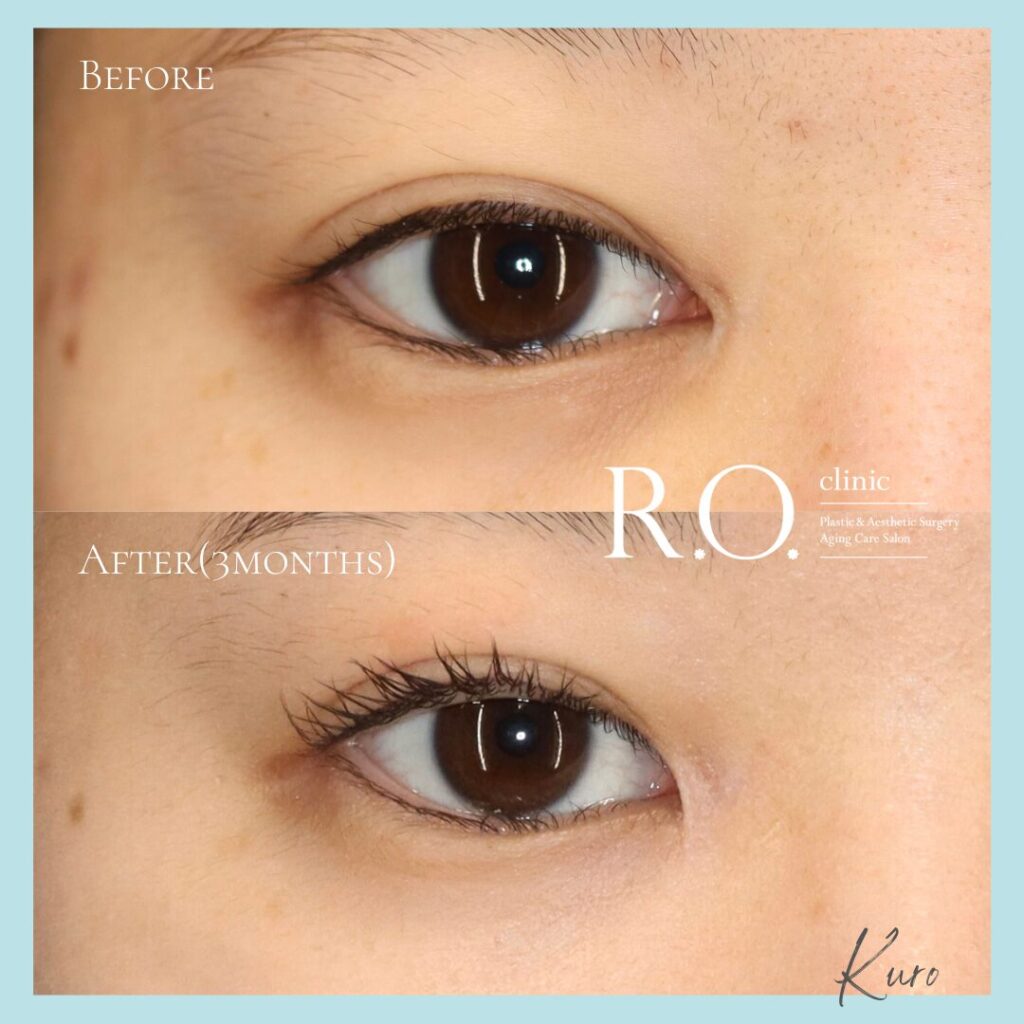
The indentation and the white cast of the scar are noticeable, consistent with the Z-plasty scar at the eye socket.
In the postoperative period of the VY method of mongolian fold formation, the concavity is lightened.
The scar from the craniotomy remains, but the scar from the VY technique is not noticeable.
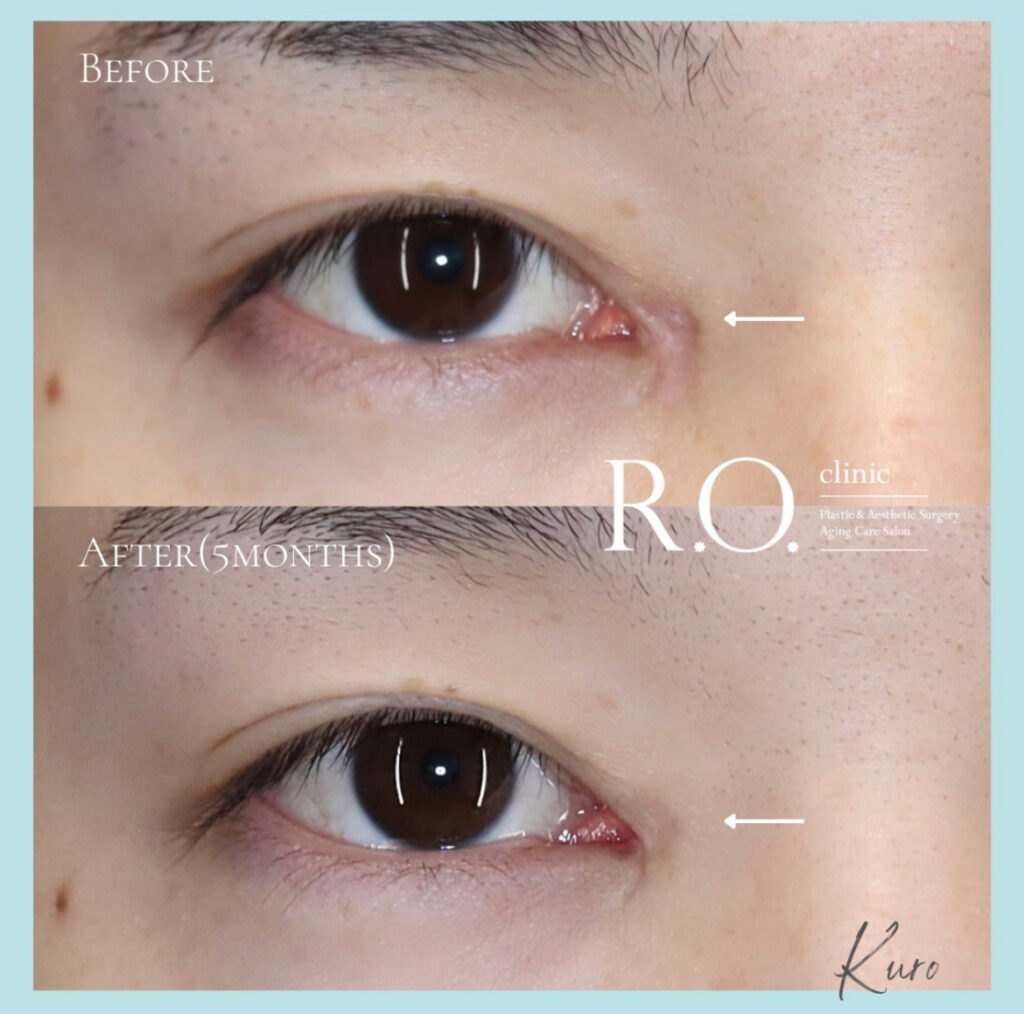
The scar from the craniotomy has a mild indentation and vertical striae.
In the postoperative period of the Inverted Z method of mongolian fold formation, the concavity and vertical striations are seen to have improved.
Even with the inverted Z method, the scar can be improved because the operation is performed to remove the subcutaneous scar caused by the craniotomy incision.
In cases with widespread depressions, as in this case, it is better to supplement subcutaneous volume with fat injections or dermal fat grafting for improvement.
Even when fat injections or dermal fat grafting are used, a thorough manipulation to remove the subcutaneous scar caused by the craniotomy incision must be performed.
How was it?
I think it is a nice advantage to have mongolian fold formation so that the scar from the craniotomy is less noticeable.
Because scar healing varies from person to person, we cannot say that all cases will improve the indentations and scars, but we feel that in about 80% of cases, the skin sensation improves the scars.
We can provide a wide range of services from mongolian fold formation to scar revision.
If you are concerned about the condition of your post-incision eyes, please contact us.
Assistant Director Daiki Kuroda
Supervisor of this article
vice president (of a hospital, clinic, etc.)
Daiki Kuroda
OHKI KURODA
Share Article