
 Doctor's Column
 Staff Blog
 campaign
 News





Are you worried that “after having an inner corner blepharoplasty, the inner corner of your eye seems too wide” or that “your tear mounds are too visible, making your eyes look too intense”?
Revision surgery following epicanthoplasty and inner canthus incision is a procedure designed to adjust the shape of the inner corner of the eye and the appearance of the lacrimal mound—which have been altered by the inner canthus incision—to create a more natural-looking eye area.
By adjusting the shape of the epicanthal fold based on the condition of your eyes after an inner corner blepharoplasty and your preferences, we aim to improve the degree to which the inner corners of your eyes open and correct any asymmetry, resulting in an eye area that harmonizes with your overall facial features.
[R.O. Clinic] Case Studies of Revision Surgery Following Epicanthoplasty and Inner Canthus Incision
At R.O. Clinic, we carefully examine the degree of inner corner opening, the appearance of the lacrimal papilla, and the condition of any scars, and we consider corrective methods tailored to each individual’s concerns.
Here is a case study in which we corrected overly wide inner corners of the eyes to achieve an eye shape that suits the patient.
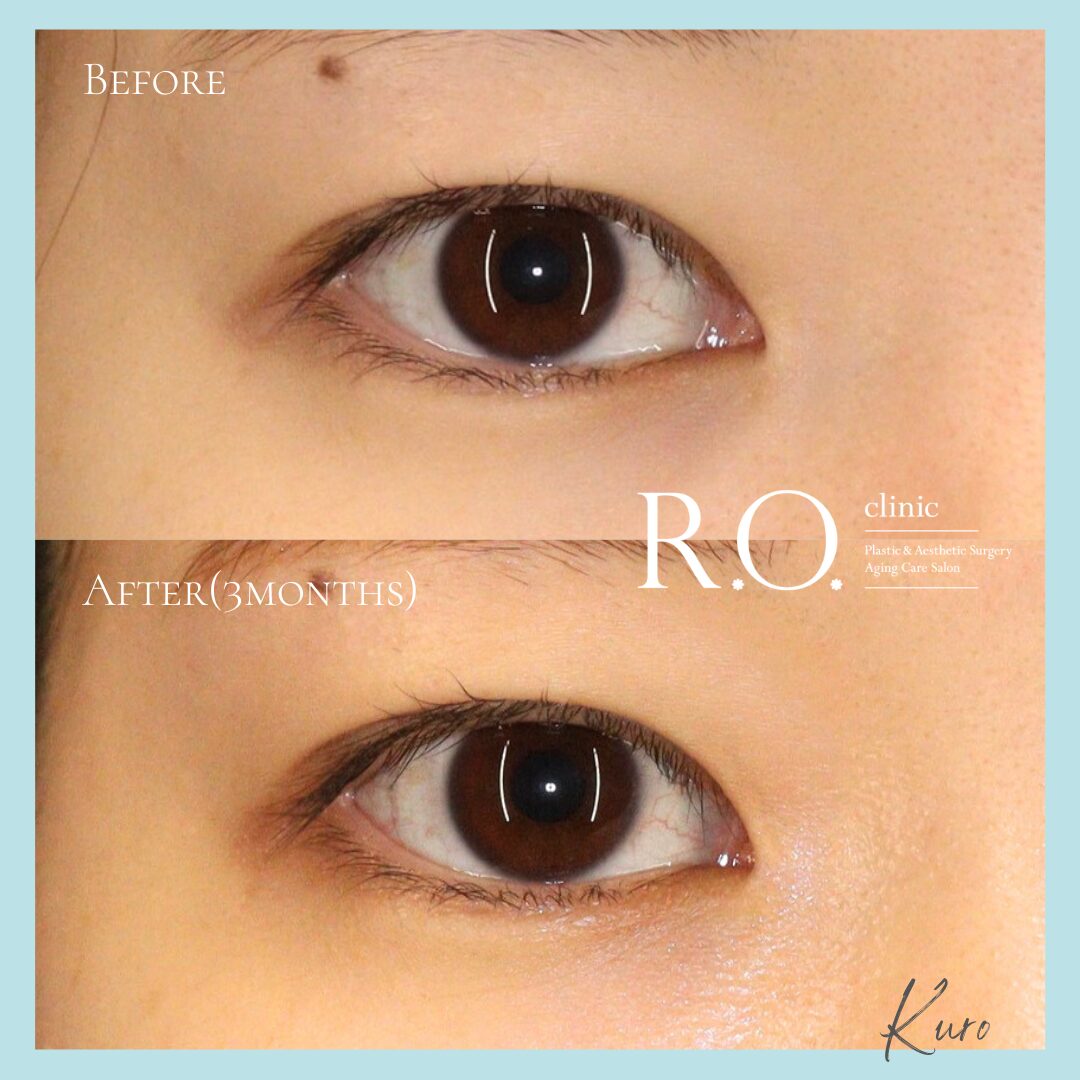
- Treatment Name
- VY method (mongolian folds)
- Attending Physician
- Daiki Kuroda
- Costs
- 330,000 yen (including tax)
- Side Effects and Risks
- Anesthesia: Local anesthesia
Risks: swelling, internal bleeding, scar redness, left-right difference, etc. - Downtime
- About 1 to 2 weeks (depending on the individual)
*This is a self-pay service. Results and treatment outcomes may vary from person to person.
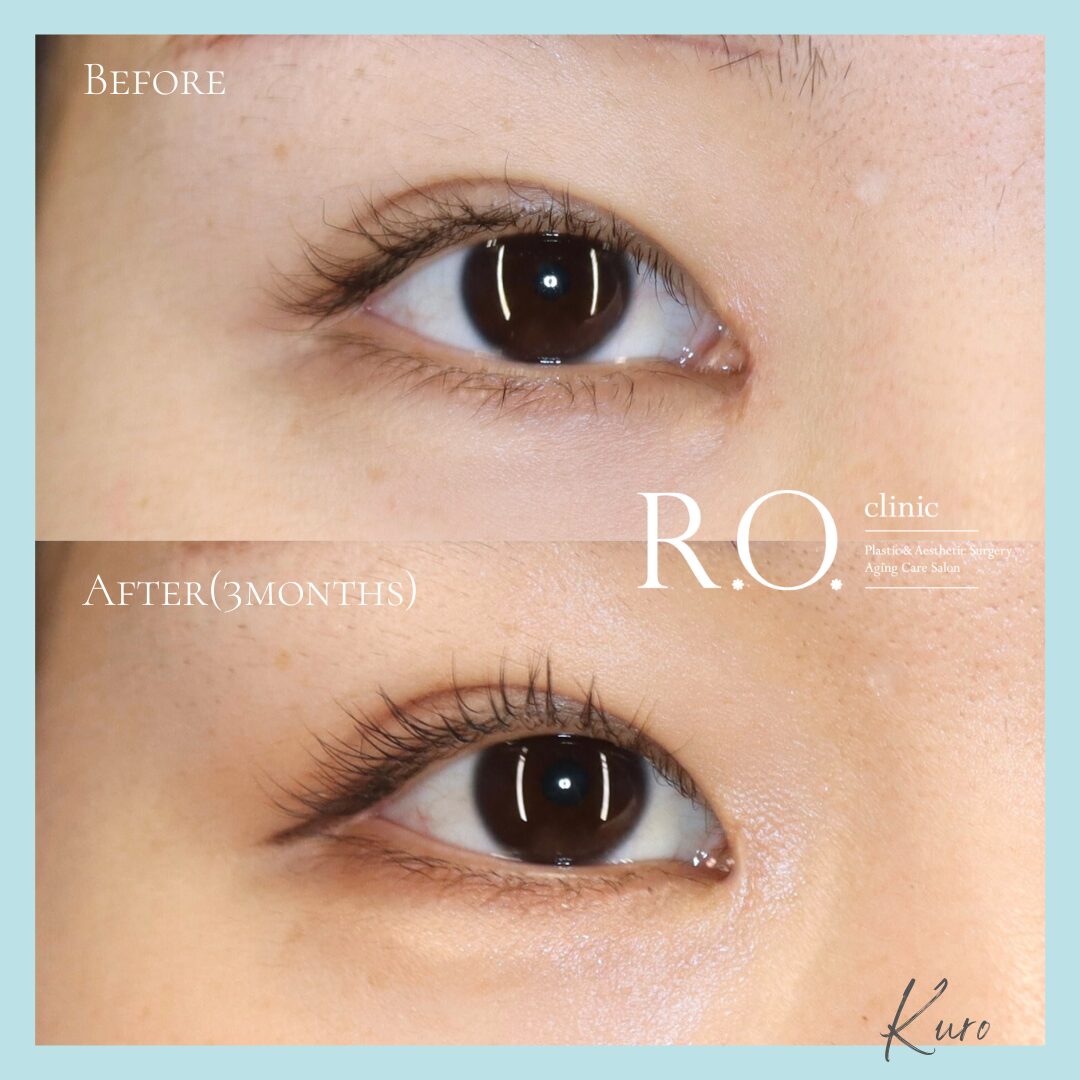
- Treatment Name
- VY method (mongolian folds)
- Attending Physician
- Daiki Kuroda
- Costs
- 385,000 yen (including tax)
- Side Effects and Risks
- Anesthesia: Local anesthesia
Risks: Swelling, bruising, redness at the incision site, scarring, infection, asymmetry, etc. - Downtime
- About 1 to 2 weeks (depending on the individual)
*This is a self-pay service. Results and treatment outcomes may vary from person to person.
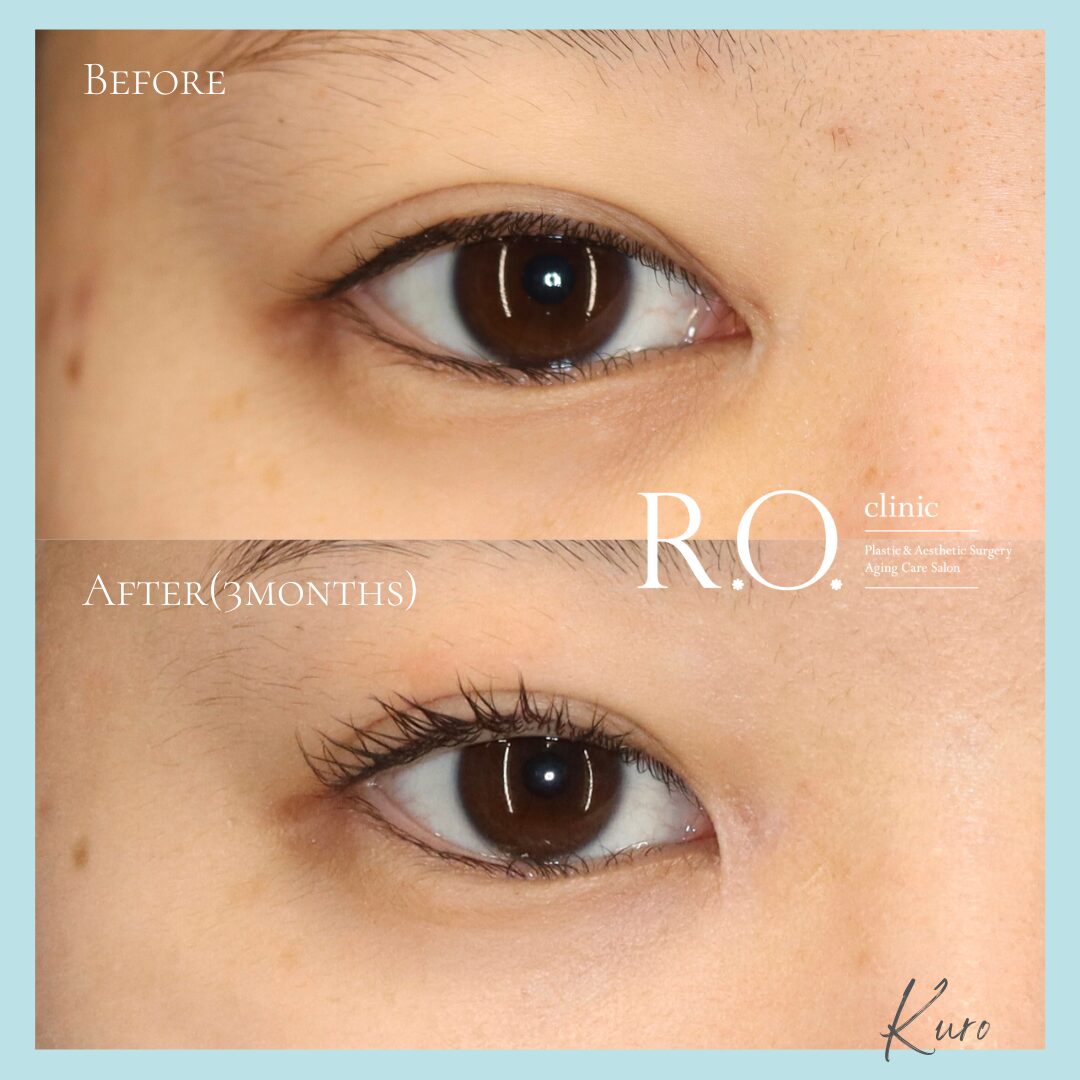
- Treatment Name
- Epicanthoplasty (Reverse Z-Technique)
- Attending Physician
- Daiki Kuroda
- Costs
- 385,000 yen (including tax)
- Side Effects and Risks
- Anesthesia: Local anesthesia
Risks: swelling, internal bleeding, scar redness, left-right difference, etc. - Downtime
- About 1 to 2 weeks (depending on the individual)
*This is a self-pay service. Results and treatment outcomes may vary from person to person.
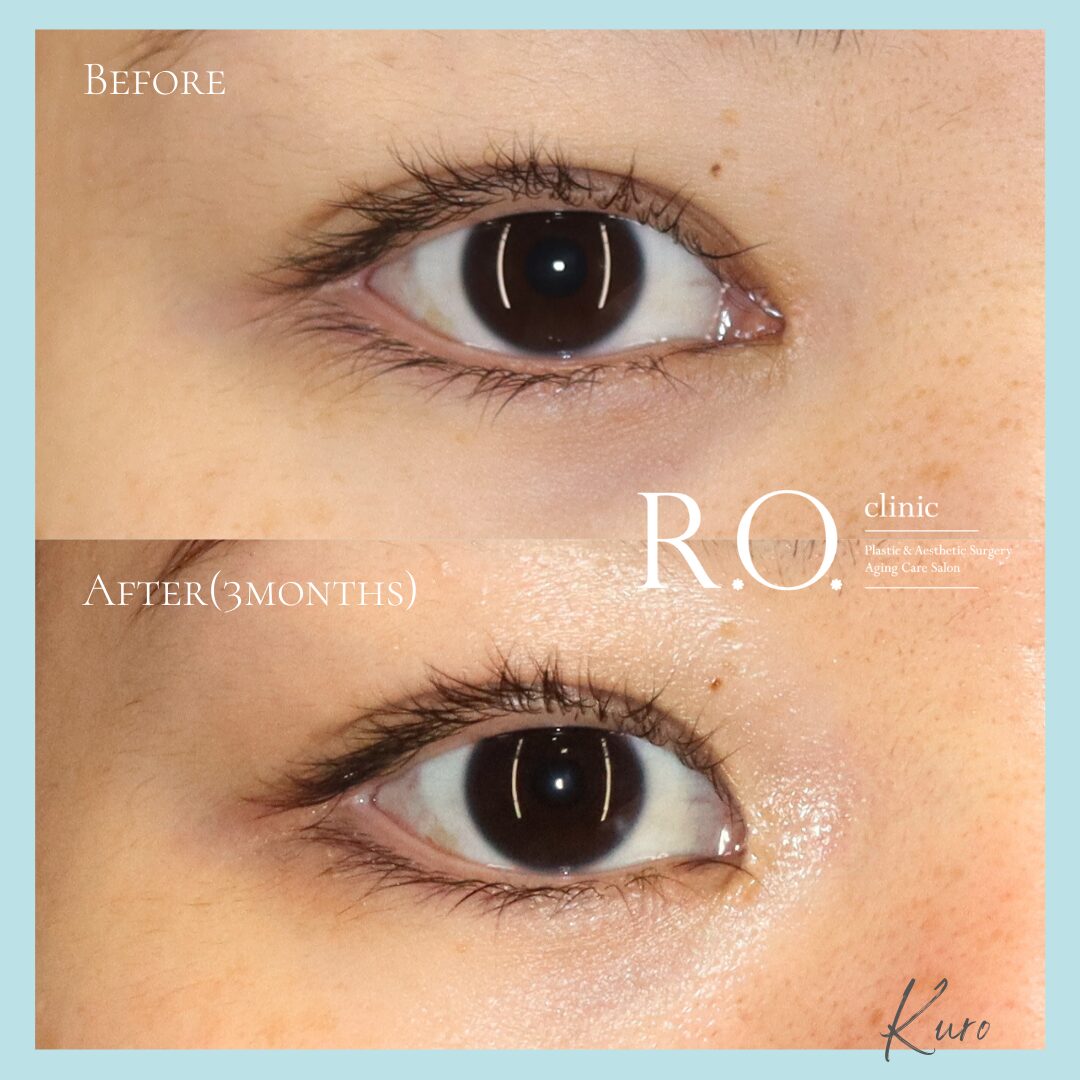
- Treatment Name
- Epicanthoplasty (Reverse Z-Technique)
- Attending Physician
- Daiki Kuroda
- Costs
- 385,000 yen (including tax)
- Side Effects and Risks
- Anesthesia: Local anesthesia
Risks: swelling, internal bleeding, scar redness, left-right difference, etc. - Downtime
- About 1 to 2 weeks (depending on the individual)
*This is a self-pay service. Results and treatment outcomes may vary from person to person.
Do you have any of these concerns about your eyes?
- After having an inner corner eyelid surgery, my eyes feel like they're too wide open.
- The tear mound (the red area) is too visible.
- I want to achieve a look that’s closer to how I looked before my inner corner blepharoplasty
- I'm concerned about the shape of the inner corners of my eyes and any asymmetry between them
- I want to have an epicanthoplasty performed at another clinic corrected
These concerns may be improved through revision surgery following epicanthoplasty or inner canthoplasty.
In revision surgery following epicanthoplasty and epicanthoplasty, we aim to achieve a more natural-looking eye area by adjusting the shape of the skin covering the inner corner of the eye and refining the appearance of the lacrimal tubercle and the degree to which the inner corner is opened.
However, the correction method varies depending on the current condition of the inner corner of the eye, any scarring, and the patient’s preferences. It is important to carefully assess the condition during the consultation and select the treatment method best suited for each individual.
Why R.O. Clinic Is the Top Choice for Revision Surgery After Epicanthoplasty and Inner Corner Blepharoplasty

When performing revision surgery after an epicanthoplasty, it is important to choose the surgical method based on the current condition of the inner corner of the eye, the scar, and the desired outcome.
At R.O. Clinic, we use a variety of techniques, such as the VY method and the reverse Z method, to achieve results that blend naturally with the eye area.
- Custom Design
- When to Use the VY Method and the Reverse Z Method
- Delicate revisions based on insights from plastic surgery
- Comprehensive After-Sales Support
Custom Designs Tailored to the Condition of Your Eyes
Concerns after an inner canthoplasty vary from person to person and may include issues such as “the lacrimal tubercle is too visible,” “the inner corner of the eye looks too pointed,” or “asymmetry between the eyes.”
At R.O. Clinic, we assess the current shape of the inner corners of your eyes, any scars, and any asymmetry, and propose a design tailored to you while taking into account the overall balance of your eye area.
Corrective Surgery Using the VY Method and Reverse Z Method Appropriately
The two main methods for creating epicanthal folds are the VY method and the inverted Z method.
At R.O. Clinic, we take into account the characteristics of each surgical technique and select the most appropriate one based on the current condition of the inner corner of the eye and the desired outcome, with the goal of achieving a natural-looking result.
Delicate revisions based on insights from plastic surgery
The inner corner of the eye is a delicate area where even the slightest change can significantly alter one’s appearance. Additionally, when performing revision surgery after an inner corner blepharoplasty, it is necessary to take into account the condition of the scar and surrounding tissue.
At R.O. Clinic, we assess the condition of the skin and scars based on our expertise in plastic surgery and perform revisions with careful attention to detailed design and suturing.
A comprehensive aftercare system that provides peace of mind through the postoperative period
When performing revision surgery following epicanthoplasty or inner canthus incision, it is important not only to address postoperative swelling but also to monitor the healing process until the shape of the inner canthus stabilizes.
R.O. Clinic has established a system that makes it easy to consult with us even if you have concerns or are experiencing symptoms that worry you, and we provide personalized support for each patient well beyond the procedure, including ongoing monitoring of their post-operative condition.
Revision Surgery Following Epicanthoplasty and Inner Canthus Incision at R.O. Clinic
Revision surgery following epicanthoplasty and inner corner blepharoplasty is a procedure designed to refine the shape of the inner corner of the eye and the appearance of the lacrimal tubercle—which have changed as a result of the inner corner blepharoplasty—in order to achieve a more natural-looking eye area.
At R.O. Clinic, we evaluate the current condition of your inner corners, any scarring, and your desired outcome. We also review your pre-surgery condition and any previous procedures you’ve undergone to help you achieve a natural-looking result with minimal discomfort.
Expected Benefits
The following results can be expected from revision surgery following epicanthoplasty and inner canthoplasty:
- Adjusting the inner corners of the eyes that are too wide to create a natural look
- Adjust the appearance of the tear mound
- Correcting Asymmetry in the Inner Corners of the Eyes
- Balancing the Overall Look of the Eye Area
By creating an epicanthal fold, you can adjust the appearance of the eye area that has changed as a result of an epicanthoplasty.
However, it is not always possible to restore the eyes to exactly the same condition as before the inner canthoplasty. The extent to which corrections can be made depends on factors such as the current condition of the eyes.
Risks and Side Effects
Revision surgery following epicanthoplasty and inner canthoplasty is associated with the following main risks and side effects.
- Swelling
- Bruising
- Redness of Scars, Scarring
- Difference between the left and right sides
- Infection
- The possibility that you may not fully experience the changes you hoped for
The progression of swelling, bruising, and scarring varies from person to person. In rare cases, infection or asymmetry may occur. Additionally, the final results may vary depending on the condition of any previous epicanthoplasty scars.
At R.O. Clinic, we carefully explain not only the expected results but also the risks and limitations of the procedure, and we proceed with treatment only after you have fully understood and agreed to them.
Who Should Consider Revision Surgery After Mongolian Fold Creation or Inner Canthus Incision?
If you have any of the following concerns, corrective surgery following epicanthoplasty or inner canthoplasty may be appropriate for you.
- For those who feel the results of their inner corner eyelid surgery look unnatural
- For those who feel their tear troughs are too visible
- For those who want to give their eyes a more natural look
- For those considering revision surgery at another clinic
- For those concerned about asymmetry in the inner corners of their eyes
Revision surgery following epicanthoplasty and inner canthus incision is suitable for those who wish to adjust the degree to which the inner corner of the eye is opened and the appearance of the lacrimal tubercle, with the goal of achieving a more natural-looking eye area.
However, the extent to which corrections can be made and the most appropriate surgical technique vary depending on the condition of each individual’s inner eye. It is important to carefully assess the condition during the consultation and determine the treatment method best suited to each patient.
Treatment Methods
For revision procedures following epicanthoplasty or epicanthoplasty, we select the surgical method based on the current shape of the inner corner of the eye, the scar, and the patient’s preferences.
At R.O. Clinic, we carefully examine the condition of the inner corners of the eyes as well as the skin and underlying tissues, and recommend the surgical technique best suited for each individual, such as the VY method or the reverse Z method.
VY method
The VY method involves making a V-shaped incision along the inner corner of the eye, moving the skin toward the nose, and suturing it in a Y-shape to adjust the appearance of the lacrimal mound and the degree to which the inner corner of the eye opens.
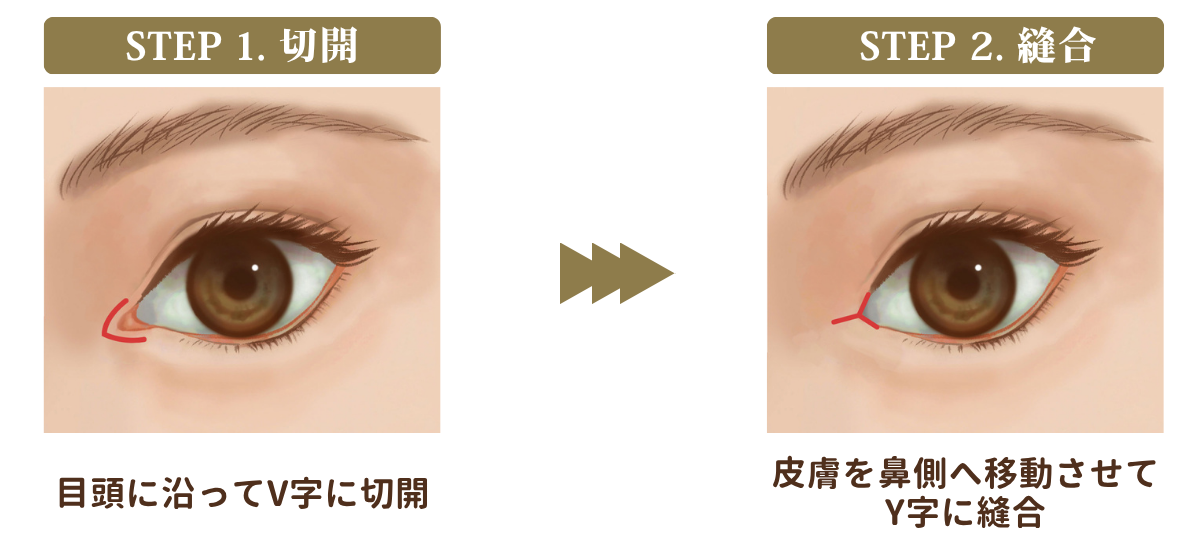
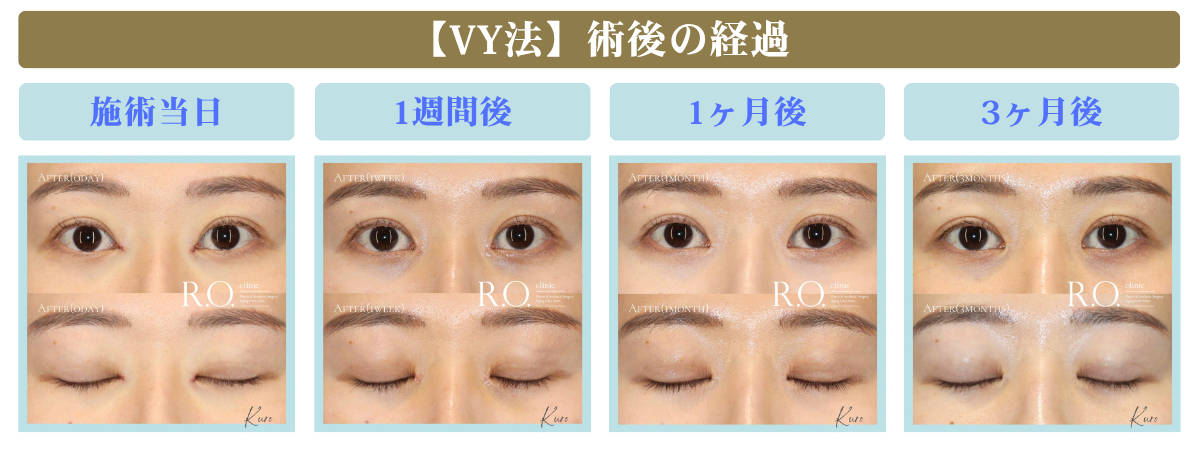
By adjusting the amount of skin moved, we aim to achieve a natural-looking eye area. Additionally, depending on the condition of any scars or indentations, it may be possible to correct them at the same time.
inverse Z method
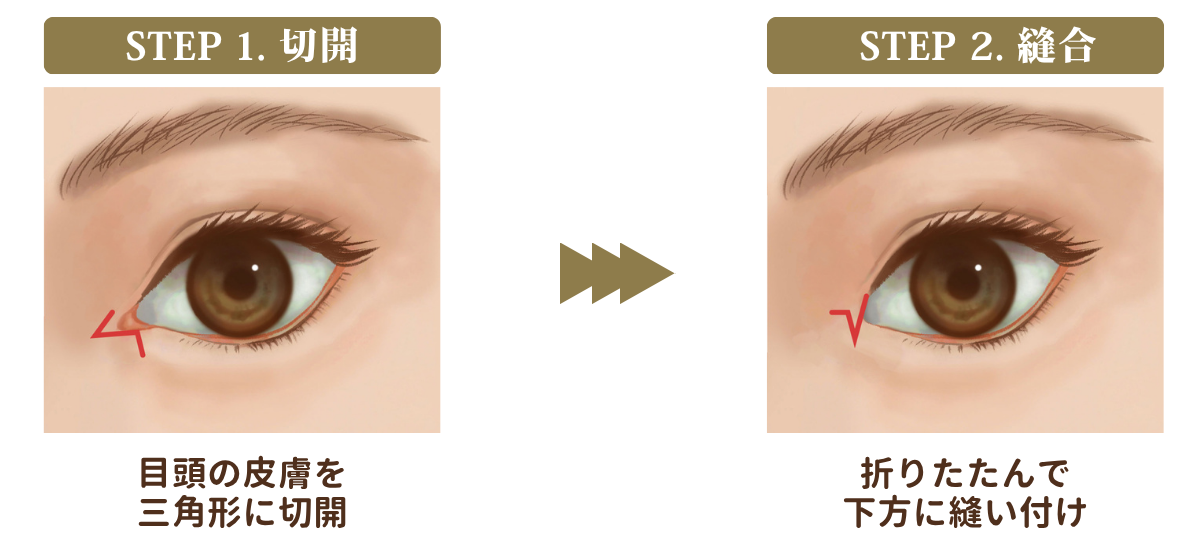
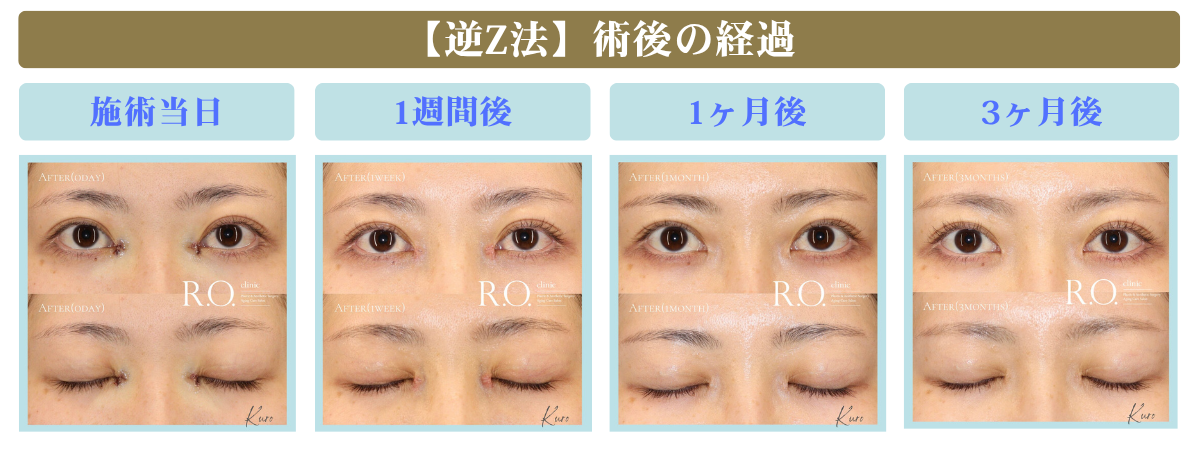
The Reverse Z-Method is a technique for creating a Mongolian fold by making a Z-shaped incision at the inner corner of the eye, folding the skin, and suturing it.
This option is chosen when you want to adjust the shape of the inner corner of the eye that has changed as a result of an inner canthoplasty, in order to achieve a more natural look.
Corrections Based on the Condition of the Scar
When undergoing revision surgery after an inner canthus incision, patients may be concerned not only about the shape of the inner corner of the eye but also about scars or other issues resulting from the previous surgery.
At R.O. Clinic, we will assess your current condition and, if necessary, consider options that may include scar revision and treatment for indentations. However, depending on the condition of the eye area, it may not always be possible to achieve the desired results; therefore, we will propose a treatment plan only after thoroughly evaluating your condition during your consultation.
Procedure Flow for Revision Surgery Following Epicanthoplasty and Inner Canthus Incision
At R.O. Clinic, we carefully assess the current condition of your inner corners of the eyes and discuss your preferences, then propose a correction method tailored to each individual.
From the initial consultation through post-operative follow-up, we provide support to ensure you can undergo treatment with peace of mind.
Counseling and Medical Examinations
First, we’ll ask you in detail about any concerns you have regarding the current appearance of the inner corners of your eyes and the look you’d like to achieve.
During the consultation, we will examine the shape of the inner corners of your eyes, the appearance of the lacrimal mounds, and any asymmetry between the left and right sides, as well as check for scars and the condition of your skin and tissue. We will then explain the extent to which corrections can be made and the most appropriate surgical procedure. If you have any photos taken before your epicanthoplasty, we will use them as reference material.
Design and Treatment
Based on the results of the consultation, we create a design that takes into account the shape of the inner corner of the eye, the appearance of the lacrimal mound, and the overall balance with your face.
Depending on the patient’s current condition, we select a technique such as the VY method or the reverse Z method, then make an incision in the skin, reposition it according to the design, and carefully suture it. The procedure typically takes about 30 to 40 minutes. We use a combination of topical anesthetic cream and local anesthesia, and can also provide nitrous oxide or intravenous anesthesia upon request.
Postoperative Recovery and Downtime
After surgery, you may experience swelling, bruising, or redness around the incision site, but noticeable swelling typically subsides within about a week. Minor swelling may persist for about three months, and the redness around the incision will gradually fade over the course of three to six months. Stitches are typically removed one week after surgery.
Follow-up
When the stitches are removed, we will examine the scar, the shape of the inner corner of the eye, and the level of swelling. If you have any concerns afterward—such as asymmetry—we will schedule follow-up visits as needed based on your progress.
Revision surgery following an inner corner blepharoplasty is a procedure that requires time for the shape of the inner corner of the eye to stabilize. At R.O. Clinic, we have established a comprehensive aftercare system that makes it easy to consult with us—including updates on your progress until the final results are achieved—so you can feel at ease throughout your recovery.
Postoperative Progress and Follow-Up Care at R.O. Clinic
| Item | Details |
|---|---|
| Treatment Time | 30-40 minutes |
| Postoperative hospital visit | The stitches must be removed exactly one week later. |
| Postoperative swelling | Approx. 1 week (varies by individual) |
| Necessity of hospitalization | nashi (Pyrus pyrifolia, esp. var. culta) |
| Treatment on the Day of the Consultation | possible |
| anesthesia | Cream anesthesia, combined with local anesthesia *Nitrous oxide anesthesia and intravenous anesthesia can be used in combination upon request (additional fee applies). |
| shower | Club Formation: Can be done starting the next day Other than club formation: Available starting the same day |
| make | Possible after the stitches are removed |
| face-washing | Available starting the next day |
R.O. Clinic's Fees for Revision Surgery Following Epicanthoplasty and Inner Corner Blepharoplasty
| Treatment Details | Prices (including tax) |
|---|---|
| VY method | 385,000 yen |
| inverse Z method | 385,000 yen |
| [Scar at the Inner Corner of the Eye] Fat Grafting | 220,000 yen |
| [Scar at the Inner Corner of the Eye] Dermal Fat Grafting (One Eye) | 275,000 yen |
| [Scars at the Inner Corners of the Eyes] Dermal Fat Grafting (Both Eyes) | 330,000 yen |
*Prices include tax; private insurance
Related Videos
R.O. Clinic has released a video in which a doctor explains revision surgery following an inner canthoplasty and Mongolian fold creation. Please watch it for reference when considering the differences between the VY method and the reverse Z method, or when evaluating revision surgery options.

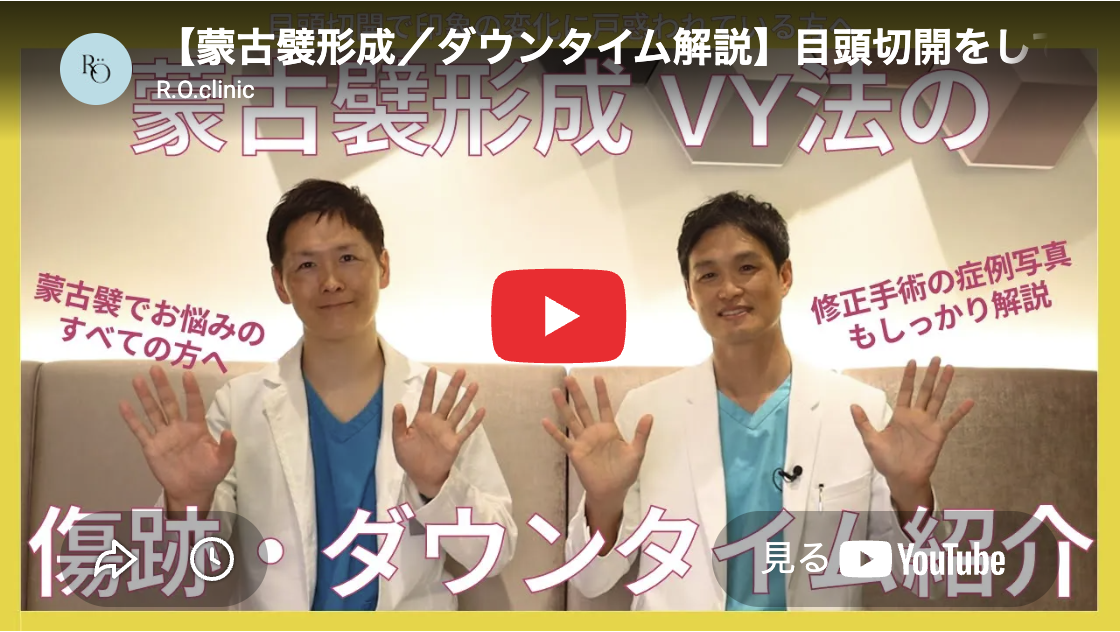

What You Need to Know to Avoid Regrets After Corrective Surgery for Double Eyelid Surgery or Inner Corner Eyelid Surgery

Revision surgery following epicanthoplasty and inner canthoplasty is a procedure designed to refine the eye area—which has been altered by the inner canthoplasty—to achieve a more natural appearance.
However, depending on the condition of the scar from a previous surgery, there may be limits to what can be corrected, and it may not be possible to restore the area to exactly the same condition as before the epicanthoplasty. Therefore, when considering this procedure, it is important to fully understand not only the expected results but also the limitations, risks, and downtime associated with the procedure.
At R.O. Clinic, we carefully assess the current condition of your inner corners and discuss your goals to propose a correction method tailored to each individual. Whether you’re unhappy with the results of a previous inner corner blepharoplasty or are considering having the procedure corrected at another clinic, please feel free to contact us for a consultation.
Frequently Asked Questions
Q: Is it possible to reverse the effects of an inner corner blepharoplasty?
A: By creating an epicanthal fold, it is possible to achieve a look similar to what you had before the epicanthoplasty.
However, since the extent to which corrections can be made varies depending on the previous surgical procedure, the amount of skin removed, and the condition of the scar and surrounding tissue, it may not be possible to fully restore the skin to its original state. Please schedule a consultation to discuss what results can be achieved.
Q: How do you choose between the VY method and the reverse Z method?
A: Whether the VY method or the reverse Z method is more suitable depends on the shape of the inner corner of the eye, the appearance of the lacrimal tubercle, the condition of the scar, and your preferences.
At R.O. Clinic, we carefully assess each patient’s current condition and recommend the surgical procedure best suited to their individual needs.
Q: Will the scar be noticeable?
A: The scar may appear red for a while after surgery, but it will gradually fade over time.
The healing process varies from person to person, and depending on your skin type, a slight scar may remain. Please feel free to discuss any concerns you may have during your consultation.
Q: Can I have revision surgery as many times as I want?
A: There is no limit to the number of times you can undergo revision surgery, but the results may not be the same every time.
Repeated surgeries can place a significant strain on the skin and surrounding tissues, which may make it difficult to achieve the desired results. If you are considering a revision procedure, we will examine your current condition and recommend the most appropriate treatment option.
Q: Can you correct an inner canthoplasty performed at another clinic?
A: Depending on the condition, we may be able to consider corrective surgery for an epicanthoplasty performed at another clinic.
However, the most appropriate corrective method varies depending on the previous surgical technique, scarring, and the condition of the skin and tissue. At R.O. Clinic, we carefully assess your current condition and recommend a treatment plan tailored to each individual.
References
Revisional Medial Epicanthoplasty Using the Reverse Z-Plasty Technique | Aesthetic Surgery Journal
https://pubmed.ncbi.nlm.nih.gov/33675227/
Revision Surgery After Mongolian Fold Creation and Inner Corner Blepharoplasty | R.O. Clinic
https://ro-clinic.com/menu_face/116/
About the VY Method for Creating Mongolian Folds | R.O. Clinic