 Doctor's Column
 Staff Blog
 campaign
 News
News





2024.06.07
Blepharoplasty
Indications for Ptosis Surgery

Dr Kuroda
CONTENTS
What is ptosis?
Ptosis is a condition in which the upper eyelid is lower than its normal position when the eyes are open.
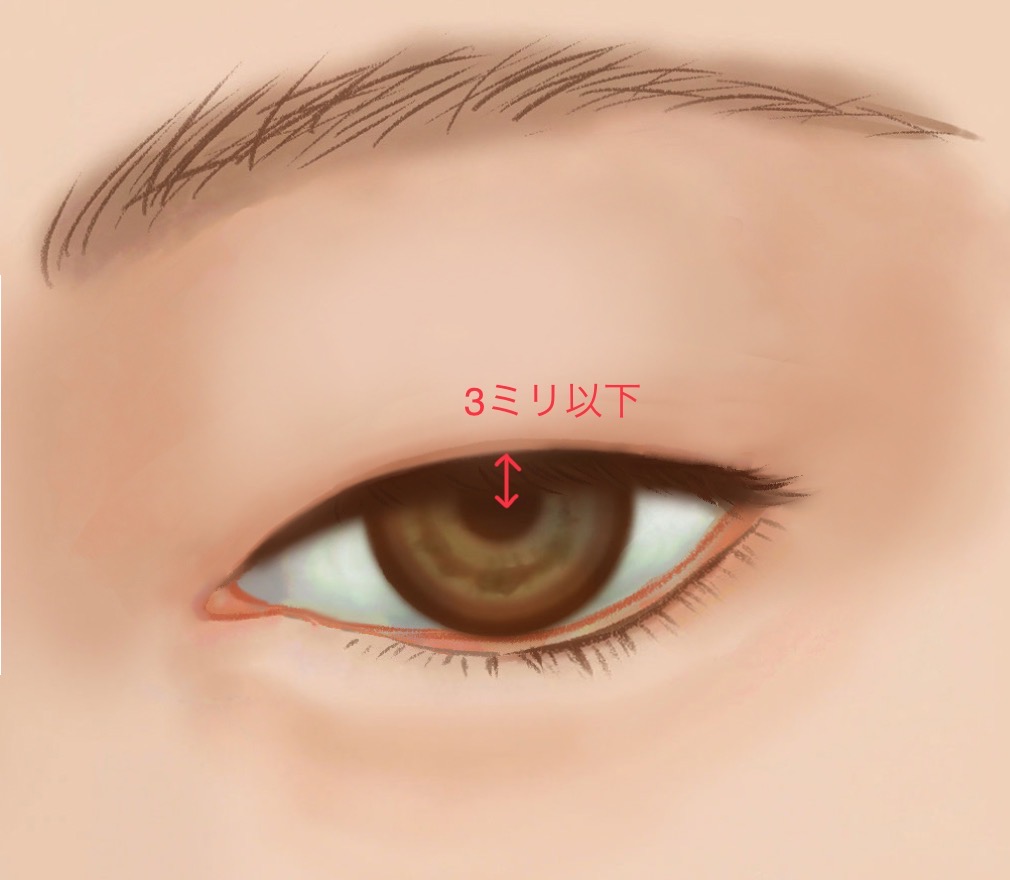
A droopy eyelid is diagnosed when the distance from the center of the black eye to the upper eyelid when looking straight ahead is less than 3 mm.
Unlike insurance-paid ptosis treatment in ophthalmology or plastic surgery, cosmetic surgery for a droopy eyelid may be indicated even if the patient does not meet the definition of a droopy eyelid.
I want to make my sleepy eyes pop.
I want to improve the concavity of my upper eyelid.
I want to improve my habit of raising my eyebrows.
I want to narrow the double width.
In cases such as the following, ptosis surgery may be performed.
Cases in which ptosis surgery is indicated
However, this is not always the case in cosmetic surgery.
People with a single eyelid
For people with a single eyelid, when they open their eyes, the skin of the upper eyelid covers them, making the black eye appear smaller than it actually is. Some people are satisfied with a double-edged eyelid because it makes the black eye appear larger than it actually is.
In addition, when a double fold is created through an incision, the tissue that resists the opening of the eye, known as eyelid opening resistance, is treated, so it is not uncommon for the eye opening to improve without a blepharoplasty.
People with double eyelids
For people with double eyelids, blepharoplasty is indicated if there is dissatisfaction with the appearance of the black eye. However, if the double eyelid has been created by a buried suture, the eye opening may be improved without blepharoplasty by removing the buried suture and treating the open eyelid resistance, or by narrowing the inappropriately wide double eyelid to an appropriate double width.
Whether or not a blepharoplasty is necessary in cosmetic surgery is determined on a case-by-case basis. Therefore, we often hear patients say, "Clinic A said I need a droopy eyelid surgery, but Clinic B said I don't need it. I often hear patients say, "I don't know what is true anymore," but I believe that this is inevitable.
It is not difficult to determine the indication for surgery when the opening of the black eye is obviously poor, but what troubles me is when the eye is not ptosis by definition, but looks a little sleepy. It is impossible to predict in advance whether or not the eye opening will improve after the eyelid opening resistance is treated or the implantation thread is removed. Therefore, if the patient wants to be sure that the eye opening will improve, a blepharoplasty will be performed, and if the patient is hoping for an improvement, a standard double incision surgery will be performed.
In my case,
The distance from the center of the black eye to the upper eyelid when looking straight ahead is less than 3 mm.
Strong brow elevation habit and simulation does not break the skin at the double line.
There is an objectively discernible difference in eye opening from left to right.
I like the way the black eyes look, just enough to consciously open the eyes with a sleepy look.
The indication for ptosis surgery is cases such as the following
Cases in which ptosis surgery is not recommended
We do not recommend blepharoplasty for people with normal eyelid opening for the purpose of making the eyes bigger. By making the eyes open excessively to look good with color contacts
Worsening of dry eye
Worsening of astigmatism
This is because it is difficult to perform surgery to correct an over-opened eyelid because of the risk of problems such as the following.
Changes to Expect After Blepharoplasty Surgery
Postoperative changes after ptosis surgery include
The more dark eyes are exposed, the more light enters the eyes and makes them look patchy.
...It's easier to open my eyes.
Improvement of eyebrow elevation, upper eyelid concavity, and lower third whites of the eyes
Improvement of accompanying symptoms such as headache and stiff shoulders
is expected to be
One of the slightly more troublesome postoperative changes is that in most cases the eyebrows will drop in position after surgery. The degree to which the eyebrows will be lowered is unpredictable. The raising or lowering of the eyebrows affects the width of the brow, and in the case of cosmetic surgery, where it is necessary to improve not only function but also appearance, the inability to promise the finished brow width is stressful for both the surgeon and the patient.
In some cases, when a person has thick eyelids, the thicker eyes are emphasized more when the eyes are open and the eyebrows are lowered.
Since cosmetic surgery for blepharoplasty does not simply consider the opening of the eyes, it is ultimately impossible to determine if surgery is indicated without first asking about the patient's wishes and then examining the eye area.
Case Studies
Finally, we will look at some monitored cases of ptosis surgery.
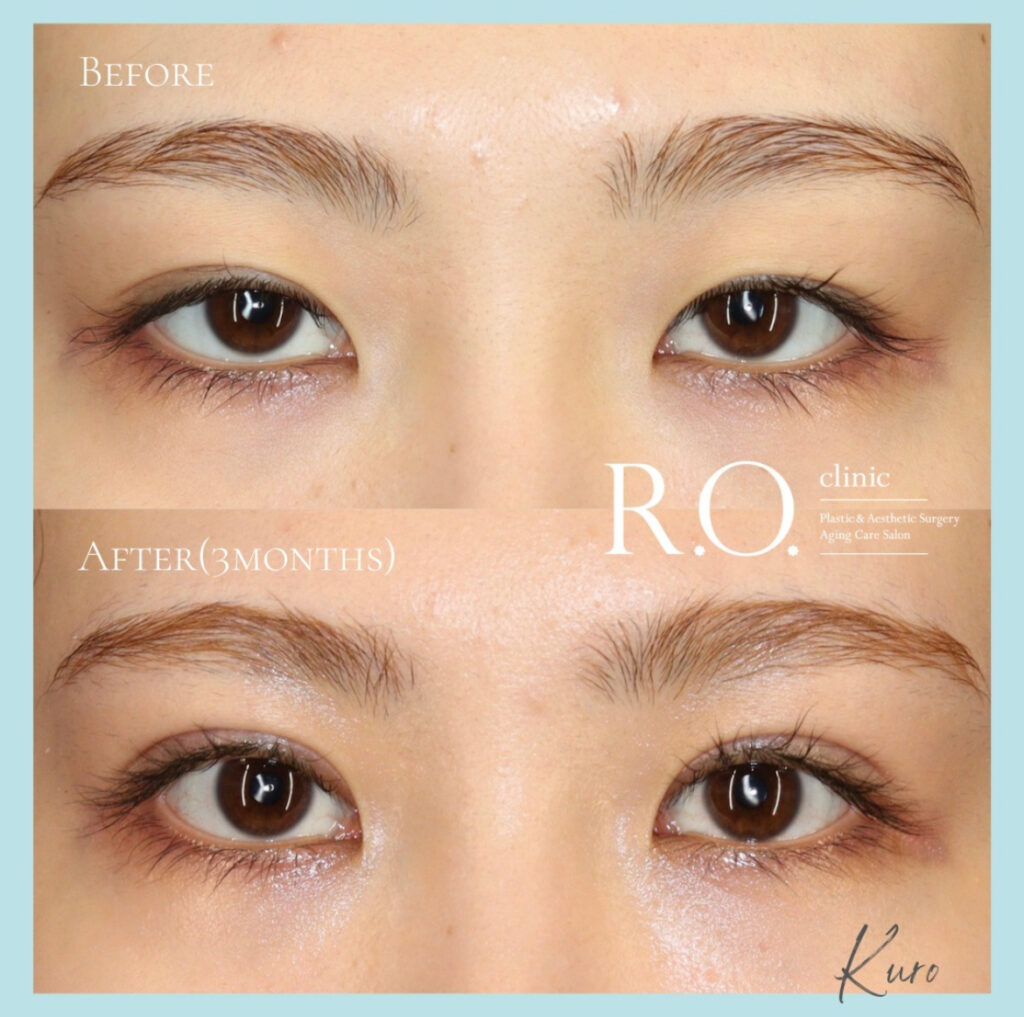
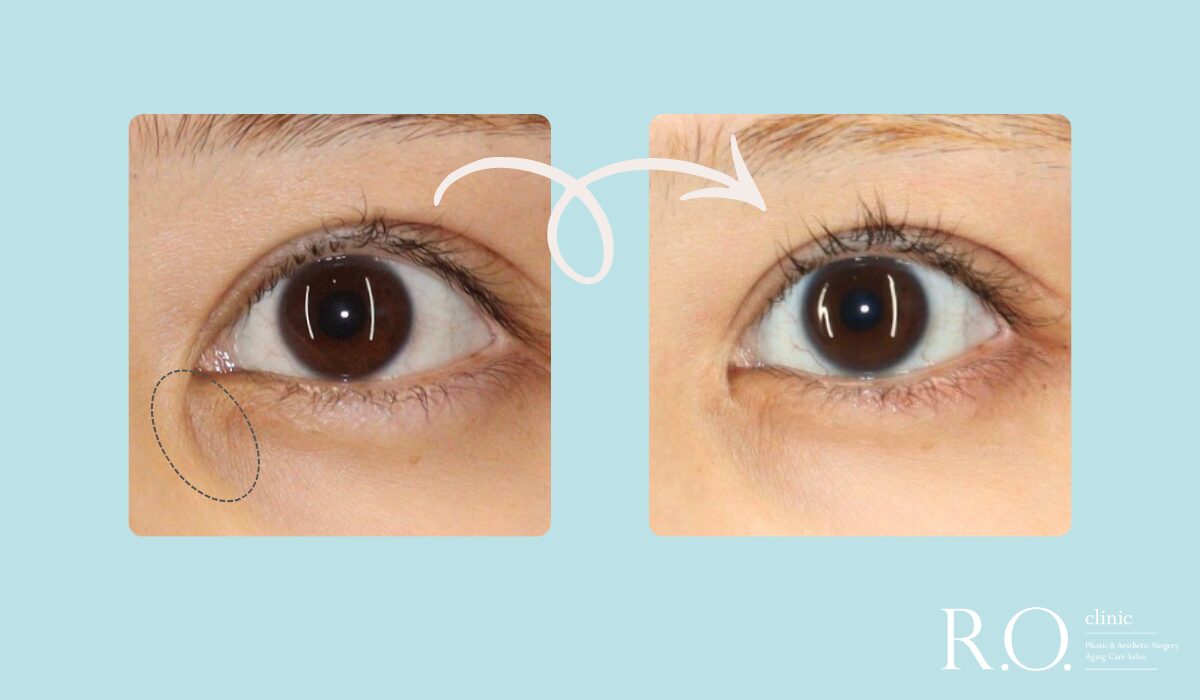
This is a case in which the distance from the center of the black eye to the upper eyelid is less than 3 mm and meets the definition of a droopy eyelid.
In such a typical case, there would be no doubt about the indication for surgery.
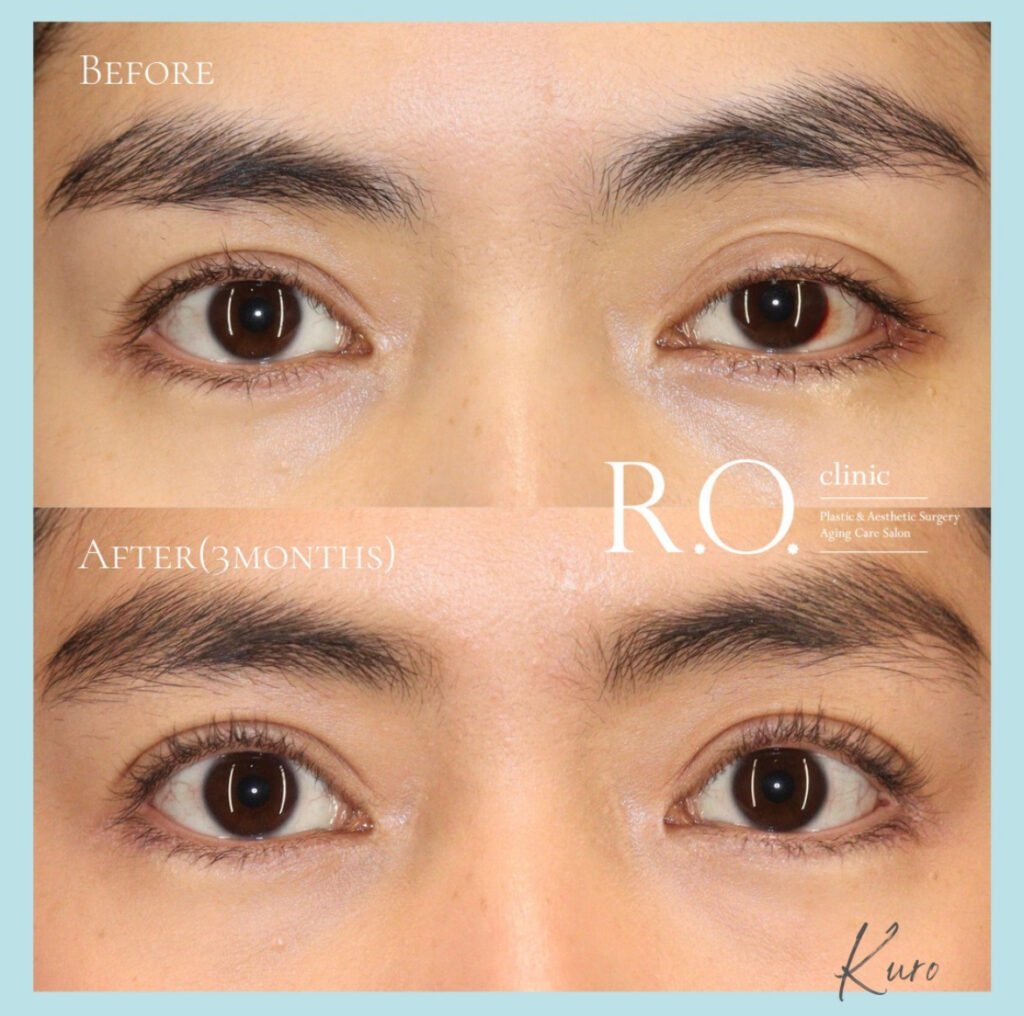
This patient has an obvious left-right difference in eye opening. There is also an upper lid concavity in the ptotic eye. Postoperatively, the eye opening has improved, the eyebrows have lowered slightly, and the upper eyelid depression has improved.
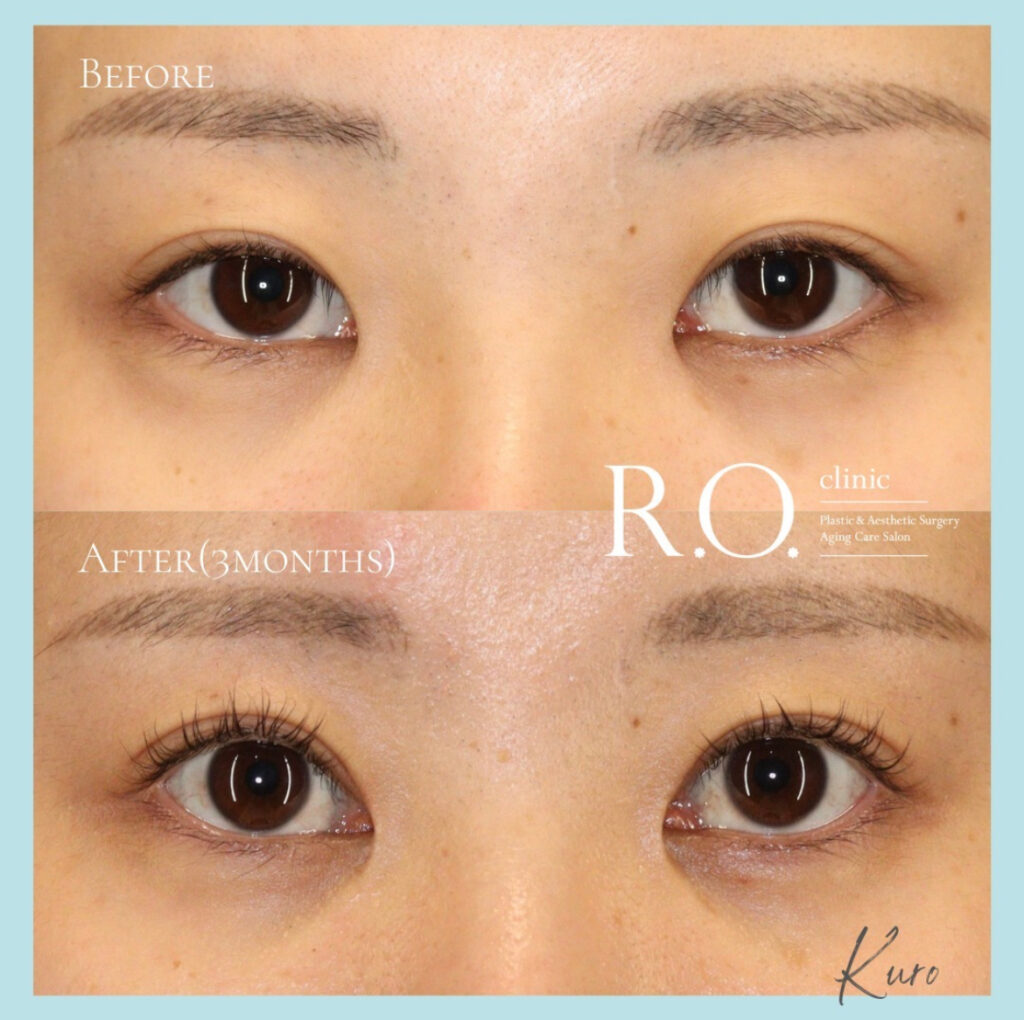
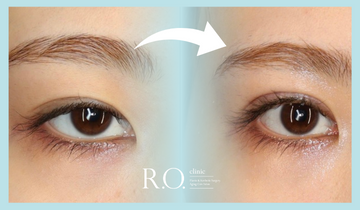
This person has more than 3 mm from the center of the black eye to the upper eyelid. In a case of this magnitude, opinions are divided on whether or not to perform a blepharoplasty. The droopy eyelid surgery has resulted in a more defined eye area.
Although droopy eyelid surgery is a highly satisfactory procedure, it is a difficult procedure and in some cases, the eyelid may not open as well as expected. It is advisable to consult with a physician to carefully determine if surgery is indicated.
52nd Doctor's Column
Well, it has been a full year since I wrote this column.
In my first column.
Updated weekly
52 columns per year
This was the goal of the project.
In fact, this is my 52nd column.
I set the goal without much thought, but when I tried it, I found that creating a new column every week was a moderate burden, and I spent a year writing column drafts on holidays and on vacation.
However, we were able to reach our goal of 52 columns thanks to the patients who read our columns and came to us for counseling and those who said, "I learned a lot from your column. I was skeptical that anyone would bother to read a column in print in an age when information is readily available on Instagram and YouTube. I was skeptical about whether anyone would bother to read a column in print in an age when information is readily available on Instagram and YouTube, but I am glad I wrote the column, because the response has been positive.
This is not the last issue of the series, although it has ended as if it were the last.
However, since we have achieved our initial goal, we will take a short break from updating this page.
After taking a break, I intend to update my column at a less burdensome pace than I am doing now.
Thank you for your continued support of the R.O. Clinic and our column.
Assistant Director Daiki Kuroda

#Dr. K's In-Depth Commentary Series
Supervisor of this article
vice president (of a hospital, clinic, etc.)
Daiki Kuroda
OHKI KURODA
Share Article