 Doctor's Column
 Staff Blog
 campaign
 News
News





2024.03.29
epicanthus
About Mongolian Fold Formation (4) "Downtime of Inverted Z Method"

Dr Kuroda
Previous column,About mongolian fold formation (3) In the following section, we explained the downtime of the VY method of mongolian fold formation.
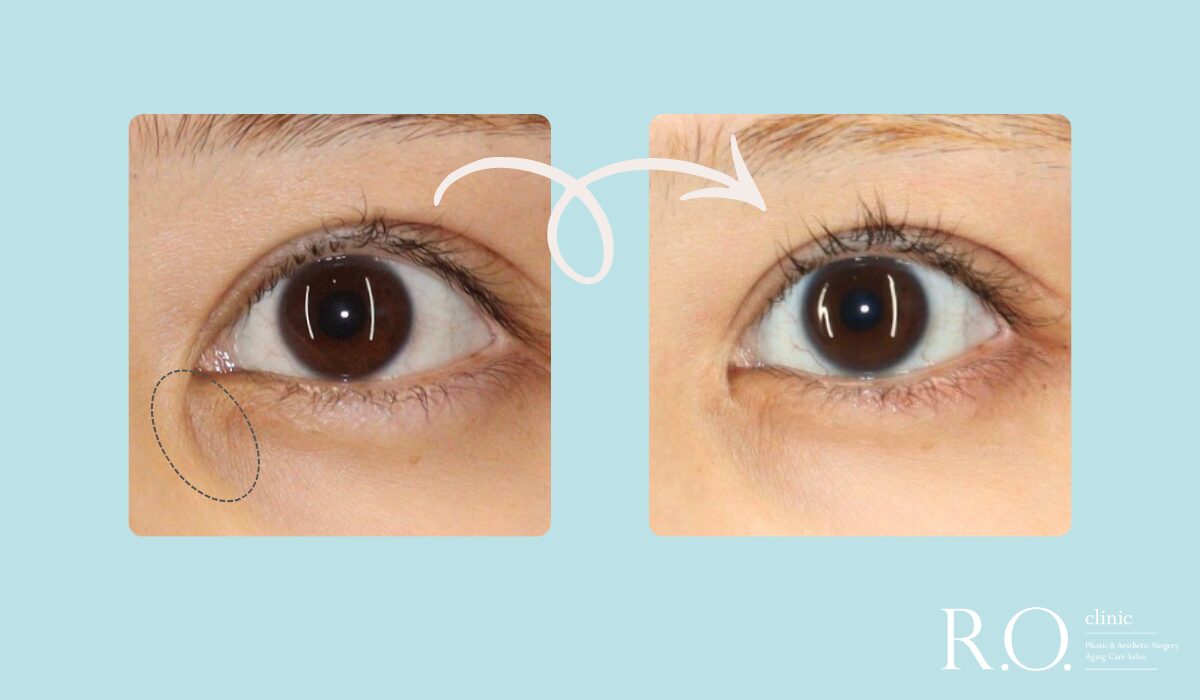
Many of our patients undergo the VY method of mongolian fold formation, but we also perform mongolian fold formation using the inverse Z method.
In this issue, we will explain the downtime of the Inverted Z method of mongolian fold formation, which has been requested by many people.
If you would like to know more about the features of the Inverted Z method of mongolian fold formation,About mongolian fold formation (1) for more information.
CONTENTS
Mongolian Fold Formation Reverse Z Method Case Introduction (1)
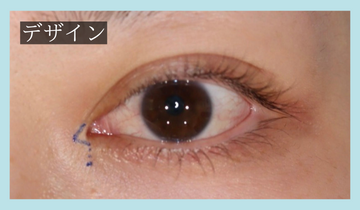
First, the design.
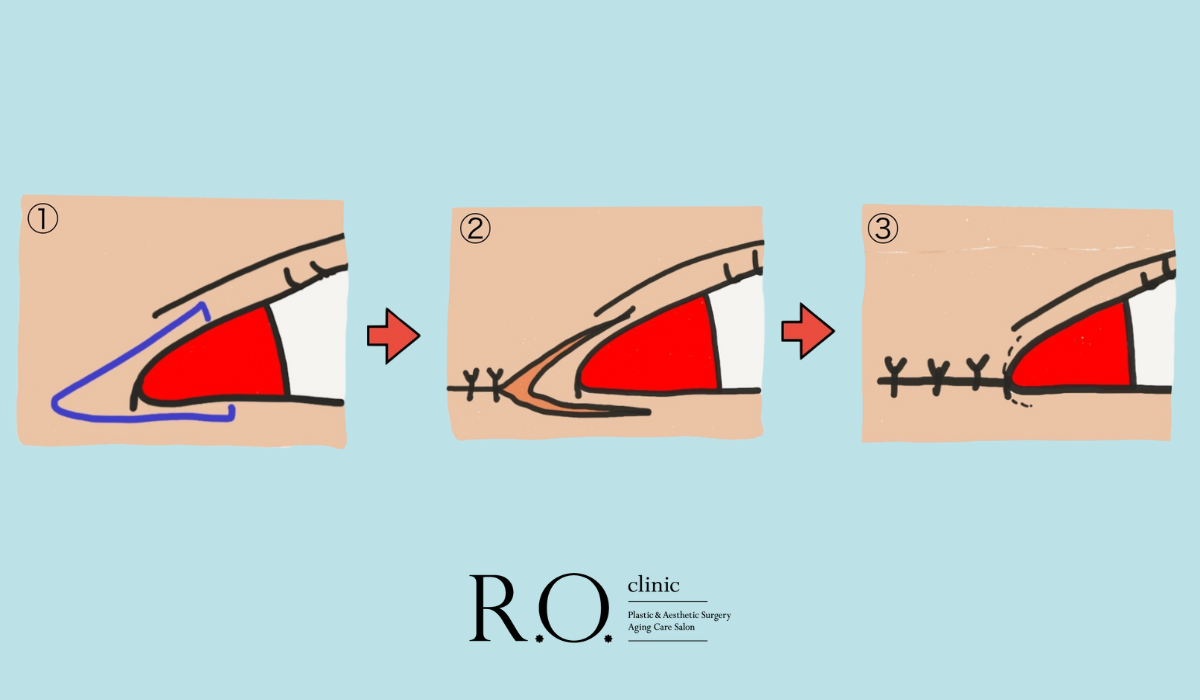
A triangular skin incision is added to the top of the eye. The triangular skin is folded like a hood to create the mongolian folds. The triangular skin incision is sewn down and the created Mongolian folds are sewn downward.
The triangular skin incision is smaller than standard in this case.
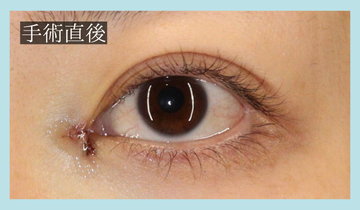
This is the condition immediately after surgery.
The whitish skin is the result of local anesthesia.
It is hard to see with the ointment, but it is sutured with a fine thread called 8-0 nylon.
The tear duct is narrowed by about 1 mm.
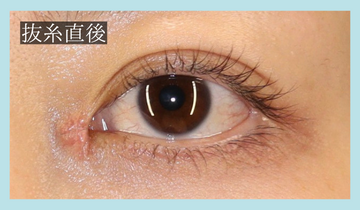
This is the state of the stitches immediately after removal.
As is the case with the VY method, there will be redness and bumpiness of the scar immediately after the stitches are removed.
The mongolian folds created have edema and are blotchy immediately after the stitches are removed.
For scars, the patient will be required to apply an ointment to improve the scar for 3 weeks after the removal of stitches.
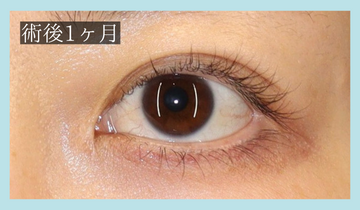
This is the condition one month after the surgery.
The redness and bumpiness have improved compared to immediately after the stitches were removed.
The edema of the created mongolian folds is receding.
The exposure of the lacrimal folds does not change much, but some people feel that the edema has receded as the edema reced.
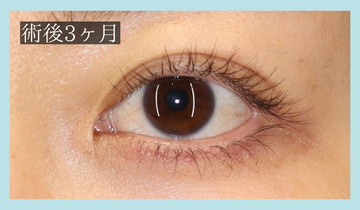
This is the condition of the patient 3 months after surgery.
Compared to the immediate postoperative period, it can be seen that the exposure of the tear duct has not regressed.
The triangular skin extraction site is left as a rather wide scar with white loss.
This lateral scarring varies greatly from person to person.
Mongolian Fold Formation Reverse Z Method Case Introduction (2)
Let's look at the course of another case.
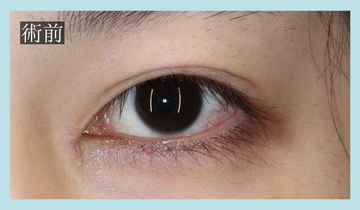
Preoperative state. Three months have passed since the incision was made at another hospital.
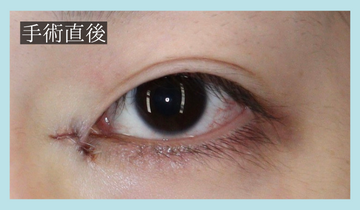
This is the immediate postoperative state. The triangular incision is of standard size, so the wound is larger than in the previous case.
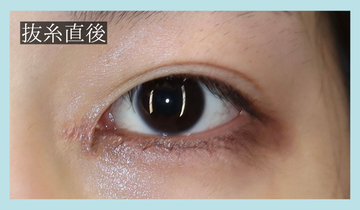
This is the state immediately after the stitches were removed. The scar is still red and bumpy.
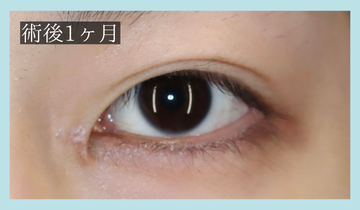
This is one month after the surgery. The redness of the scar has decreased, but it still remains bumpy.
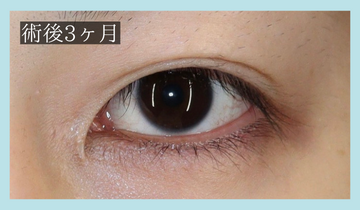
This is the condition of the patient 3 months after surgery.
The scar is white and slightly wide with white loss.
The exposure of the lacrimal folds is not much more retroactive than immediately after surgery.
The tear duct can be narrowed by about 1 mm.
summary
How was it?
The ability to create three-dimensional mongolian folds is an advantage of the inverse Z method.
We are often asked about retroversion, but you can see that although the impression changes as the edema of the reconstructed mongolian folds improves, the exposure of the tear ducts has not retrograded much.
Mongolian fold formation is a very delicate surgery, sometimes requiring fine-tuning to the nearest 0.5 millimeter.
It is important to consult with a doctor who is familiar with the advantages and disadvantages of the VY and inverted Z methods and can suggest the best technique for the patient's needs.
Assistant Director Daiki Kuroda
#Dr. K's In-Depth Commentary Series
Supervisor of this article
vice president (of a hospital, clinic, etc.)
Daiki Kuroda
OHKI KURODA
Share Article