 Doctor's Column
 Staff Blog
 campaign
 News
News





2025.11.07
epicanthus
About the VY method of mongolian fold formation

Dr Kuroda
The theme of this issue is "Mongolian fold formation VY method".
CONTENTS
What is the VY Method?
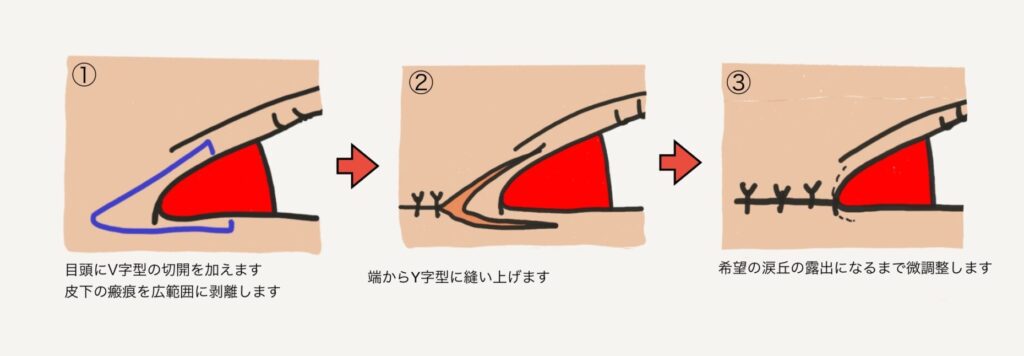
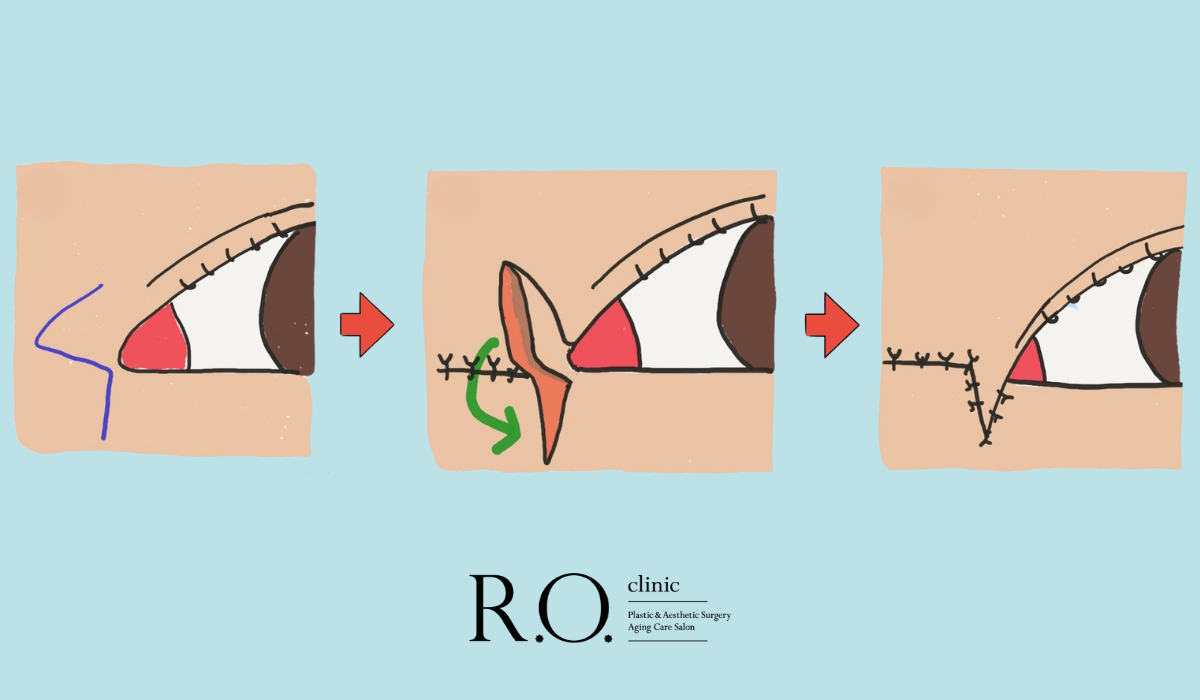
As shown in the illustration, a V-shaped incision is made at the top of the eye, and the skin above and below is sewn into a Y-shape as if closing a zipper; the V of the Y is behind the Mongolian folds, so the scar visible from the surface is the I of the Y, a straight scar.
Characteristics of the VY Method
The most important features of the VY method are
The ability to fine-tune the visibility of the tear ducts."
Scars are less noticeable."
This is to say.
During the surgery, the exposure of the lacrimal duct is checked, and fine adjustments can be made in millimeter increments if the lacrimal duct needs to be narrower or wider. In contrast to the inverted Z method, which is difficult to fine-tune during surgery, the VY method allows for a greater degree of freedom in fine-tuning during surgery.
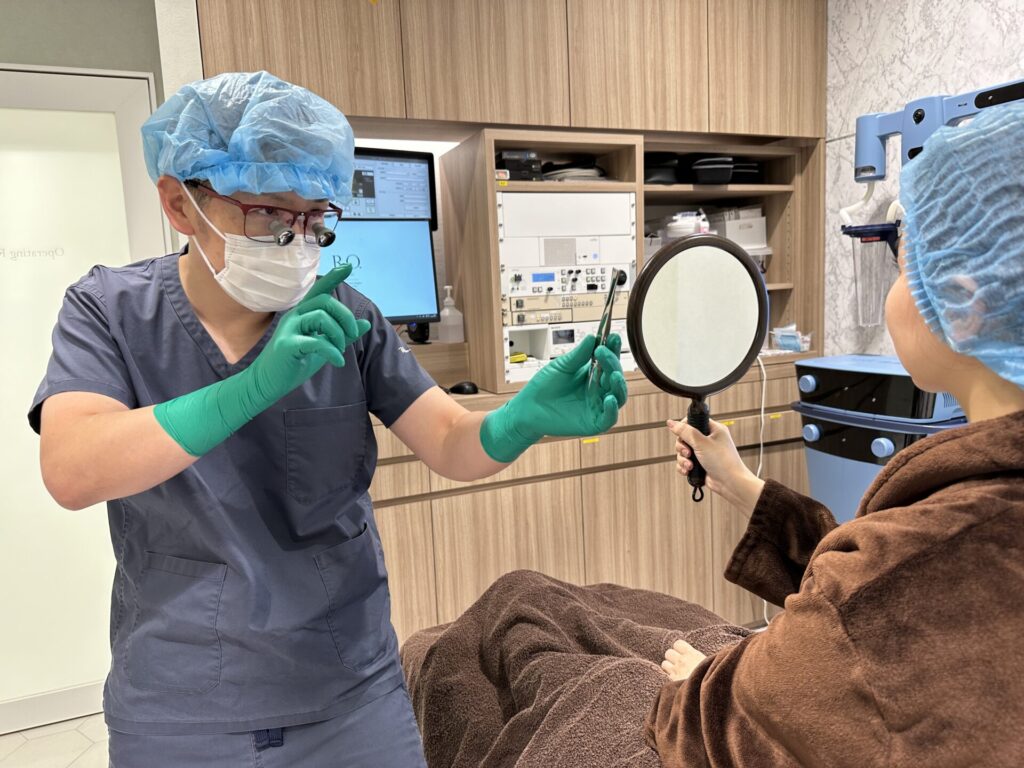
*Checking with a mirror during surgery to adjust the finished product. (This may not be done depending on the surgeon.)
The VY method is also superior in that the scars are shorter than those of other mongolian fold formation methods, so the scars are less noticeable.
In the VY method, the skin covers the eye lid in a flat plane, narrowing the exposure of the tear duct, rather than the three-dimensional covering of the Mongolian folds as in the inverted Z method.
In cases where the Mongolian folds remain, the lacrimal folds are narrowed while the Mongolian folds remain, and in cases where the Mongolian folds are completely removed, the lacrimal folds are narrowed without changing their shape.
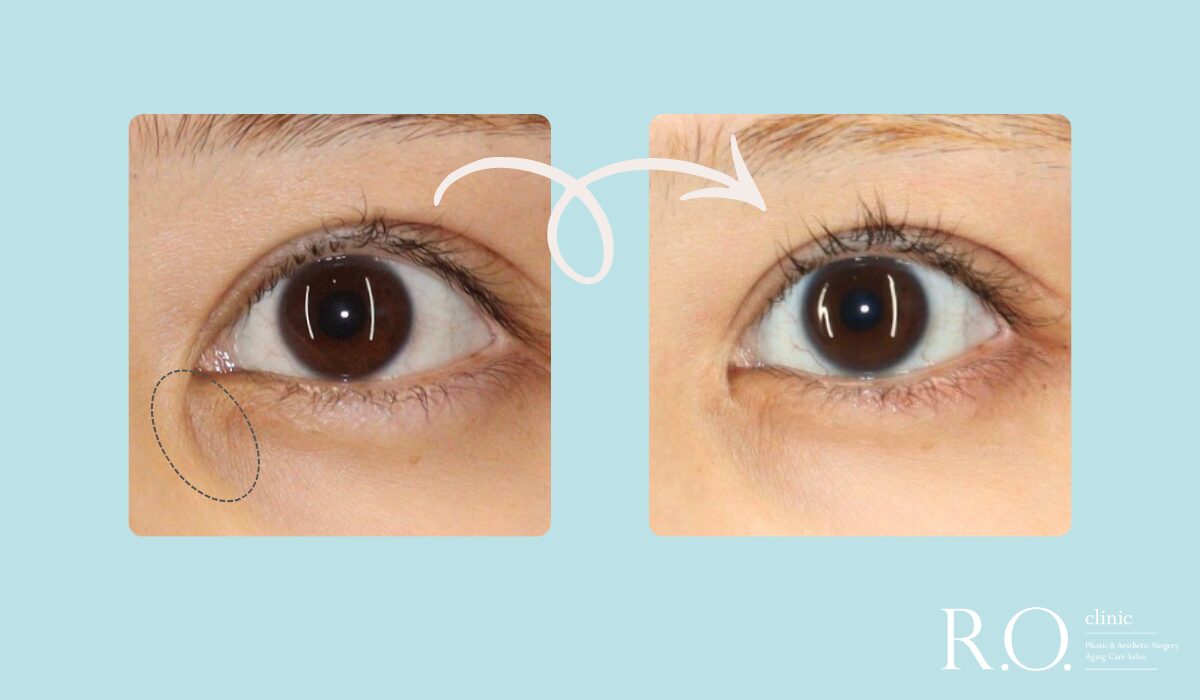
Since it is difficult to convey the image when explained in words, the case photos I will show you later will be easier to understand the image of the change.
Risks of the VY method, etc.
Although this surgery can adjust the exposure of the tear ducts with a fairly high degree of precision, the shape of the eye socket is affected by the shape of the eye socket before surgery. If the eye caps are round before surgery, they will be rounded; if they are pointed, they will be pointed; and if the Mongolian folds remain covered, they will often be made to look that way. Although it can be adjusted to some extent, it may not be possible to reproduce the desired shape due to the amount of tissue and scarring in the eye socket.
As for retroversion, measurements after 3 months are often 1 mm wider than the measurements during surgery. If the inner eye angle distance measured during surgery while swollen from anesthesia was 37 mm, it will be 35 mm when measured 3 months later.
This is the average value of change, and there can be cases of large backward movement or almost no backward movement.
People for whom the VY method is suitable
The VY method is,
I don't want to go back to the mongolian folds I had before the craniotomy, but the tear ducts are too visible and uncomfortable.
I want to fine-tune the exposure of the lacrimal folds to the nearest millimeter.
I don't like it when a parallel double fold turns into a terminal fold.
This technique is suitable for those who wish to use it.
On the other hand,
I want to return as much as possible to the state of the mongolian folds that existed before the craniotomy.
I want to change a parallel double fold to a terminal fold.
who wish to do so may want to consider a technique other than the VY method.
Finally, please see photos of actual cases.
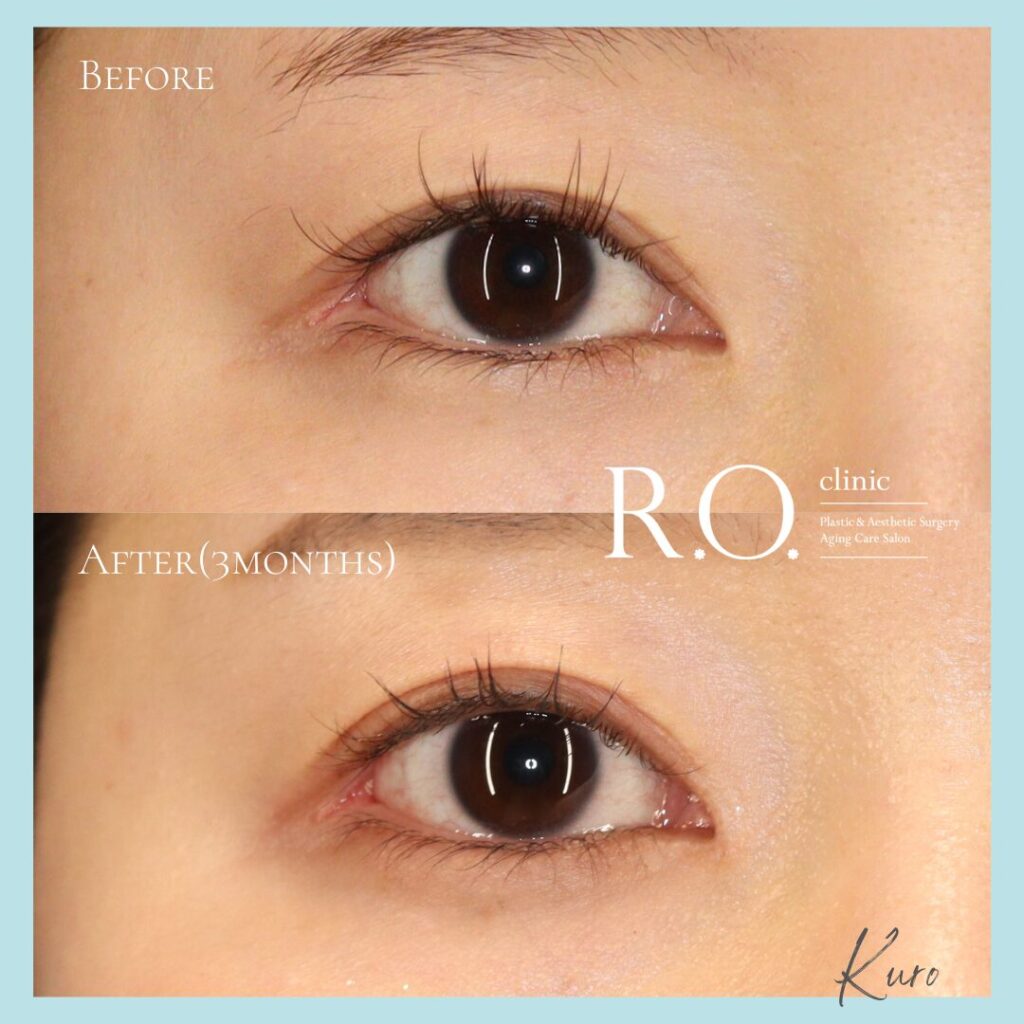
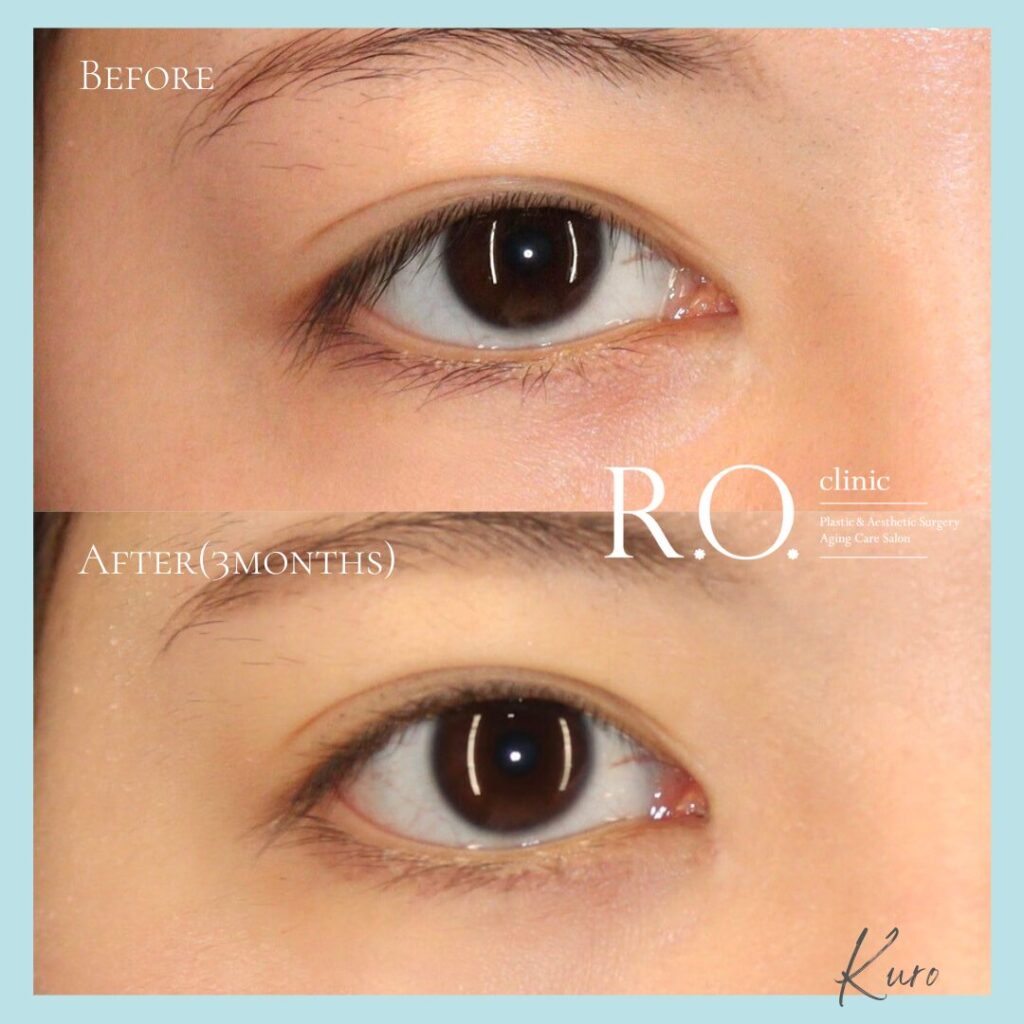
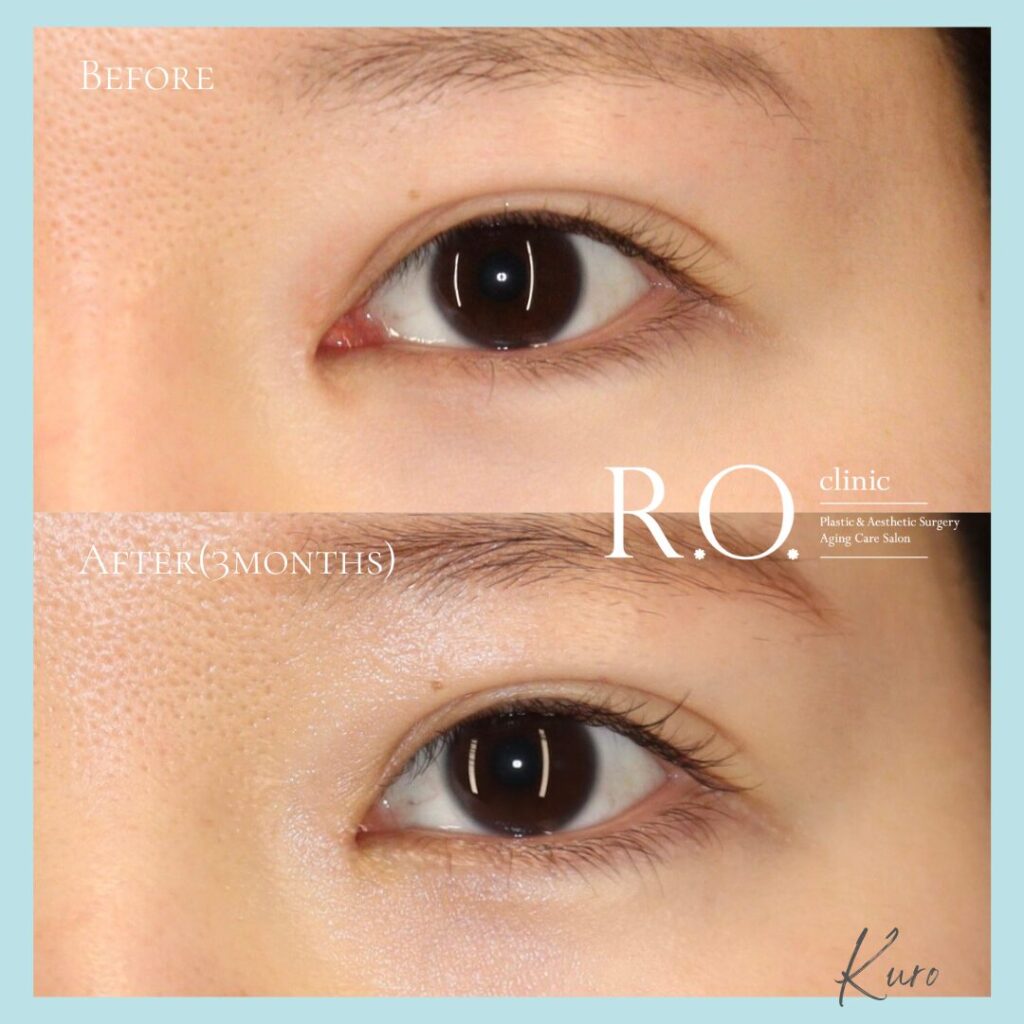
I hope I have successfully conveyed the characteristics of the VY method of mongolian fold formation.
Assistant Director Daiki Kuroda
Supervisor of this article
vice president (of a hospital, clinic, etc.)
Daiki Kuroda
OHKI KURODA
Share Article