 Doctor's Column
 Staff Blog
 campaign
 News
News





2023.09.08
double-entry burial
Resurfacing Method Q&A

Dr Kuroda
In the previous and previous articles, we have explained in depth about the implantation method.
Patients have commented that it was a bit difficult..." so this time it is easy to read.
We would like to answer some of the questions we often receive during counseling sessions.
CONTENTS
Suitable and unsuitable eyelids for implantation
When we simulate the double-exposed eyelid during the consultation, we use a thin stick with a bougie tip on the eyelid to determine if the patient is suitable for the implantation method. If you wish to simulate the procedure yourself, you may use a pusher that comes with an eyelid pouch to safely check the results.
Can the pusher create the desired double layer? When the double fold is created, does it retain its shape even after the pusher is removed if the patient is patient enough to blink? If you say "the double fold is maintained," then there is a good chance that the double fold will be maintained well even if you use the implantation method, making you a good candidate for the implantation method.
On the other hand, there are some people who cannot create the desired double fold with pushers, or if they stop supporting the double fold with pushers, the double fold becomes shallow even if they endure blinking. For such eyelid people, the possibility of maintaining a double fold for a long period of time with the implantation method is not high, so they may consider an incisional double fold as an option. However, it is totally acceptable to want to use the implantation method at first with the understanding that there is a possibility that the eyelids may loosen someday.
Also, people who have a weak ability to open their eyes, so-called droopy eyelids, are not suitable for the implantation technique. If a droopy eyelid is treated with the implantation technique, the threads will not pull the skin of the double fold line in tightly, resulting in a wide, shallow double fold.
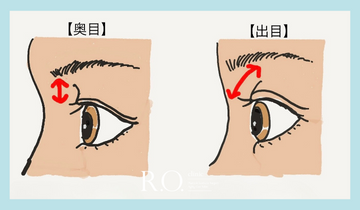
If the eyelid is slightly droopy, a double fold can be created with the implantation technique. In some cases, a double fold cannot be created with the implantation method if the black eye is largely hidden or if the eyebrows move widely when opening the eyes.
How long will the implantation method last?
This is the question we get the most. To be honest, it is difficult to accurately predict 2-3 years or 5 or 10 years. Simulation can help us determine if you are a good candidate for implantation or not. So we can say, "I think it will last quite a long time," or "It might last two or three years at most because it is not really suited for implantation," or "It might not even last a year. Would you consider an incision?" I will tell you my prediction such as "I think it will last quite a long time. Some people with thin skin and habitual eyelids may have one implantation that will never come off, but I don't think it is something that should be done with the expectation of semi-permanent results.
What happens when the implantation loosens?
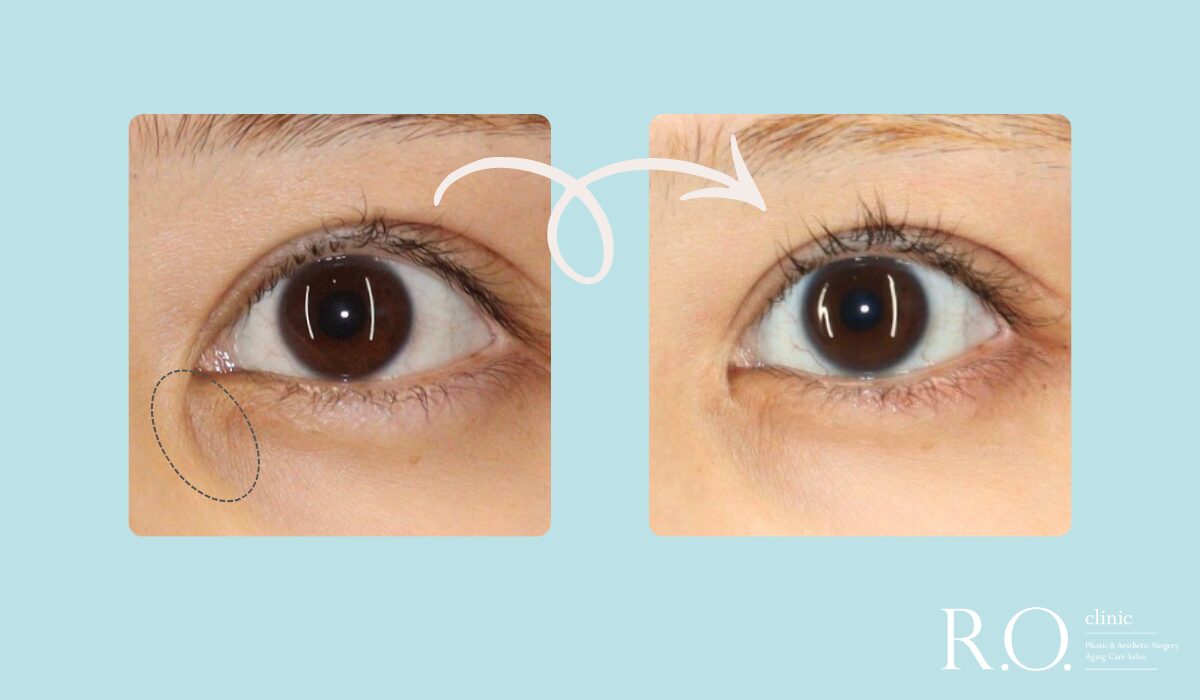
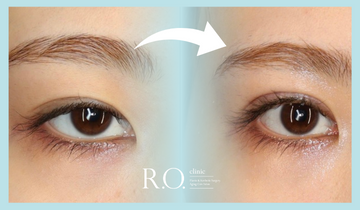
As the implantation threads become dislodged from the tissue and hang down, the retraction of the double fold line will become shallower. If the eyelid skin is thick, the double width will narrow and eventually revert to a single fold. If the eyelid skin is thin or there is little fat, the double fold line may be wider than the line created by the implantation technique, and it may look like a triple fold. It is relatively rare for a patient to wake up in the morning and find that their eyelids have suddenly come off, but it is more common for them to come off gradually. If it is difficult to determine this by yourself, it is best to have it checked at a medical examination.
How do I make my implantation procedure last longer?
It boils down to not rubbing or pulling the eyelid unnecessarily. When a bunion comes loose, it is caused by the threads detaching from the tissue. People who scrub their eyelids too hard when washing their face or removing their makeup, people with allergies such as hay fever or atopic dermatitis who scrub their eyelids, and people whose eyelids often swell up when they cry tend to have a tendency to loosen their implantation technique.
How many times can I have a burial procedure done?
Although there is no specific limit to the number of times a procedure can be performed, as explained in the previous column, implantation is not without risk. Repeated implantation increases the risk of distortion of the eyelid plate and eyelid spasm. As can be confirmed by performing an incisional bifoveal surgery, the tissue adhesions and scarring are very different between those who have had one or two implantation procedures and those who have had three or more implantation procedures.
One or two times is not a problem, but if you need more than three times, why not add incision as an option? That is my opinion.
summary
This is the third consecutive week of our implantation series.
I'm sure you've had your fill of the burial technique by now, haven't you?
I have almost exhausted the knowledge I have.
But finally, the topic of implantation continues for one more week.
The next and final installment of the implantation method will be in the next issue.
Please stay with us a little longer.
Assistant Director Daiki Kuroda
Series of Frequently Asked Questions in # Counseling
Supervisor of this article
vice president (of a hospital, clinic, etc.)
Daiki Kuroda
OHKI KURODA
Share Article