 Doctor's Column
 Staff Blog
 campaign
 News
News





2025.10.31
epicanthus
Inverted Z method for forming mongolian folds

Dr Kuroda
I have previously provided a series of explanations about mongolian fold formation in my column, and about two years have passed since I wrote it. Since there has been an increase in the number of consultations regarding Mongolian fold formation, I would like to once again explain about Mongolian fold formation and treatment of scars on the eye socket in my column.
The theme of this year's session is "Mongolian Fold Formation Inverted Z Method".
CONTENTS
What is the Inverse Z Method?
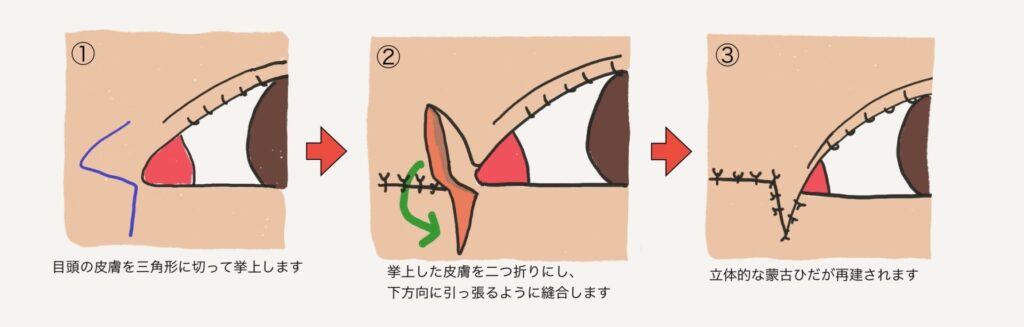
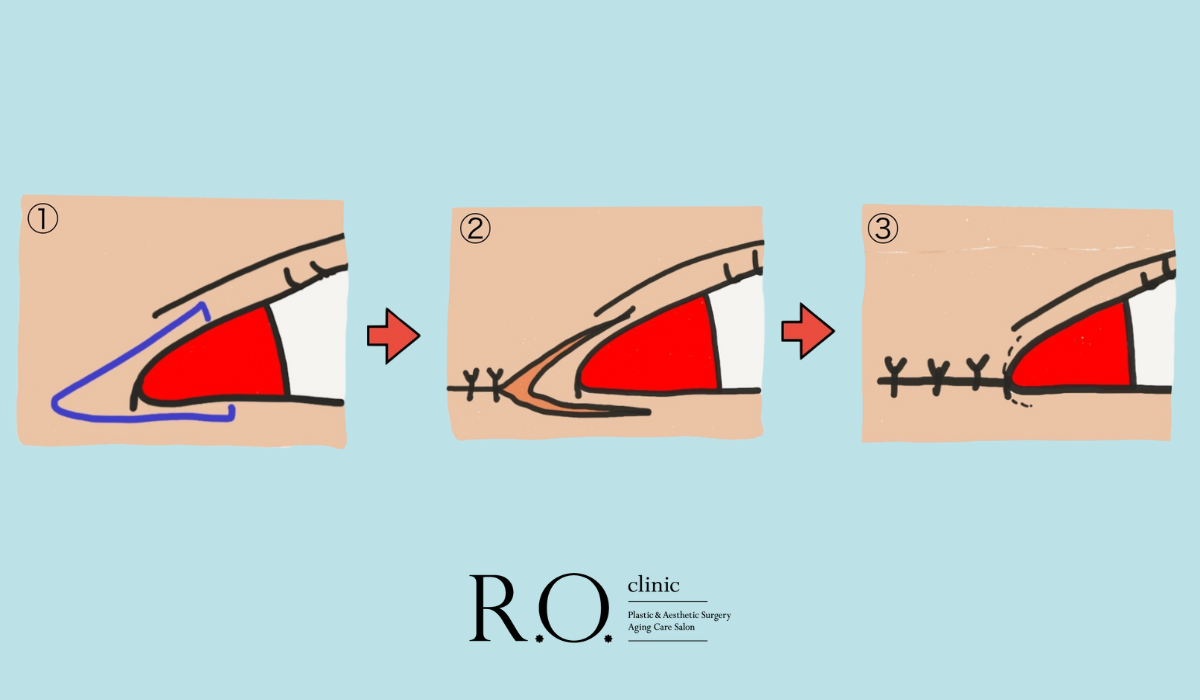
This surgical procedure is an image of a reverse reproduction of the Z-plasty technique, an incision at the eye socket.
As shown in the illustration, a triangular incision is made in the skin of the eye socket. The length of the triangular incision is between 3 and 5 mm per side and is adjusted according to the size of the Mongolian folds to be reconstructed.
The Mongolian folds are reconstructed by folding the triangular skin in two and sewing it under the eye socket.
The triangular skin cut is sutured, resulting in the scar shown in the illustration.
Characteristics of the Inverse Z Method
The most important feature of the inverse Z method is
It is the ability to create mongolian folds with "three-dimensional coverage."
When the mongolian folds are covered, the eyes look gentle, soft, and young.
The inverted Z method is suitable for those who wish to reconstruct the three-dimensional mongolian folds that were lifted by the craniotomy.
Risks of the inverse Z method, etc.
In cases where there is not enough room in the skin of the eye socket, it may not be possible to create a large enough mongolian fold or there may be a strong retroversion.
There may not be enough room for the skin of the eye socket in cases where the patient has undergone skin incisions (redrape, W-plasty, park method, etc.), multiple eye socket incisions, or has already undergone mongolian fold formation.
Not all of the above cases are off-label. After examining the patient, we determine whether or not the inverse Z method is indicated.
Another characteristic of the inverted Z technique is that it is difficult to fine-tune the degree of concealment of the lacrimal folds.
Direction and length of mongolian folds
Exposed lacrimal folds
However, there is a limit to how much symmetry can be achieved because of the influence of the shape of the eye socket and the scar.
In the inverted Z method, the double width on the inner eye side tends to be narrower.
This may be an advantage for those who want to revert a parallel double fold to a terminal fold, and may be perceived as a disadvantage for those who do not.
People for whom the inverse Z method is suitable
The reverse Z method is,
The incision was done by Z-formation and I want to return to the impression I had before the incision.
I want to change my parallel bifold back to a terminal bifold.
This technique is suitable for those who wish to use it.
On the other hand,
Do not wish to reconstruct three-dimensional mongolian folds
I don't like the narrowing of the double width on the inner eye side.
I want to fine-tune the visibility of the tear trough by 1 mm.
and those who wish to do so may want to consider a method other than the inverted Z method.
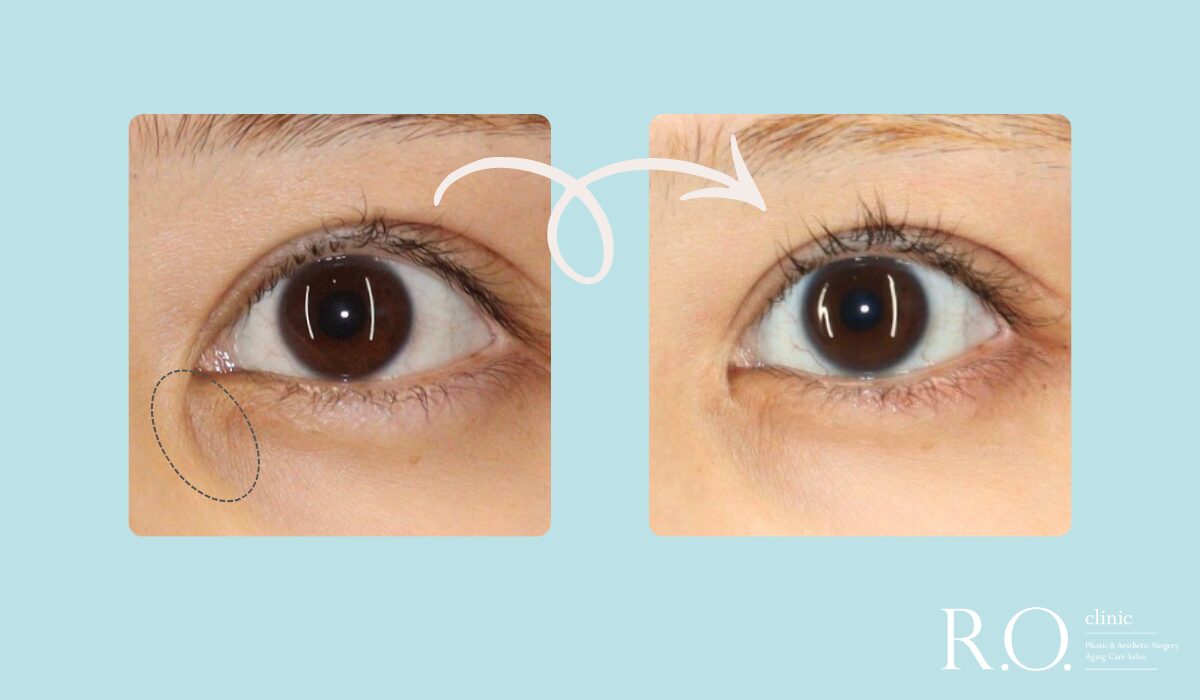
Finally, please see photos of actual cases.
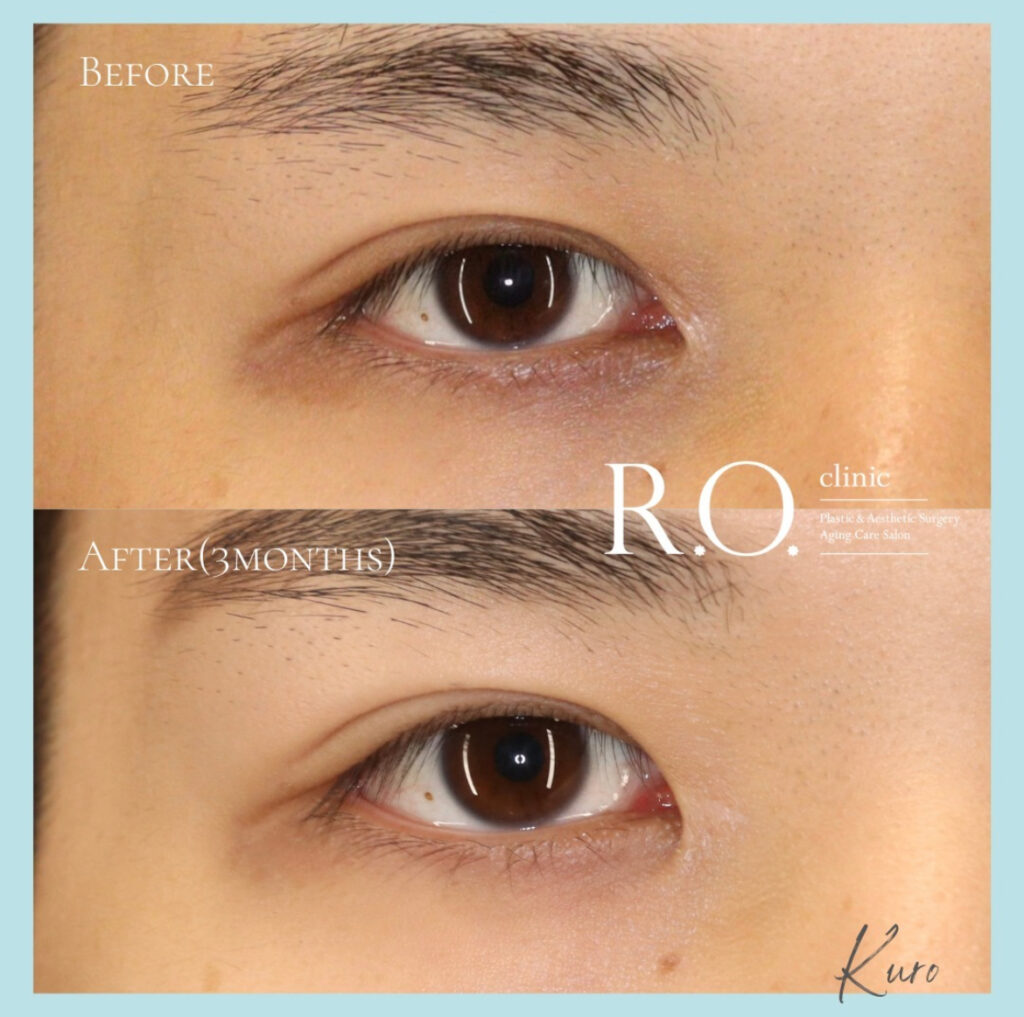
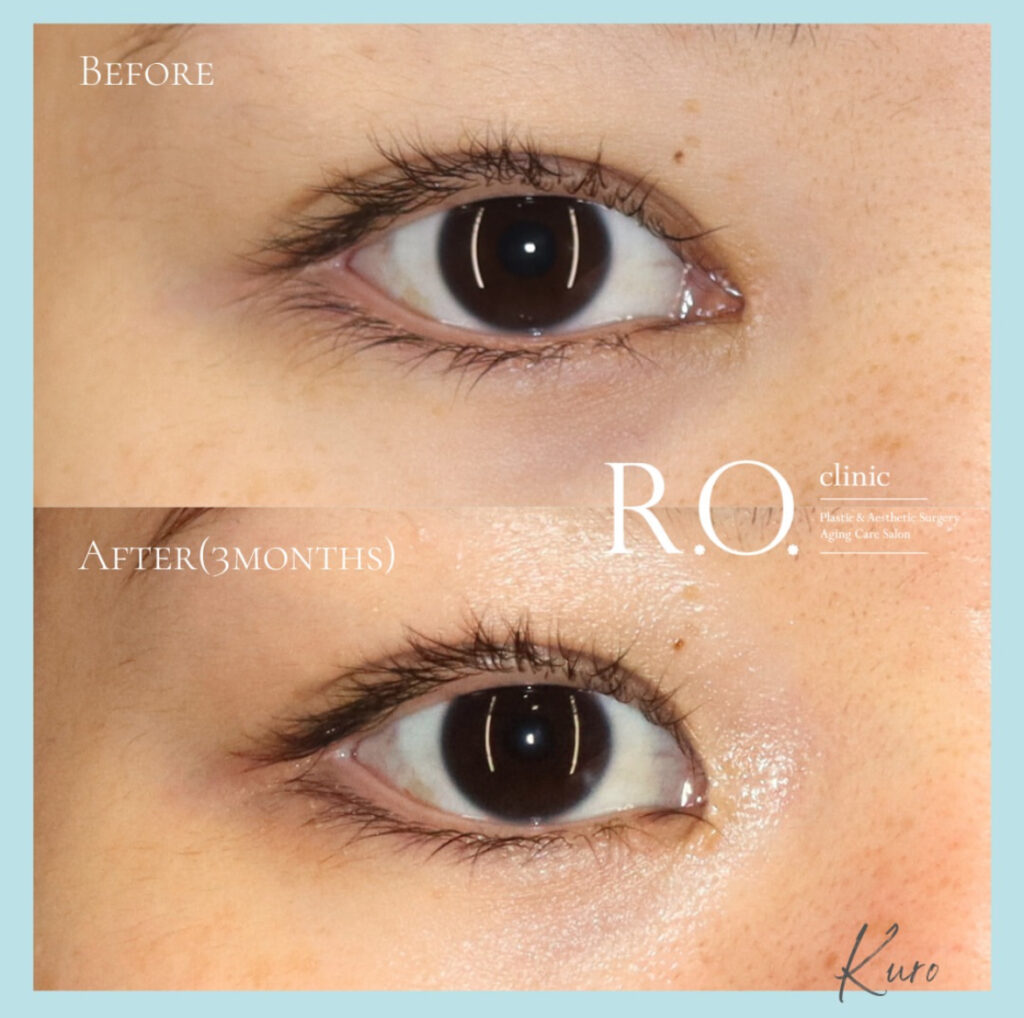
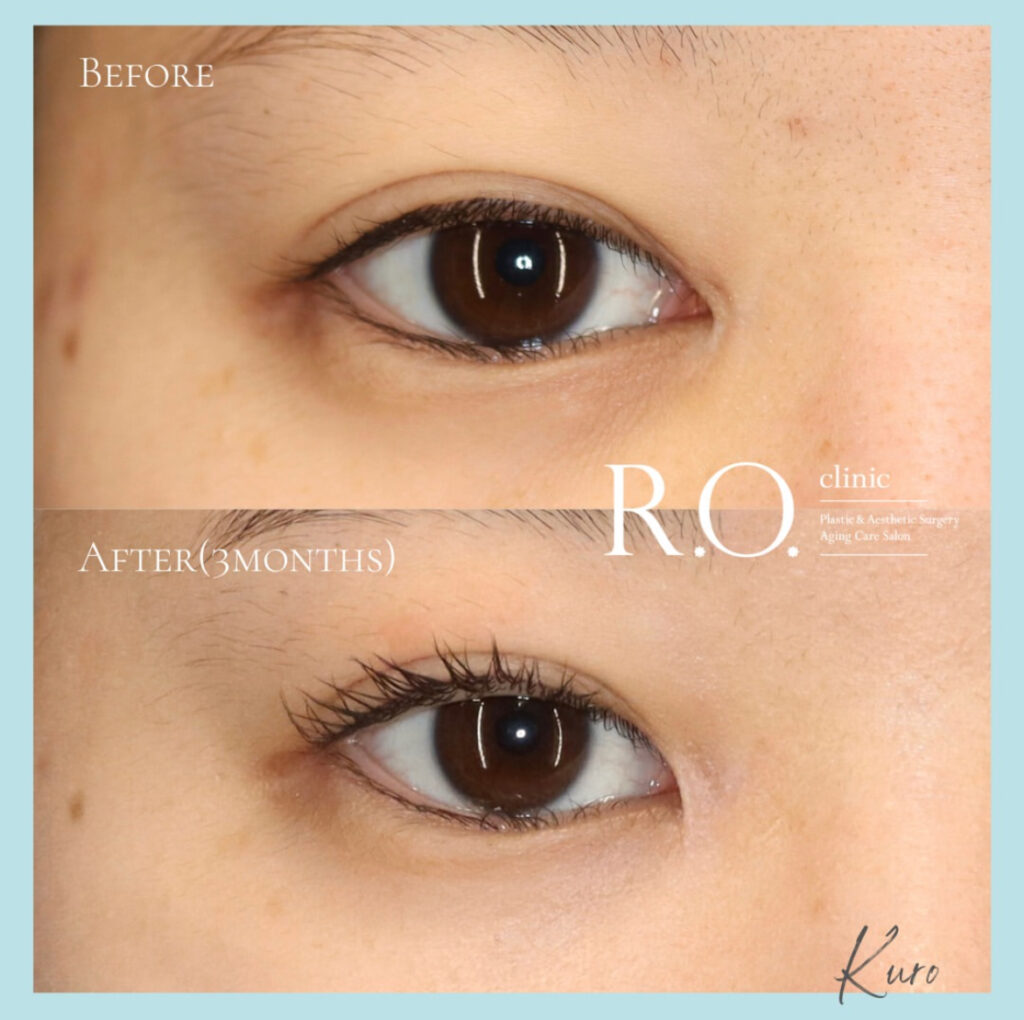
Did I convey the characteristics of the Inverted Z Method of mongolian fold formation?
Assistant Director Daiki Kuroda
Supervisor of this article
vice president (of a hospital, clinic, etc.)
Daiki Kuroda
OHKI KURODA
Share Article