 Doctor's Column
 Staff Blog
 campaign
 News
News





2024.02.09
Other
Can surgery be performed if the eyelids are swollen?

Dr Kuroda
CONTENTS
swelling of the eyelids
I have easily swollen eyelids. If my eyelids are swollen on the day of surgery, can I still have surgery?"
This is a question we sometimes receive from patients considering spring or fall surgery.
Some patients have swollen eyelids at the time of counseling, not on the day of surgery.
There are many causes of eyelid swelling. One example.
Allergies such as hay fever
Atopic dermatitis
Contact dermatitis due to eye pits, etc.
Drug-induced rashes due to ointments, cosmetics, etc.
Unknown causes such as urticaria
Such as.
What is the inconvenience of having swollen eyelids on the day of surgery?
Simulations are less accurate.
Before counseling and surgery, a wire-like rod called a bougie is pressed against the eyelid to simulate the postoperative result. The shape of the double fold is then shared between the patient and the doctor to ensure the finished product. If the simulation is done with swollen eyelids, the double folds will appear wider and puckered compared to when the eyelids are not swollen.
Increased difficulty of surgery
If surgery is performed when the eyelids are edematous, it is difficult to adjust the double width and the degree of engorgement. When edema is strong, the skin becomes thicker and less likely to fold into a double fold. Therefore, even if the double fold is created just right, it may not fold at the double fold line, resulting in an unscheduled double eyelid line (a so-called triple fold) or a shallow double fold.
When the eyelids are edematous, the skin capillaries are dilated and blood components leak into the tissues. Compared to normal conditions, there is more bleeding, making surgical manipulation more difficult, and there is a possibility of severe postoperative internal bleeding.
Measures that can be taken to prevent eyelid swelling on the day of surgery include
Refrain from using eye lids, etc. for about a week before surgery.
Before the surgery, try to avoid fatigue and stress.
Sleep well to keep in good condition.
If you have allergies such as hay fever, take antihistamines.
Avoid scheduling surgery during the season when eyelids are more likely to swell, if scheduling is possible.
These include
Although these measures do not completely prevent swelling, if swelling occurs on the day of the surgery even after all these measures are taken, the surgeon can give up.
If the eyelid becomes swollen on the day of surgery, we will examine the eyelid first. If the swelling is severe, we will consider postponing the surgery, but in many cases, the patient may wish to force the surgery due to scheduling conflicts in preparation for the surgery.
When performing surgery on a swollen eyelid, we will refer to the medical record of the patient at the time of the counseling simulation and design the surgery to take swelling into consideration. We rely on our experience to adjust the width of the double eyelid and the internal process of the incision, so if there are any problems after the downtime has elapsed, we will correct them.
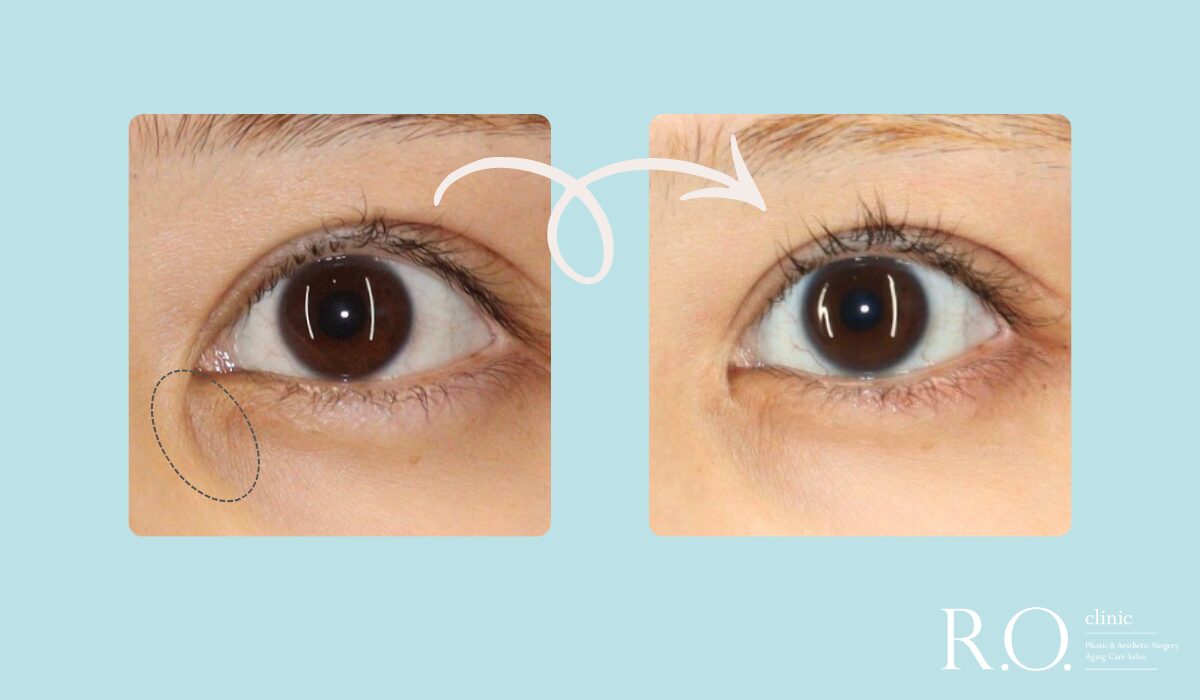
Here is the progress of a monitor patient whose eyelids were swollen on the day of surgery.

It is hard to tell from the picture, but on the day of surgery, my eyelids were more swollen than at the time of counseling due to hay fever.
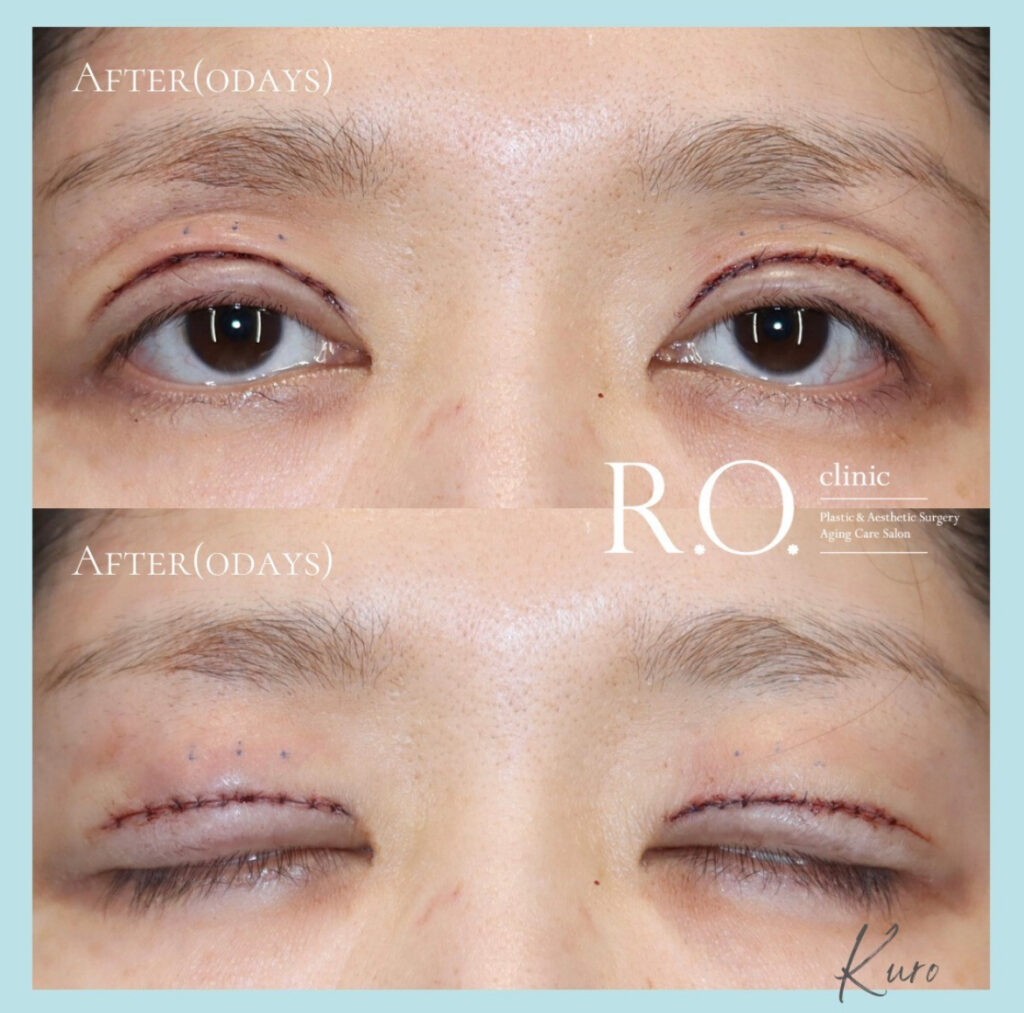
This is the state of the patient immediately after surgery. The edema of the eyelid makes it difficult to fold the skin at the double fold line, and the double fold line is not retracted even though the appropriate internal double fold procedure was performed.

This is the state immediately after the removal of stitches one week after surgery. Compared to immediately after the surgery, the bite at the double fold line has improved, but the effect of swelling remains and the left-right difference in the width of the double fold is worrisome. However, after one month, when the swelling went down with the end of the pollen season, it settled down to a beautiful symmetrical double fold as shown in the first picture.
Even if the eyelid is swollen on the day of surgery, as in this case, it may eventually settle into a good condition, but it is still less certain than surgery performed on an eyelid without swelling.
answer
Thus, in answer to your first question,
I can do the surgery, but I would appreciate it if you could condition my eyelids so they don't swell up."
This is the case.
Assistant Director Daiki Kuroda
Series of Frequently Asked Questions in #Counseling
Supervisor of this article
vice president (of a hospital, clinic, etc.)
Daiki Kuroda
OHKI KURODA
Share Article