 Doctor's Column
 Staff Blog
 campaign
 News
News





2023.10.06
craniotomy
Eyelid incisions are deleterious.

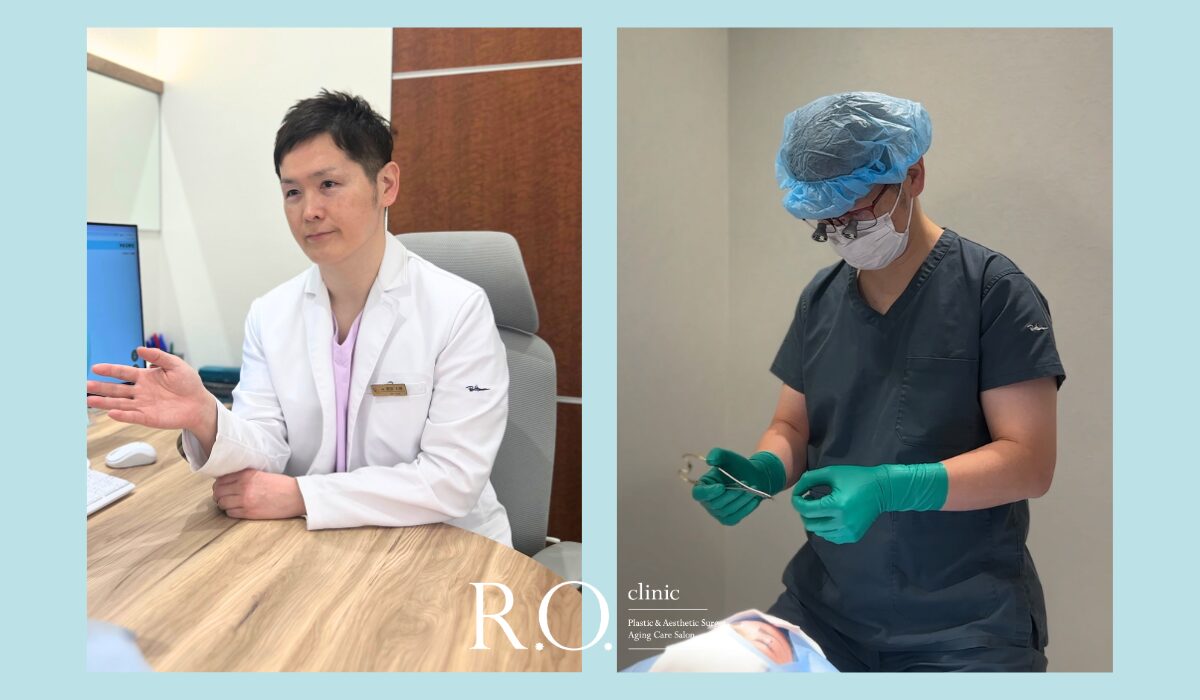
Dr Kuroda
In this issue, we will talk about craniotomy.
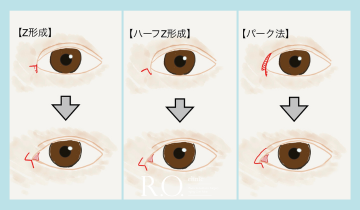
An episiotomy is a surgery to change the shape of the mongolian folds and increase the exposure of the tear ducts (the pink flesh at the top of the eyes).
As for the Mongolian folds. Past Columns for more information.
Since craniotomy is a popular surgery, many people may be considering it.
I was recommended a craniotomy at another clinic. Is it really necessary?" I am often asked "Is it really necessary?
I believe that an eyelid incision is a surgery that if you take it for any reason, you will often regret it.
If you have a firm image of the eyes you want and evidence that an incision is necessary to achieve this, you may consider it.
What is the purpose of the craniotomy?
Let's look at actual case photos by purpose.
CONTENTS
Objective 1: To create a parallel double fold.
I want to have a parallel double fold. This is the most common reason for people considering an eyelid incision. The first thing to consider is, do I really need an incision to create a parallel double fold? The first thing to consider is whether a craniotomy is really necessary to achieve a parallel double fold. In some cases, if the Mongolian folds are present but small or weak, a parallel double fold can be created without an incision. Some cosmetic surgeons will reflexively recommend a craniotomy when you say, "I want to have a parallel double fold," so be careful.
If the skin does not fold into a parallel double fold in the simulation, or if it folds into a parallel double fold but the extended line of the mongolian folds is mixed and prominent, an eyelid incision can be effective.
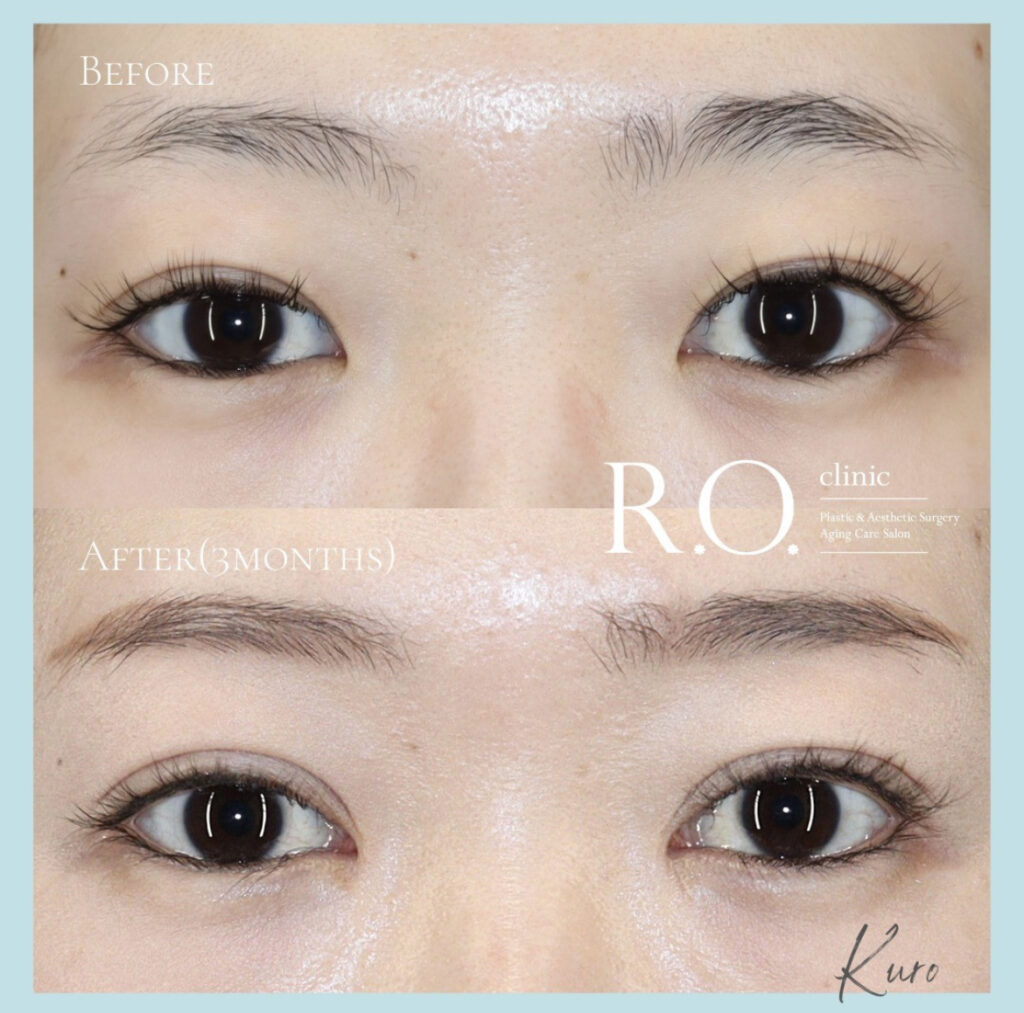
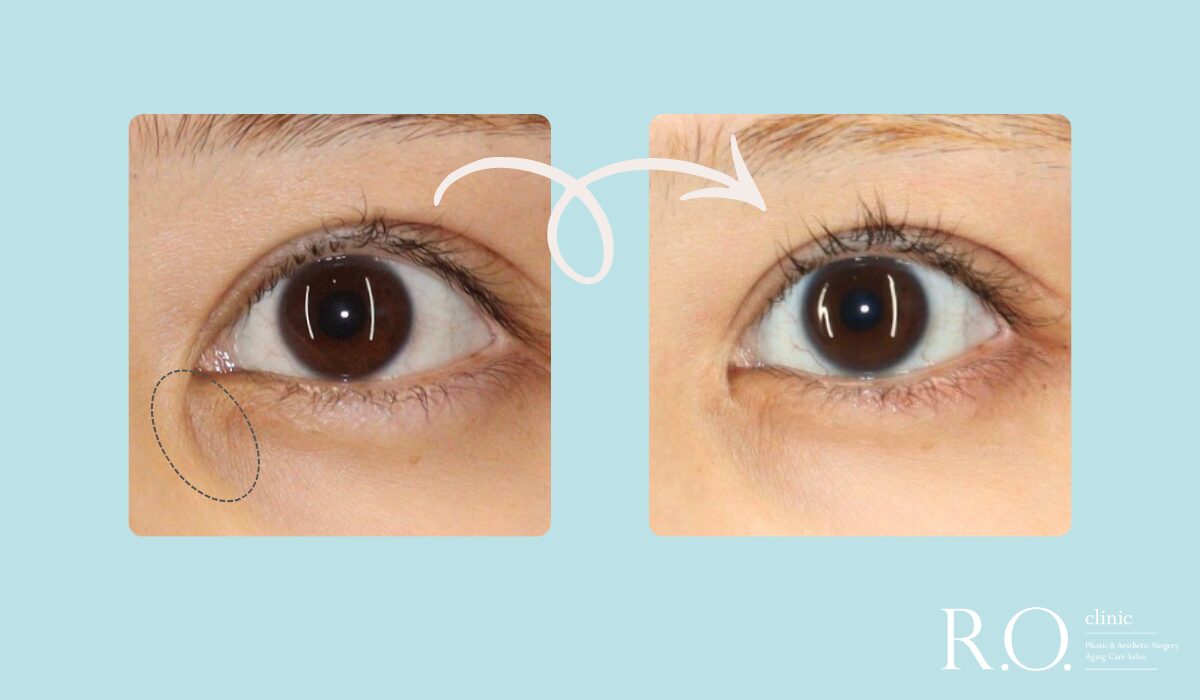
In this patient's case, we performed a craniotomy and incisional double-layered eyelids because she had undergone multiple implantation procedures at other clinics but just could not achieve a parallel double-layered eyelid.
Objective 2: To improve wide eye spacing.
The average distance between the eyes of Japanese women is said to be 35 mm. However, 35mm is only a guide, so it is dangerous to judge how wide or narrow the eyes are based on the number alone. There are people with eye spacing close to 40mm, but with small Mongolian folds and well exposed tear ducts. In such cases, we may propose to improve the impression of separated eyes by raising the bridge of the nose instead of making a craniotomy.
People whose mongolian folds curl toward the outer corner of the eye, making the eyes appear smaller, are a good indication to benefit from an incision. For those with curled Mongolian folds, the visual effect is to make the eyes appear smaller and more distant than they actually are.

This patient has a mongolian fold curled toward the outer corner of the eye. The incision was made sparingly, and the exposed tear ducts changed by about 1mm. However, the width of the eyes seems to have widened more than the numbers suggest, and the impression of detached eyes has been improved.
Objective 3: To change the cramped look of the eye area.
In cases where the eye corner looks tight due to mongolian folds, a craniotomy can dramatically refresh the impression.

This patient has a 38mm inner eye angle distance, and an incision was made at the inner corner of the eye to increase the exposure of the tear duct by about 1mm. Although no modifications were made to the double fold, the double fold line naturally extended closer to the inner corner of the eye, improving the tight impression of the inner corner of the eye.

This patient has a 37 mm inter-ocular angle distance and an even more modest incision than in the previous case. The double fold has not been modified in any way. The change is probably less than 1mm. Even with this small change, the eyes will look more attractive.
summary
An incision is a surgery that can change the impression of the eye, for better or for worse. If the right indications are chosen, the eyes can become very attractive.
On the other hand, it is a fact that not a few patients suffer from changes in impression after craniotomy. We are a clinic that provides many consultations for revision after craniotomy, and we have seen many such patients.
The adaptation of the craniotomy should be considered based on a comprehensive judgment of not only the shape of the Mongolian folds, but also the shape of the hidden tear ducts, the height of the nasal bridge, and the overall atmosphere of the person's face.
Even when indications are present, it is important to keep in mind that "a modest incision is just about right" for the craniotomy.
An episiotomy is a deleterious procedure.
It can be both medicine and poison.
Assistant Director Daiki Kuroda
# Dr. K's In-Depth Commentary Series
Supervisor of this article
vice president (of a hospital, clinic, etc.)
Daiki Kuroda
OHKI KURODA
Share Article