 Doctor's Column
 Staff Blog
 campaign
 News
News





2024.05.17
craniotomy
Variations of the craniotomy (2)

Dr Kuroda
This is a continuation of my previous column.
I was explaining my usual method of eye incision.
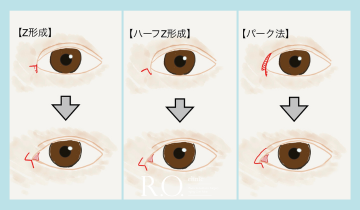
In this article, we will explain how not to use Z formation.
CONTENTS
(4) Redrape method
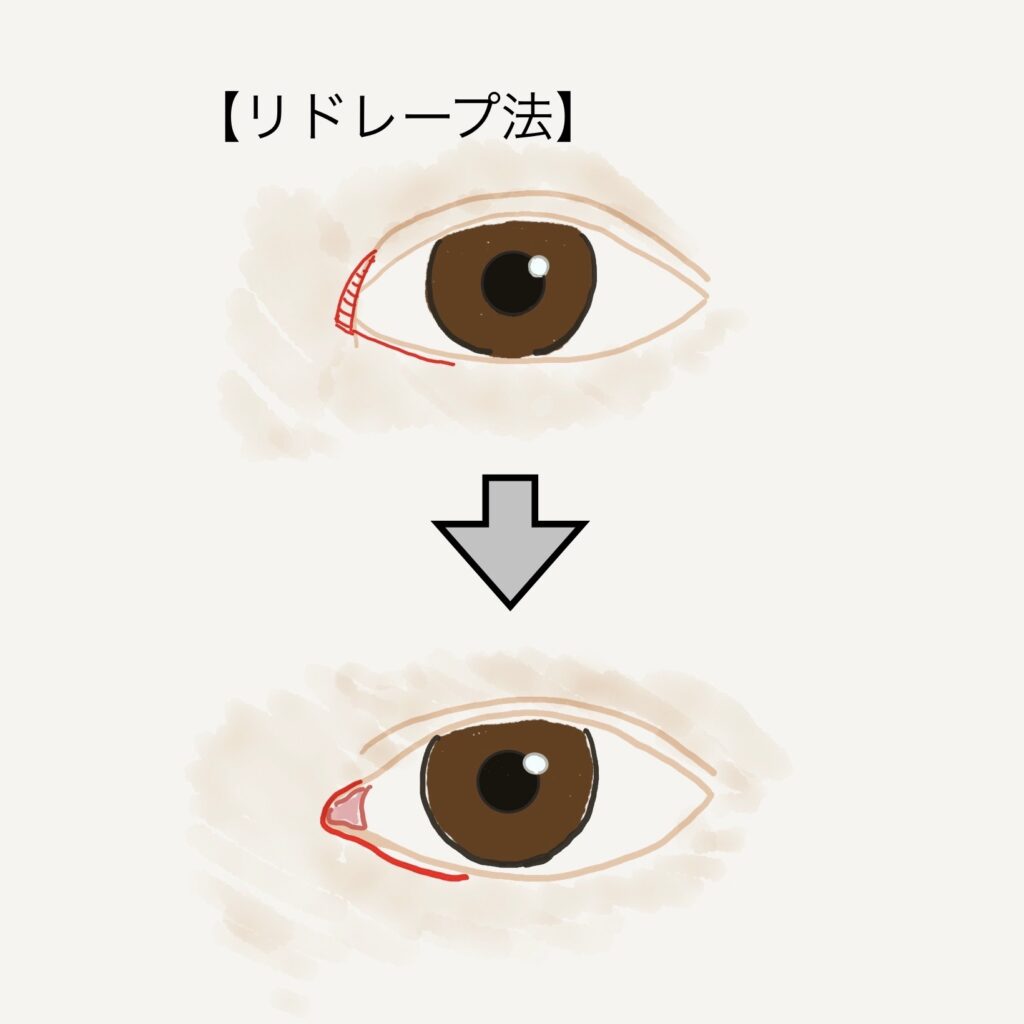
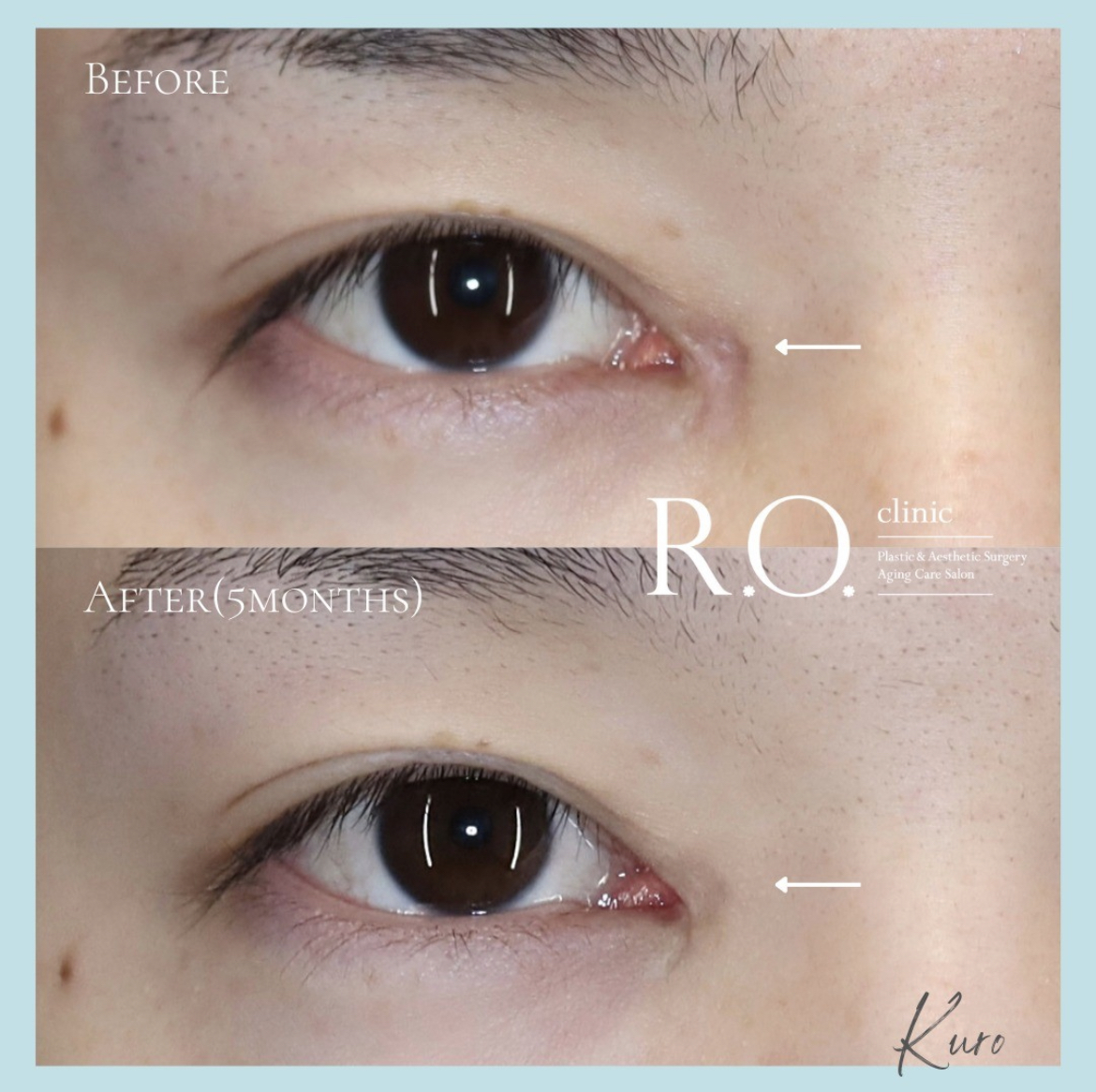
This method is often performed by Korean cosmetic surgeons and is sometimes referred to as the Korean style blepharoplasty. The skin including the ridge of the mongolian folds is excised and sutured. Since the inner and outer lengths of the skin to be removed differ, the incision is extended along the lower eyelid and sutured while adjusting for the difference in length. The greatest advantage of this method is that the sutures at the eye socket hardly show on the surface, so the scar is inconspicuous.
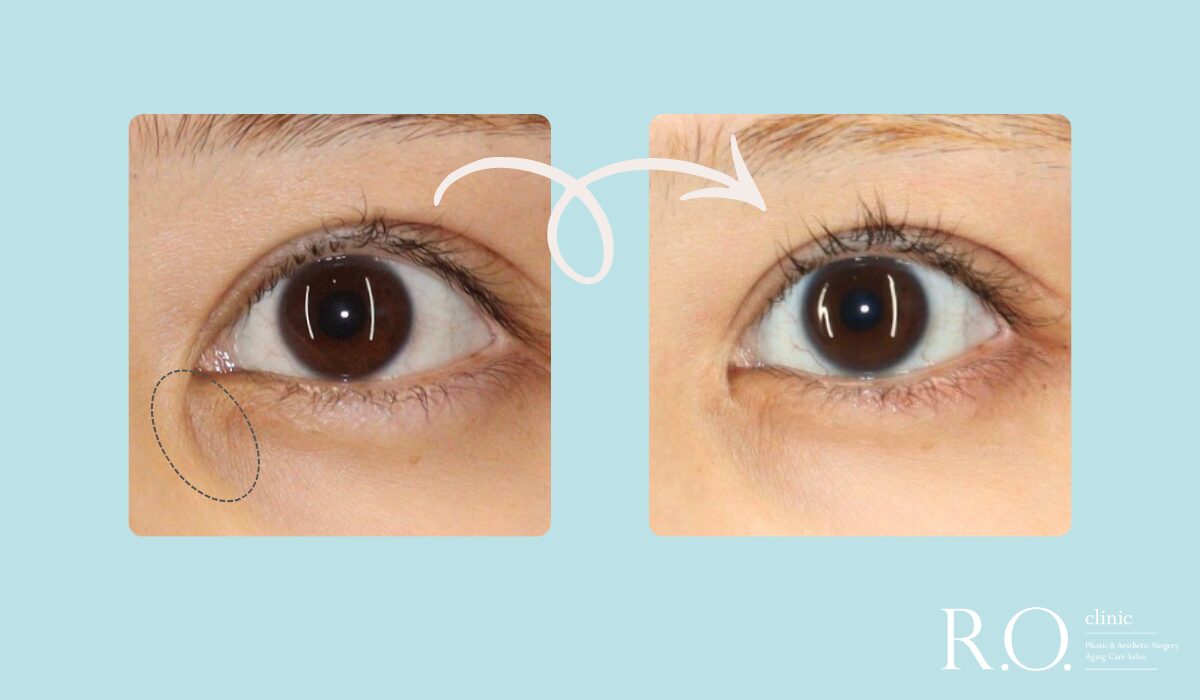
Another feature of the redrape technique is the ability to release the line of the Mongolian folds extending into the lower eyelid. This is an advantage of the redrape technique because in people with Mongolian folds that extend long into the lower eyelid, a Z-plasty may result in a noticeable scar on the lower eyelid. On the other hand, there are some disadvantages: the scar along the ridge of the eye lid tends to contract postoperatively, making the tip of the lid slightly rounded, and it does not always result in a parallel or mixed double-exposed eyelid.
in my case
I don't want the scar to be noticeable anyway.
The amount of change is good there.
I don't wish to have a sharp eye roll.
I want to improve the lines extending to the lower eyelid of the mongolian folds.
This is the way to do it in cases such as
(5) W formation
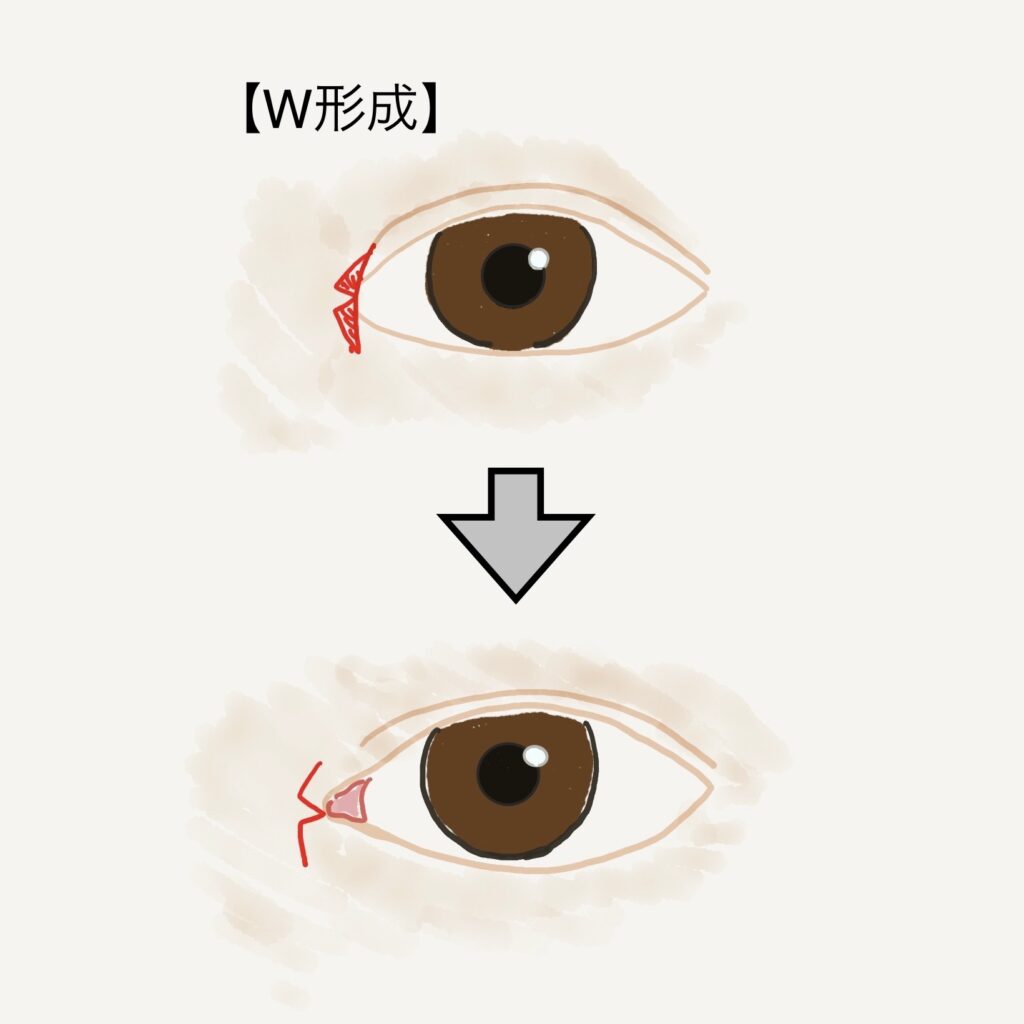
This method weakens the Mongolian folds while cutting the skin in a zigzag pattern against the skin of the Mongolian folds. The advantages of this method are that the scar is not a straight line, so postoperative contracture is less likely to occur and there is less recurrence, and even in cases where the Mongolian folds are very large, it can be firmly removed.
On the other hand, there are some disadvantages: the eye corner is not sharp, the scar is noticeable if the surgical technique is not carefully performed, and if the design is too small, the scar will eventually be almost straight, which may cause retroversion.
In my case, I would not perform a W formation as a first incision method. I consider it a useful method in the treatment of congenital deformities of the eye area rather than for cosmetic purposes.
However, in certain cases, the W formation comes in handy. That is the case of the so-called "upper eye incision.
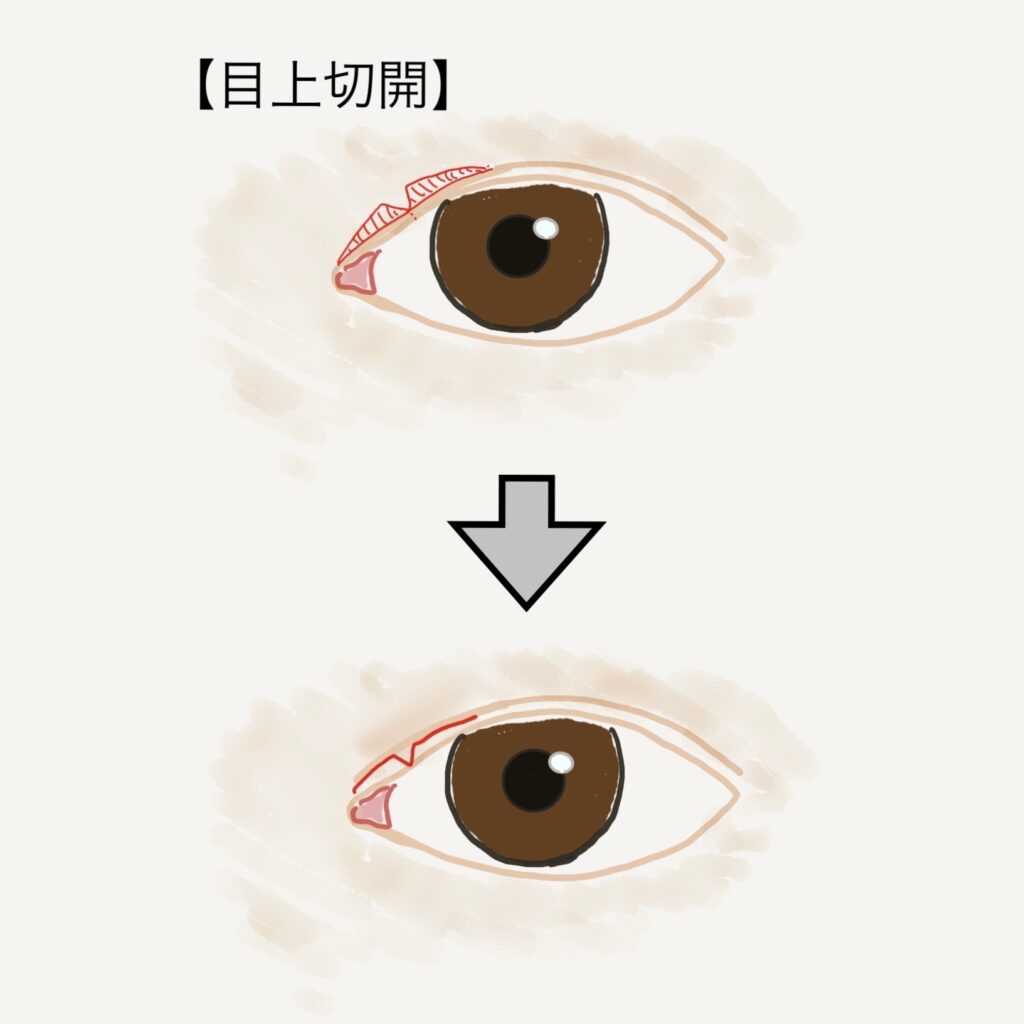
I don't want to change the way the tear ducts look.
I don't want to have close eye-to-eye distance, but I want to have parallel or mixed type of double-exposed eyes.
In some cases, such as the case of the Z-plasty, the W-plasty is performed not on the inner corner of the eye as in the Uchida procedure, but on the inner corner of the upper eyelid to widen the double fold on the inner corner of the eye.
(6) Crescent method
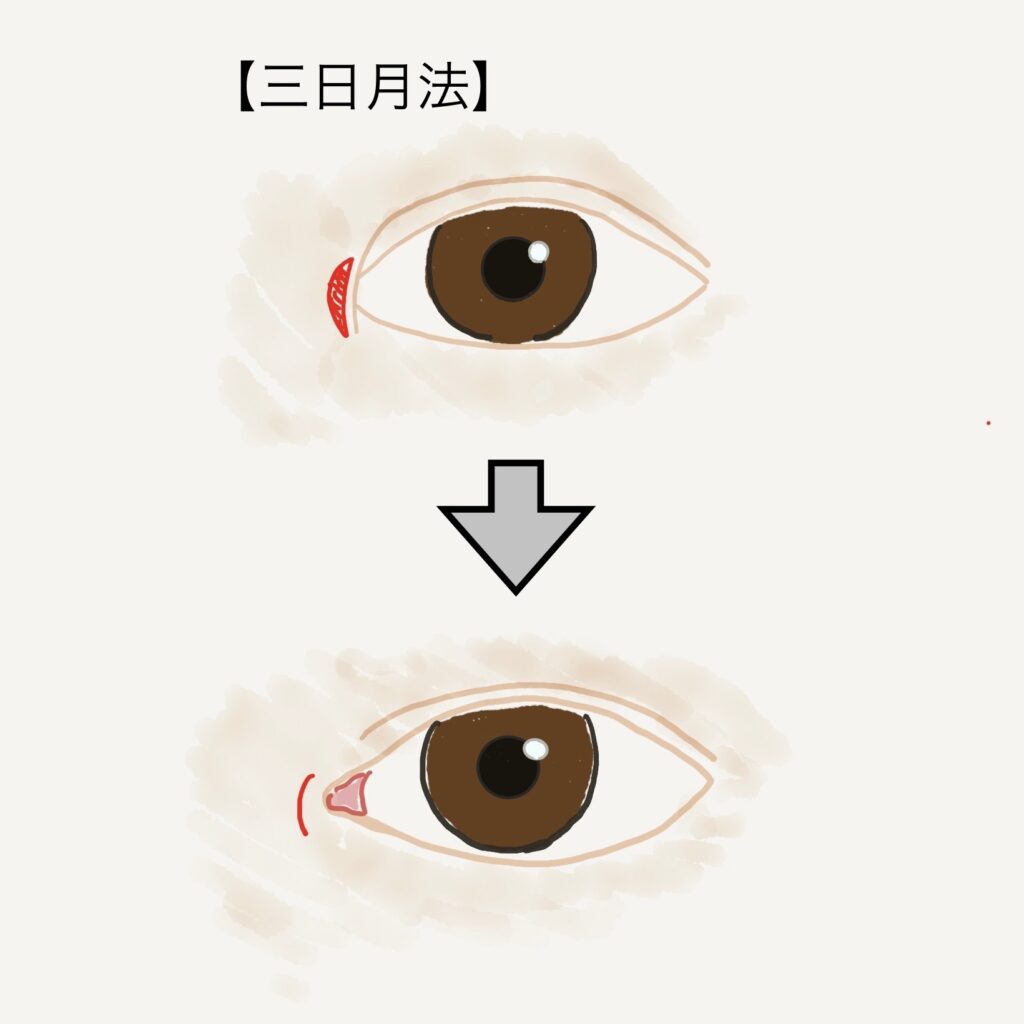
This is a very simple surgery in which the skin of the mongolian folds is removed and sutured. The advantage is that the technique is simple, but there are disadvantages: the scar is a straight line, so it will retract due to contraction; it cannot be made into a sharp eye socket; and poor subcutaneous treatment will result in a prominent scar with a concave appearance.
This method used to be performed by certain major cosmetic surgeons, but is rarely done nowadays for quirks. I have never performed it for the first incision of the craniotomy.
The crescent method does not have a good image, but it is rarely used in limited cases. It is
Cases in which an incision has already been made at another hospital and the scar is wide and conspicuous
Cases in which the exposure of the lacrimal folds needs to be slightly widened after mongolian folds
It is.
The case for scar revision is indicated on the condition that the scar should be clean even if the exposure of the lacrimal duct is slightly increased from the current condition. The scar can be made less noticeable by peeling off the subcutis and redoing the orbicularis oculus procedure and carefully suturing the wound.
summary
I use the six methods I have described as appropriate for different cases.
Every teacher has a method that he or she is good at and used to. I did not start out using six different methods. When I first became a cosmetic surgeon, I only used the half-Z method, but gradually there were cases that could not be handled by that method alone, so I gradually increased the number of methods I used.
In a consultation for a craniotomy
How much exposure of the lacrimal folds do you want?
Do you want a sharply shaped eye lid? Or not?
Do you want a parallel or mixed type?
Scar problems
Distance between eyes
Original size of mongolian folds
We decide which method to use, taking into consideration a variety of cases, such as
I hope you will refer to my previous column on craniotomy from a different perspective than this one.
・Eyelid incisions are deleterious.
・Scars from craniotomy
Assistant Director Daiki Kuroda
#Dr. K's In-Depth Commentary Series
Supervisor of this article
vice president (of a hospital, clinic, etc.)
Daiki Kuroda
OHKI KURODA
Share Article