 Doctor's Column
 Staff Blog
 campaign
 News
News





2024.03.08
auricular cartilage graft
rhinoplasty
hump osteotomy
Nose counseling
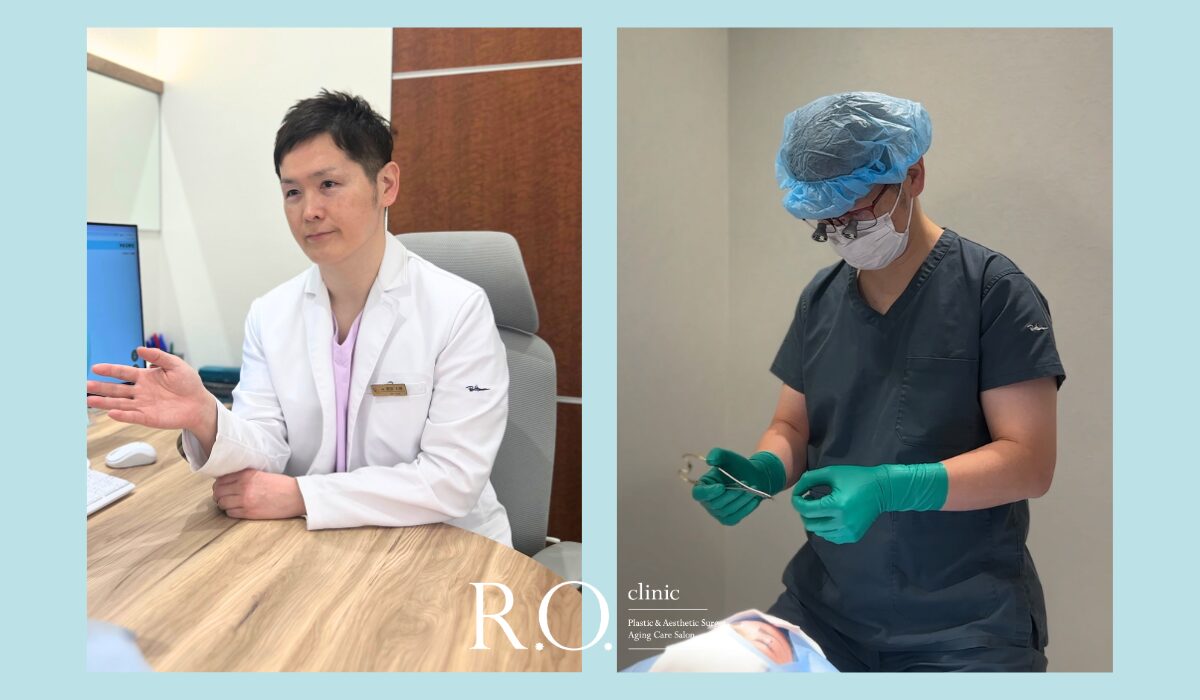
Dr Kuroda
Although our clinic has an image of performing many eye surgeries, we have recently seen an increase in nose consultations, so this topic is related to nose counseling.
CONTENTS
Nose counseling
During the nose consultation, the patient
I would like to have an auricular cartilage graft to raise the tip of my nose."
I want to make the tip of my nose look thinner with a nasal tip reduction."
I don't want to do a septum extension, but I do want the tip of my nose to be as beautiful as it can be."
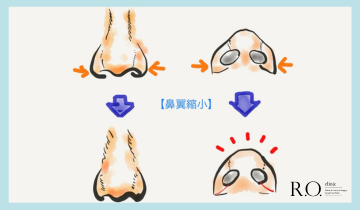
I have a wide nose and would like to have a nasal wing reduction."
Please let us know what you would like to do, such as
However, it is not uncommon in nasal counseling for the patient's desired surgery to not match what the physician believes is necessary. The following is an explanation of what is checked during a nose counseling session to determine the type of surgery needed.
Checklist and surgical decision making
Properties of the skin of the nose
The first thing I check is the nature of the skin on the nose.
Thick or thin skin?
Hard or soft?
...whether the sebaceous glands are developed or not.
Check for such things as
We believe that the nature of the skin of the nose is the most important factor in predicting surgical results. In reality, the skin is not only the skin, but also the underlying fat layer and fibromuscular layer, but we refer to them as "skin" for convenience.
People with thin and soft skin can easily reflect the shape of the cartilage that serves as the frame, making it easier to make changes. On the other hand, there is a severe aspect that even the slightest distortion or unevenness of the frame cannot be hidden.
For those with thick, hard skin, the skin's ability to retain its original shape is stronger, making it more difficult to make changes and more prone to regression.
The skin may be thick but soft, thin but hard due to scarring, etc., in addition to the above two patterns.
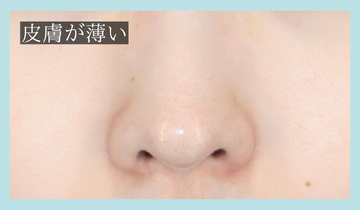
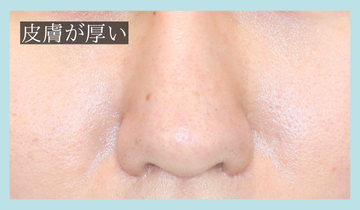
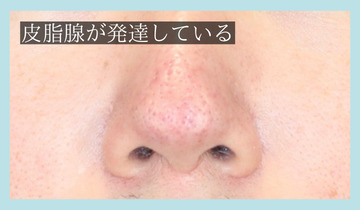
Characteristics of the cartilage at the tip of the nose
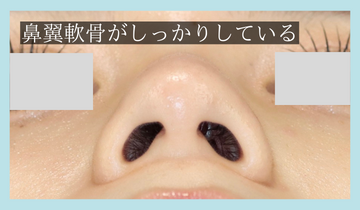
The next check is the condition of the cartilage at the tip of the nose. Specifically, we check the size, firmness, and position of the nasal wing cartilage and nasal septum cartilage at the tip of the nose.
The more robust the cartilage of the nasal tip, the easier it is to perform the operation using the nasal cartilage. On the other hand, if the cartilage at the tip of the nose is small and weak, it is necessary to use cartilage from other parts of the body, as manipulation of the nasal cartilage alone cannot produce changes.
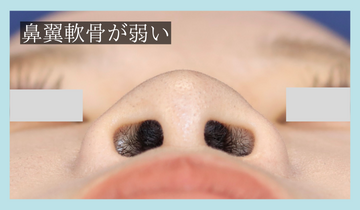
Left-right difference
Perfectly symmetrical people are in the minority, and there is usually some left-right difference. Recognizing that left-right difference is important for surgical planning.
While mentally sorting through this information obtained from the examination, we determine if the patient's desired image of the nose is feasible.
Nose surgery is
Formation of cartilage and grafts in the frame area
Cover the frame with less tension skin
It is essential that the two points be done without difficulty.
Earlier, I mentioned that the nature of the nasal skin is the most important factor in predicting the outcome. The skin of the nose will try to revert to its original state for about 6 months after surgery. The skin itself tries to shorten and lower itself. Therefore, the key is to create a frame that can withstand this force in the long term.
Whether the necessary surgery for this purpose is a nasal apex augmentation, auricular cartilage graft, or nasal septum extension depends on the patient's skin and cartilage characteristics and the desired nasal shape.
Nose counseling takes time.
For this reason, even if a patient says, "I want to have a surgery with a certain technique," we may propose a different technique from what the patient wants.
Patients who want nose surgery often say, "I want it to look natural," or "I don't want it to look like a pouty nose." However, the simpler the surgery is, the less "natural" it will look. It is true that the simpler the surgery is, the less change there is, but that does not necessarily mean that it looks natural.
Since the nose is located in the center of the face, adjusting the nose may cause imbalance with the forehead, cheeks, and chin. In such cases, even though you have come for a nose consultation, we may make suggestions for your forehead, cheeks, and chin as well.
The final decision will then be made on the surgical technique to be performed, taking the patient's budget and other factors into consideration.
The counseling includes a hearing to understand the patient's wishes, evaluation of the condition of the nose, sharing the expected changes using a 3D simulator, explaining the surgical procedure and downtime, and answering questions. Therefore, nose consultation is a very time-consuming process.
However, depending on the availability of appointments, we may only be able to provide a brief explanation. If you wish to have a nose consultation, we would appreciate it if you could schedule it separately from the other parts of the body so that we can have a thorough discussion.
Assistant Director Daiki Kuroda
# Cosmetic Surgery Yomoyamatari Series
See details of the treatment related to ▼ column here.

Supervisor of this article
vice president (of a hospital, clinic, etc.)
Daiki Kuroda
OHKI KURODA
Share Article