 Doctor's Column
 Staff Blog
 campaign
 News
News





2025.02.19
ootocoel formation
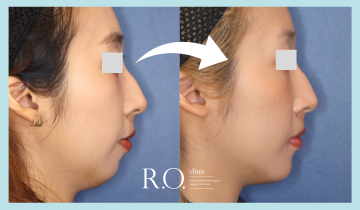
Hydroxyapatite artificial bone grafting to the molars (chin tip)

Dr Ro
Hydroxyapatite artificial bone grafting to the molars (chin tip): surgical process and advantages and disadvantages are explained.
CONTENTS
Introduction.
The shape of the jaw is one of the factors that greatly affects the overall impression of the face. In particular, a small or receding jawbone often gives the impression of a round or square face, even if the face is small, and it often looks unrefined.
One solution to such problems is artificial bone grafting using hydroxyapatite (HA). This surgery is characterized by its ability to achieve a natural-looking result while reshaping the mite area. This article will provide an overview of hydroxyapatite artificial bone grafting to the mastoid, the surgical process, and the advantages and disadvantages in detail.
What is hydroxyapatite?
Hydroxyapatite (HA)** is an artificial bone material composed mainly of calcium phosphate, a major component of teeth and bones. It has extremely high biocompatibility and naturally bonds with human bones.
Characteristics of hydroxyapatite artificial bone
✅ High biocompatibility: less likely to cause allergies or rejection
✅ Easier to bond with bone: integrates with own bone over time
✅ Natural finish: Less foreign body feel such as silicone and more natural to the touch
Cases requiring artificial bone grafting to the miter
Hydroxyapatite artificial bone grafting to the molars (chin tips) is often considered in the following cases
- Small or receding chin tip
- I want to adjust the E-line of the profile.
- A small chin makes the entire face appear rounder. - I want to sharpen my face line.
- To tighten the contours by adding volume to the chin - As an alternative to silicone implants
- Concerned about foreign body sensation of silicone implants
- Want to achieve more natural-looking results in the long term
Surgical Procedure
(1) Preoperative counseling and examination
- A CT scan is taken to confirm the bone volume and shape of the miter.
From there, a 3D bone model is created.
- Based on the patient's wishes, we will design how much volume to add.
(2) Anesthesia
- Local anesthesia or intravenous sedation is used to reduce pain during surgery.
(iii) Oral approach
- Usually, a small incision is made in the oral cavity (inside the lower lip) to expose the mussel bone.
- Since no scar is left on the outside, the appearance is unaffected.
(4) Hydroxyapatite artificial bone grafting
- An artificial bone made of hydroxyapatite is placed at the tip of the chin and molded into a natural shape.
- It may be used in conjunction with autogenous bone if necessary.
- The artificial bone is fixed with absorbable threads.
5) Suture and recovery
- The incision is sutured and the patient is placed in a fixation period for several days.
- Swelling and internal bleeding often settle down in 1-2 weeks.
- It takes approximately 3-6 months for the bone to fully settle.
Advantages and disadvantages of hydroxyapatite artificial bone grafting
Advantages
✅ Natural finish → Fusion with own bone, less foreign body
✅ Long-term stability → Fits better with time because it bonds to bone
✅ Low risk of infection → No autogenous bone harvesting, so only one surgical site is needed
demerit
Takes time to settle → several months are needed to bond with the bone
Higher surgical costs → more costly than silicone implants
Postoperative Precautions
To maintain a good postoperative course, be aware of the following points
✔ 1 week after surgery
- Peak swelling and internal bleeding
- Avoid strenuous exercise and stimulants (spicy food, hot drinks)
- Use gargles to keep mouth clean
✔ 1 month after surgery
- Swelling almost gone, natural line
- Avoid overloading the jaw as the bones begin to gradually unite
✔ 3-6 months after surgery
- Stabilizes and fully establishes bone and artificial bone
- It feels more natural to the touch and looks more familiar.
summary
Hydroxyapatite artificial bone grafting to the ottogai (chin tip) is a procedure that balances the jaw and creates a sharper facial line. The main attraction of this procedure is that, unlike silicone implants, it bonds with the bone to create a natural look.
I have a small chin, and I want to improve my face line."If you think this is a good idea, why not consult with us and consider a treatment that is right for you?
Supervisor of this article
Hidehiko Lu
Share Article