
 Doctor's Column
 Staff Blog
 campaign
 News
News





Are you concerned that your jaw looks too long, that your chin appears too prominent, or that you’d like to refine your facial contours based on your bone structure?
A mandibular mentoplasty is a surgical procedure that adjusts the length, protrusion, and width of the chin by removing and repositioning the bone at the tip of the jaw. Because it directly addresses the bone structure itself, it is also suitable for cases where significant reshaping of the chin is desired.
By adjusting the amount of bone removed and the direction of movement—taking into account not only the tip of the chin but also how it connects with the entire jawline—we aim to achieve a natural contour that is in harmony with the face as a whole.
[R.O. Clinic] Case Study: Mandibular Mentoplasty
At R.O. Clinic, we examine the bone structure of the chin and the position of the nerves, and determine the most appropriate osteotomy or bone shaving technique based on each patient’s individual condition.
Here, we present a case study in which we adjusted the length and protrusion of the jaw while taking into account the overall balance of the facial contours.
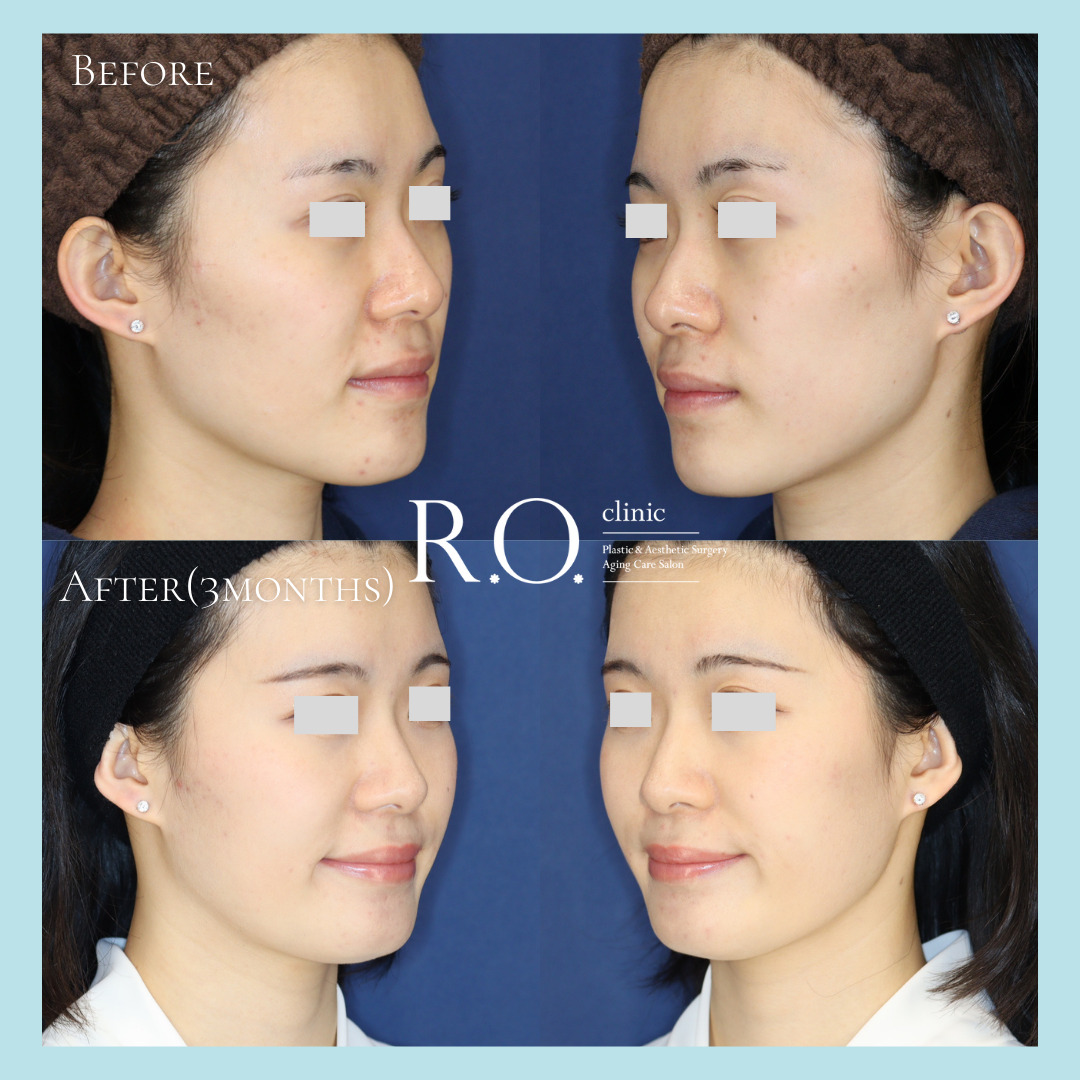
- Treatment Name
- mandibular mussel osteotomy
- Attending Physician
- Hidehiko Lu
- Costs
- 1,100,000 yen (including tax)
- Side Effects and Risks
- Anesthesia: Intravenous anesthesia
Risks: Swelling, bruising, difficulty opening the mouth, numbness in the cheeks or lower jaw, slight asymmetry - Downtime
- About 1 to 2 weeks (depending on the individual)
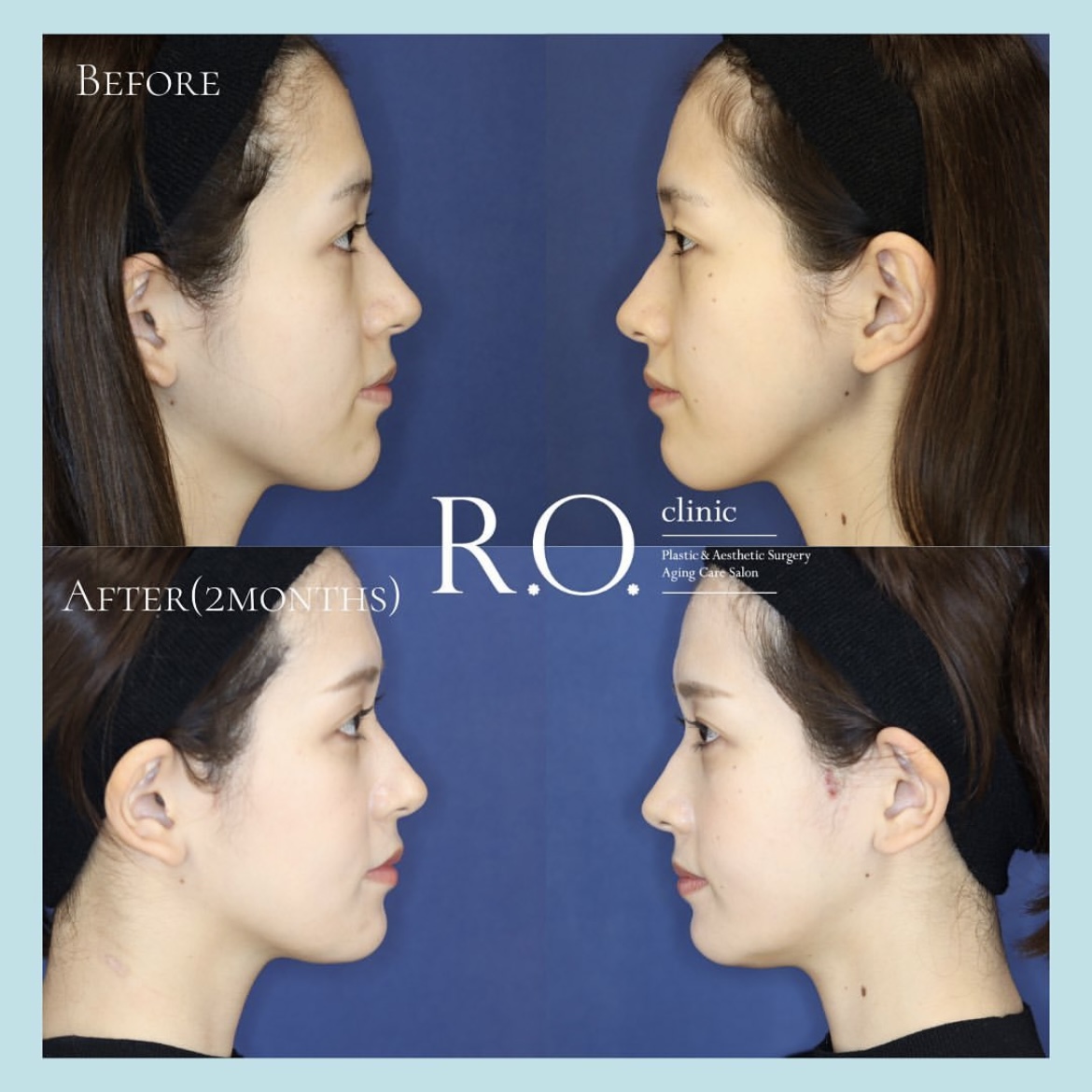
- Treatment Name
- Mandibular Chin Osteotomy + Zygomatic Osteotomy + Double Eyelid Surgery
- Attending Physician
- Costs
- Mandibular Mentoplasty: 1,100,000 yen (tax included)
Cheekbone Osteotomy: 1,210,000 yen (tax included)
Double Eyelid Surgery: 330,000 yen (tax included) - Side Effects and Risks
- Anesthesia: Intravenous anesthesia
Risks: Swelling, bruising, difficulty opening the mouth, numbness in the cheeks or lower jaw, slight asymmetry - Downtime
- About 1 to 2 weeks (depending on the individual)
Do you have any of these concerns regarding your jaw?
- ✓ Makes the jaw look longer
- ✓ I want to correct my protruding jaw
- ✓ I'm concerned about the shape and size of my chin
- ✓ I want to define my jawline
- ✓ I want to improve my facial contours starting with my bone structure
These concerns may be improved through a mandibular mentoplasty.
In a mandibular mentoplasty, the bone at the tip of the jaw is removed and repositioned to adjust its length, protrusion, and width, thereby improving the overall balance of the jawline.
However, the extent to which bones can be adjusted varies depending on the position of the nerves and the skeletal structure. To achieve the best possible results, it is important to have your skeletal structure examined in detail—for example, through a CT scan—and receive a diagnosis before proceeding.
Why R.O. Clinic's Mandibular Mentoplasty Is the Top Choice

In mandibular mentoplasty, it is important to plan the procedure based on a detailed understanding not only of the shape of the chin but also of the position of the nerves and the underlying bone structure.
At R.O. Clinic, we use CT scans, 3D bone models, and 3D simulations to develop treatment plans that take into account both the patient’s skeletal structure and their preferences.
- ★Preoperative Diagnosis Using CT and 3D Bone Models
- ★Custom Designs
- ★Sharing Visualizations Through 3D Simulations
- ★Comprehensive After-Sales Support
Precise Preoperative Diagnosis Using CT Scans and 3D Bone Models
Because nerves responsible for sensation run through the lower jaw, it is important to carefully examine the location of these nerves and the bony structure before the procedure to ensure safety.
At R.O. Clinic, we create a 3D bone model for each patient based on CT scans and carefully determine the location of the bone cut and the amount of bone displacement while verifying the position of nerves and the shape of the bone.
Custom designs that take the entire jawline into account
To achieve a natural-looking contour, it is important to consider the balance of the entire jawline—from the jawbone to the tip of the chin—rather than just the tip of the chin itself.
At R.O. Clinic, we design treatments with careful consideration given to the connections between the areas where osteotomies are performed. We assess the skeletal structure from both the front and side views to achieve a facial contour that harmonizes with each individual’s face.
Sharing Visualizations of the Final Product Using 3D Simulation
The postoperative appearance varies significantly depending on the location of the osteotomy and the extent of bone movement.
At R.O. Clinic, we use the 3D simulation software “Vectra” to discuss treatment designs while sharing a visual representation of the expected results. By aligning our expectations before the procedure, we can propose a treatment plan that meets your needs.
A comprehensive aftercare system that provides peace of mind through the postoperative period
Following a mandibular mentoplasty, patients may experience severe swelling, puffiness, and numbness in the lips and jaw after surgery.
At R.O. Clinic, we begin monitoring your progress the day after surgery, carefully examining your incisions, swelling, and the condition of your chin. We have established a system that makes it easy for you to discuss any concerns or symptoms, and we provide ongoing support until your results have fully settled.
R.O. Clinic's Mandibular Mentoplasty
A mandibular mentoplasty is a procedure that adjusts the length, projection, and width of the chin by removing and repositioning the bone at the tip of the jaw. By repositioning the bone as needed and securing it with a plate, the procedure aims to achieve the ideal facial contour.
At R.O. Clinic, we aim to create a natural and beautiful facial contour by taking into account the balance not only of the tip of the chin but also of the entire jawline extending from the jawbone, and by smoothing out any visible edges or unevenness resulting from the osteotomy.
Expected Benefits
The following benefits can be expected from a mandibular mentoplasty.
- Correcting a Long Jaw
- Correcting the Appearance of a Protruding Jaw
- Sculpting the Jawline
- Can help make your face look smaller
- Balancing the Overall Proportions of the Face
By adjusting the length, projection, and width of the chin, you can expect to achieve a more defined jawline from both the front and side views. In addition, the sleeker contours can make your face appear smaller.
Cases Suitable for Mandibular Mentoplasty
A mandibular mentoplasty is suitable for cases where the skeletal structure itself needs to be adjusted; it is a procedure recommended for those who wish to alter their skeletal structure—such as those with a long jaw, a protruding chin, or a desire to refine the tip of the chin.
At R.O. Clinic, we perform a variety of surgical procedures—including bone shaving, osteotomy, bone removal, anterior displacement, and T-shaped osteotomy—tailored to the patient’s skeletal structure and desired results.
On the other hand, for concerns such as a small or receding chin, chin augmentation using silicone implants or artificial bone may be appropriate in some cases. Therefore, it is not always the case that “a small chin = osteotomy” or “a long chin = osteotomy.”
At R.O. Clinic, we use CT scans and 3D bone models to assess your current skeletal structure and recommend treatment methods tailored to each individual.
>> Learn More About Chin Augmentation
Risks and Side Effects
The following are the main risks and side effects associated with mandibular mentoplasty:
- Infection
- Hematoma
- Intraoperative Bleeding
- Sagging and Excess Skin
- Numbness in the Lips and Jaw
- Asymmetry around the mouth
- Difference between the left and right sides
- The possibility that you may not fully experience the changes you hoped for
Numbness in the lips or jaw may occur after surgery, but in most cases, it improves over time. However, in rare cases, these symptoms may persist for an extended period. Additionally, depending on the location of the nerves and the condition of the jawbone, there are limits to what can be adjusted; as a result, you may not achieve the desired results, and there is a possibility of skin sagging or asymmetry.
At R.O. Clinic, we use preoperative CT scans and 3D bone models to confirm the position of nerves and the skeletal structure. We carefully explain not only the expected outcomes but also the risks and limitations of the procedure, and develop a treatment plan tailored to each individual.
Who Should Consider a Mandibular Mentoplasty?
If you have any of the following concerns, a mandibular mentoplasty may be right for you.
- For those who are self-conscious about having a long jaw
- For those who want to correct the appearance of a protruding chin
- For those who want to refine their jawline by adjusting their facial structure
- For those who want a slimmer face
- For those who want to fundamentally improve the shape of their chin
A mandibular mentoplasty is a procedure suitable for cases where the skeletal structure itself—such as the length, protrusion, or width of the chin—affects facial contours.
On the other hand, depending on the specific concern, procedures other than osteotomy—such as chin augmentation using silicone implants or artificial bone—may be more appropriate.
Treatment Methods
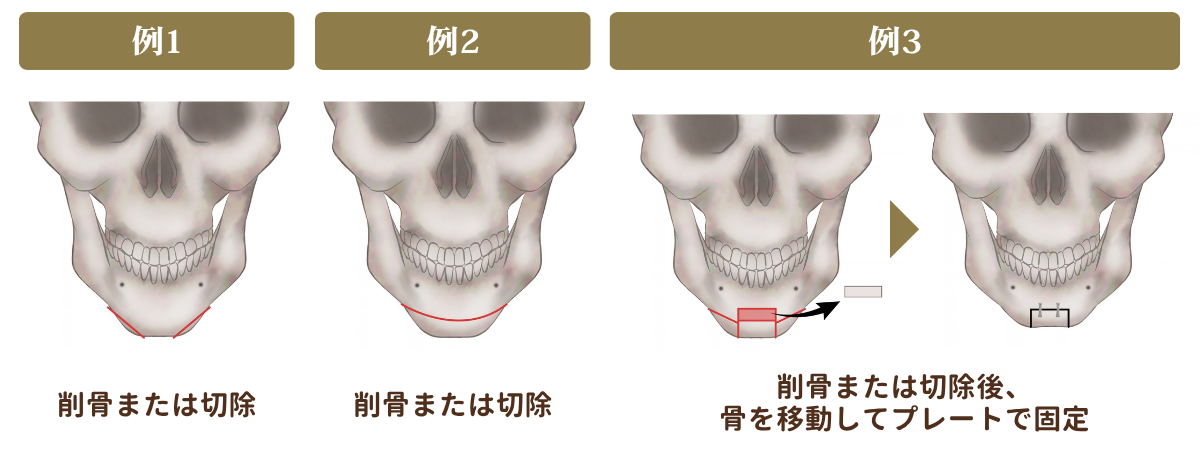
There are several surgical techniques for mandibular mentoplasty, including methods that involve shaving or excising the bone at the tip of the chin, as well as methods that involve moving the detached bone.
At R.O. Clinic, we select the surgical procedure best suited for each individual after carefully assessing not only the length and width of the jaw and the degree of protrusion, but also the position of the nerves and the balance of the skeletal structure.
Chin Bone Reduction / Chin Osteotomy
Chin reduction surgery—also known as mentoplasty—is a procedure that reshapes the chin and refines the jawline by shaving or removing excess bone from the tip of the chin. It is considered for patients whose chins appear long or who are concerned about a protruding chin; the procedure adjusts the shape of the chin by smoothing out protruding or angular areas. In addition, since chin reduction surgery allows for precise adjustments to the bone’s surface, it is also used to smooth out any unevenness resulting from the bone cut.
At R.O. Clinic, we use preoperative CT scans and 3D bone models to confirm the location of nerves and determine the position of the bone cut and the amount of bone to be removed, all while prioritizing safety.
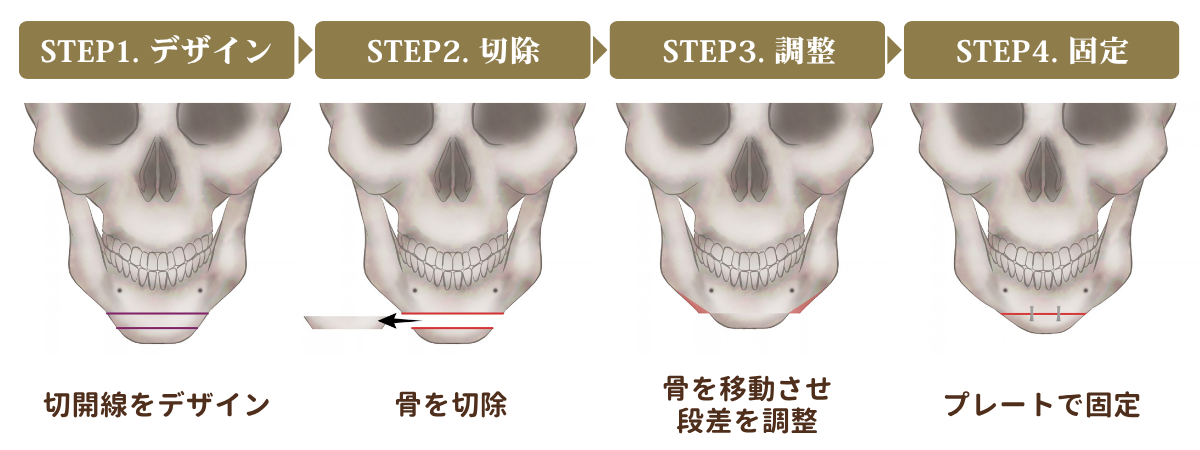
Osteotomy (de-intercalation)
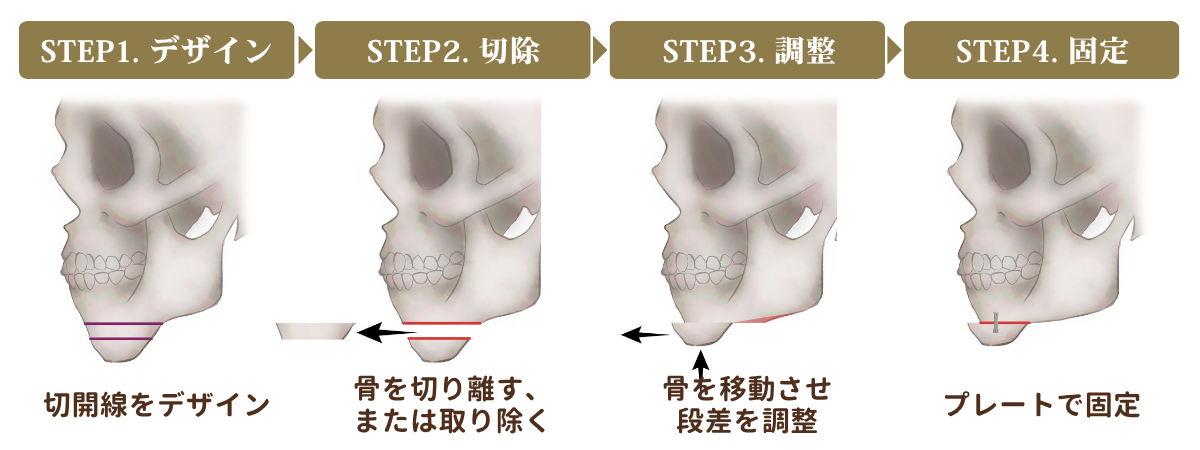
An osteotomy involves making two horizontal cuts in the bone at the tip of the jaw, removing the bone between them, and then moving the lower bone upward and securing it in place.
This is suitable for cases where you want to adjust the vertical length by shortening the bone at the tip of the jaw.
The repositioned bone is secured with a plate or similar device, and, as needed, the surrounding bones are adjusted to ensure a natural transition from the tip of the jaw to the jawline.
Anterior Displacement and T-Shaped Osteotomy (V-Line Creation)
If you wish to adjust the position or width of the chin, a surgical procedure that involves repositioning the detached bone may be chosen.
Anterior displacement is a procedure in which the detached chin bone is moved forward and secured in place. It is performed when the position of the chin needs to be moved forward and is sometimes combined with other surgical techniques, such as a midline osteotomy.
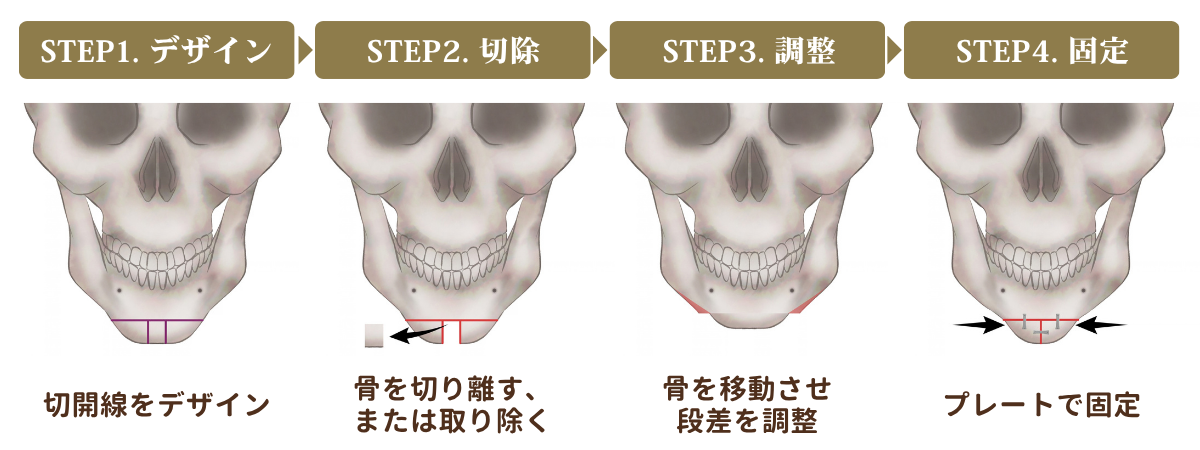
A T-shaped osteotomy (V-line surgery) is a procedure that narrows the width of the chin by removing bone from the tip of the jaw in a T-shape and bringing the left and right bone segments together and securing them in place. It is often chosen to create a sharper profile when viewed from the front and may be combined with other procedures, such as bone removal or forward displacement.
Procedure for Mandibular Mentoplasty
At R.O. Clinic, we use CT scans, 3D bone models, and 3D simulations to develop surgical plans, and we continue to monitor your progress after surgery, providing support until the results have fully stabilized.
Counseling and Medical Examinations
First, we’ll ask you in detail about the areas you’re concerned about—such as the length or protrusion of your jaw and your facial contours—as well as the results you’d like to achieve.
During the consultation, we examine not only the tip of the chin but also the jawline—from the jawbone to the tip of the chin—as well as the overall balance of the face to determine which osteotomy method is most appropriate.
CT Scans, 3D Simulation, and Design
We perform a CT scan prior to surgery and create a 3D bone model based on the patient’s own data. We confirm the location of the nerve canal and the bony structure within the jawbone, and carefully determine the cutting location and the extent of bone resection or removal while prioritizing safety.
In addition, we use the 3D simulation software “Vectra” to finalize the design while viewing the post-operative contour in 3D images.
Treatment
During the procedure, an incision is made in the gum tissue inside the mouth, and bone is cut or shaved according to a predetermined design.
Depending on the surgical procedure, the separated bone may be repositioned and secured with a plate. Additionally, the surrounding bone is contoured to ensure there is no step at the junction with the osteotomized area, aiming for a natural-looking jawline that flows seamlessly from the jawline to the tip of the chin.
The treatment typically lasts about 120 minutes.
Postoperative Recovery and Downtime
Significant swelling may occur for about 3 days after surgery, and some swelling may persist for about a week. While the extent of swelling and the recovery period vary from person to person, the typical recovery time is about 1 to 2 weeks.
After the procedure, the area will be secured with tape for 3 days. In addition, for about 1 to 2 weeks after the procedure, please avoid irritating the wound inside your mouth by refraining from hot, hard, or spicy foods and other irritants.
Starting the day after surgery, we will monitor your progress and check for any wounds, swelling, and the condition of the tip of your chin.
Follow-up
With mandibular mentoplasty, it is important to monitor your progress by checking not only postoperative swelling and scars but also the position of the chin tip, your facial contour, and sensation in your lips and chin.
At R.O. Clinic, we monitor your recovery through post-operative checkups and have established a system that makes it easy for you to discuss any symptoms that concern you. We’ll provide thorough support until your results have fully stabilized, so please feel free to contact us if you have any concerns.
[Postoperative Progress and Follow-Up Care at R.O. Clinic]
| Item | Details |
|---|---|
| Treatment Time | About 120 minutes |
| Postoperative hospital visit | Day 2 after surgery (the day after the procedure) |
| Postoperative swelling | Significant swelling lasts about 3 days, and mild swelling lasts about a week. (Results may vary.) |
| Tape fixation | 3 days |
| Removal of Stitches | Although absorbable sutures are used, the sutures are generally removed. |
| Treatment on the day of counseling | not allowed |
| anesthesia | General anesthesia, combined with local anesthesia |
| shower | Available from the day *Do not get the wound wet while the tape is in place. |
| make | |
| face-washing | Available from the next day *Please do not get it wet on the day of the procedure, as it will be secured with a bandage. |
[Prices for Mandibular Mentoplasty at R.O. Clinic]
| Treatment Details | Prices (including tax) |
|---|---|
| Osteogenesis ossificans (bone removal from the skull) | 660,000 yen |
| ostracism | 880,000 yen |
| Osteotomy (de-intercalation) | 1,100,000 yen |
| Osteotomy (midline removal) + forward movement | 1,320,000 yen |
| Maternal T-osteotomy (V-line formation) | 1,430,000 yen |
| T-shaped Chin Osteotomy (V-Line Contouring) + Anterior Displacement | 1,530,000 yen |
| Chin Osteotomy (Hollow-Out) + T-Shaped Osteotomy (V-Line Creation) | 1,540,000 yen |
| Chin Pin Removal (Plates, Screws, Wires) | 220,000 yen |
| 3-Part Osteotomy Set (Cheeks + Chin + Jawline) | 3,300,000 yen |
*Prices include tax; private insurance
What You Need to Know to Avoid Regrets After a Mandibular Mentoplasty

A mandibular mentoplasty is a procedure that directly addresses the bony structure of the chin, allowing for adjustments to its length, projection, and width. However, because nerves involved in sensation run through the interior of the jawbone, there are limits to the amount of bone that can be removed to ensure safety. As a result, it may not be possible to achieve all of the desired changes, depending on the patient’s expectations.
In addition, removing or repositioning bone not only alters the facial contour but also changes the appearance of soft tissues such as the skin and muscles. After surgery, it takes time for the swelling to subside, and there is a possibility of excess skin, asymmetry, or numbness in the lips and jaw.
At R.O. Clinic, we conduct pre-operative examinations to assess the position of the bone structure and nerves, and we develop a treatment plan after discussing your desired results with you, utilizing 3D simulations. We aim for natural-looking results that take into account the overall balance of your bone structure and facial contours, so please feel free to contact us for a consultation.
Frequently Asked Questions
Q: What is the difference between a mandibular mentoplasty and a mentoplasty?
A: A mandibular mentoplasty is a procedure in which the bone at the tip of the lower jaw is removed and repositioned to adjust its length, width, and position. It is suitable for cases where you wish to correct the skeletal structure itself—such as when the jaw is long, protrudes forward, or you want to make it narrower.
On the other hand, chin augmentation using silicone implants or artificial bone is a procedure that adds volume to the tip of the chin and reshapes it. In cases where the chin is small or receded, this procedure may offer a solution without the need for osteotomy.
Which option is more suitable depends on your bone structure and the look you're hoping to achieve.
Q: Will the scar be noticeable?
A: Since mandibular mentoplasty is generally performed by making an incision inside the mouth at the gum line, there are usually no visible scars on the face.
However, depending on the amount of bleeding during surgery, an incision may be made under the jaw to control the bleeding, which may leave a scar on the skin.
Q: Will the numbness around my mouth persist?
A: Because the procedure involves working near sensory nerves, you may experience a loss of sensation or numbness in your lips or jaw after surgery.
In most cases, symptoms gradually improve over a period of about 3 to 12 months, but in rare cases, sensation may not fully return.
Q: How long is the downtime?
A: Significant swelling may occur for about 3 days after surgery, and some swelling may persist for about a week. The extent of swelling varies from person to person, but it will gradually subside over the course of 1 to 2 weeks.
In addition, please keep the area secured with tape for 3 days after the procedure. To avoid irritating the wound inside your mouth for about 1 to 2 weeks after the procedure, please refrain from consuming hot, hard, or spicy foods and other irritants.
If you have important plans, we recommend that you consider your downtime when scheduling your treatment.
Q: If a bone is cut, can it grow back together?
A: The removed bone will not return to its original size.
However, after surgery, the appearance of the facial contours may change compared to immediately after the procedure as swelling subsides and the soft tissues—such as the skin and muscles—settle into their new positions. Additionally, changes in the skin and fat due to aging may alter the appearance of the jawline in the future.