 Doctor's Column
 Staff Blog
 campaign
 News
News





2024.02.23
Other
Criteria for Failure

Dr Kuroda
CONTENTS
Who decides if it is a failure?
What are the criteria for surgical failure?"
Who decides if you are a failure?"
How do you decide if you want to do a revision surgery?"
What about compensation in the event of residual dysfunction?"
This is the last question I am asked when I answer questions in counseling.
Some patients may be reluctant to ask the question, even though they really want to, because it may seem impolite depending on the way it is asked.
In conclusion.
It is up to the patient to decide if the surgery is a success or a failure."
If you are satisfied with the results, you have succeeded; if not, you have failed.
Of course, some objective criteria can be established.
...simulation or the form described.
Left-right difference must be within an acceptable range.
No complications such as hematoma or wound infection due to rebleeding
∙ To be completed in a standard period of downtime.
Scars should be inconspicuous.
No functional complications
etcetera, etcetera
If all of these items are met, we can generally consider it a success.
However, it is difficult to surgically create a form that is exactly the same as in the simulation. Perfect symmetry is also the domain of God. No, even God could not create a symmetrical human being. The tolerance for left-right differences and scars differs from patient to patient.
Even if the doctor feels that there is nothing wrong with the surgical result, there are cases in which the patient requests a revision. Conversely, there are patients who do not wish to undergo revision, even if the doctor suggests it, saying "I am not bothered by it, so I am fine.
Corrective surgery at our hospital
Regarding the decision whether or not to perform corrective surgery, we proactively perform corrective surgery when there are seemingly minor points that are of concern to the patient. We believe that the hurdle for revision surgery at our hospital is set quite low. Even in cases where other clinics might say, "You worry too much," "It is written in the consent form that this level of left-right difference is unavoidable," or "It will get better someday, so let's just wait and see.
There are exceptions, and we may refuse to perform a revision surgery if the request is technically impossible, such as "make it 0.1 mm narrower. In cases where there is a high risk of repeating surgery in a short period of time, such as revision surgery at another hospital, we may follow up with a medical checkup instead of performing immediate revision surgery.
About Functional Impairment
Functional impairment depends on the content.
For example, in a case where the eye opening has deteriorated after double vision surgery, there is a good chance that it can be improved by corrective surgery. What if the hyaluronic acid has entered a blood vessel and caused blindness? This is a very rare complication, but the possibility is not zero. In this case, it would be difficult to restore vision with corrective surgery, so we would be talking about financial compensation. If there is a fatal accident and there is gross negligence, the doctor may be held criminally liable in addition to financial compensation.
Complications that cause functional disability are accidents and cannot be predicted. Therefore, when asked before surgery, "What about compensation in the event of residual dysfunction?" we can only answer, "We will deal with each event in good faith.
Problems during surgery
What would happen if there was a major earthquake during surgery?"
This is really a question asked by patients.
We are sometimes asked questions that surprise us. But there is no possibility of a major earthquake during surgery.
I was working in Fukushima Prefecture when the Great East Japan Earthquake hit in 2011. I was in the middle of performing a head tumor resection surgery at 14:46 when the earthquake struck. The shaking was so severe that I could hardly stand for several minutes, and the operating room was in darkness due to a power outage. The nurses were evacuated under the operating table and I was covered over a patient lying on the operating table until the shaking subsided. After the emergency power supply was activated and the lights came on, I completed the surgery to the end, not knowing what was going on outside at all.
We do not know if the patient who asked this question is simply a worrier or if he has some painful memories from the past. However, I told him about the earlier episode and reassured him that we would do our best to deal with such an eventuality.
summary
Perhaps the patient who asks the question at the beginning of this column also wants reassurance; the more information one gathers on social networking sites, the more failure stories attract one's attention rather than success stories, so anyone would feel uneasy about undergoing surgery.
No surgery or procedure is risk-free. However, cosmetic surgeons strive to reduce risk every day. Even so, the reality is that surgical results can still vary to some degree. Therefore, we leave the decision of failure to the patient and lower the hurdle for revision surgery so that the patient can receive treatment with as much peace of mind as possible.
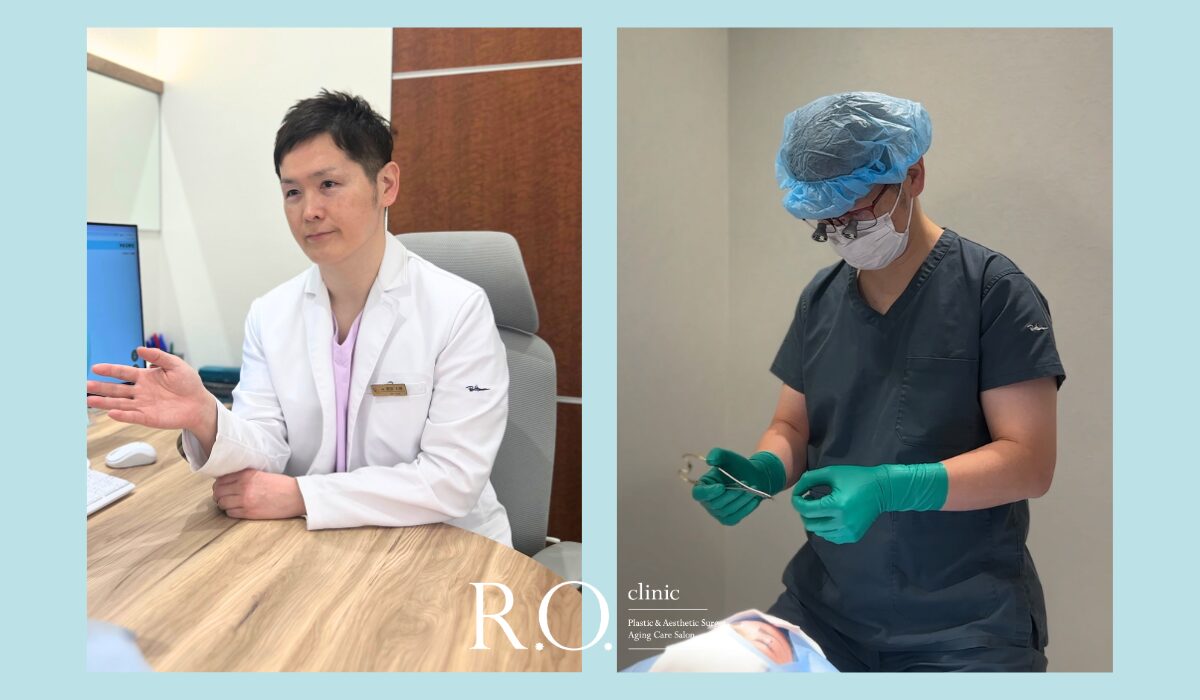
Assistant Director Daiki Kuroda
Series of Frequently Asked Questions in #Counseling
Supervisor of this article
vice president (of a hospital, clinic, etc.)
Daiki Kuroda
OHKI KURODA
Share Article