 Doctor's Column
 Staff Blog
 campaign
 News
News





2023.10.13
epicanthus
craniotomy
Scars from craniotomy
Dr Kuroda
Our clinic has a large number of cases of mongolian fold formation, and inevitably we have many opportunities to see scars after craniotomy. When we listen to the concerns of our patients, we find that quite a few are troubled not only by the shape of the cranial folds, but also by the scarring of the cranial incision.
CONTENTS
Causes of visible scars from craniotomy
Why do some cases of craniotomy scars stand out?
first of all, let me make a basic premise
To begin with, the eye socket is an area where scars are more likely to be visible."
This is a fact.
Furthermore, the eye socket is located in the center of the face, and the scar is not hidden whether the eyelids are open or closed.
Consider the causes of prominent scars from craniotomy.
(1) Design error
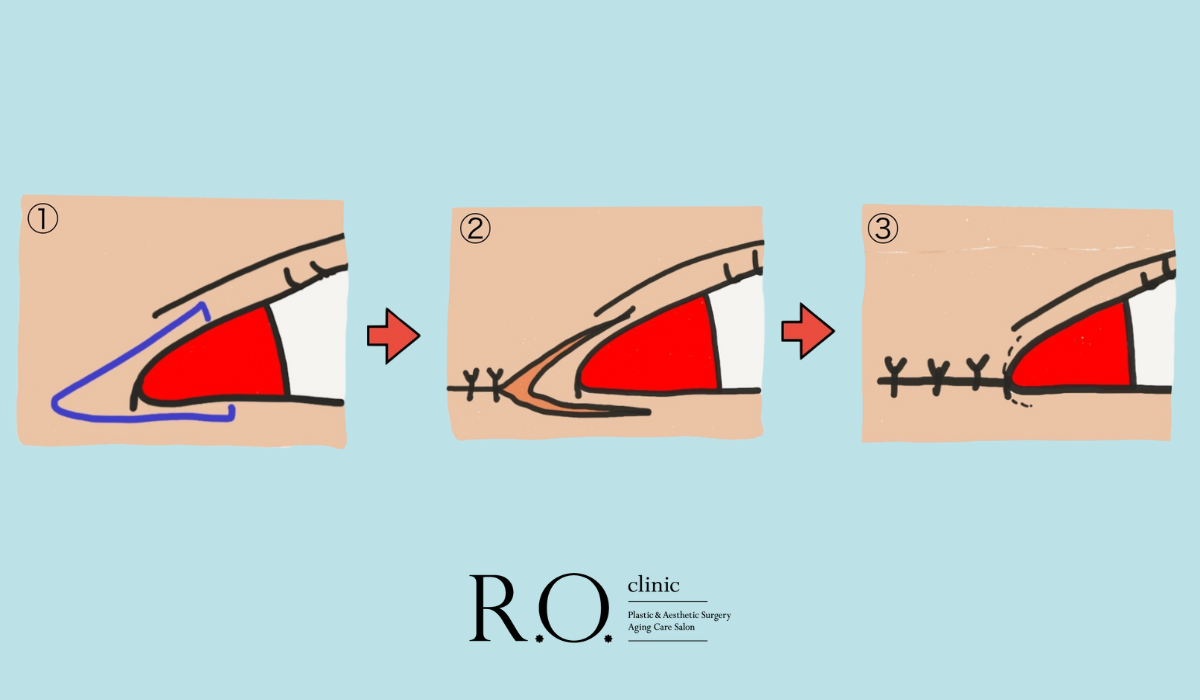
Although there are various published methods for craniotomy, the Z-plasty or redraping method is the most common in cosmetic surgery. I use the above techniques according to the shape of the patient's mongolian folds and the desired shape of the eye socket.
Since this is a column for the general public, I will not discuss the details of the design, but it is necessary to make the scar shorter and to blend the scar with the skin crease and the bifurcation line.
The shape of the mongolian folds and teardrops varies from person to person, and the desired shape also differs from person to person, so while keeping the basics of design in mind, subtle flavoring is necessary for each case.
If a uniform design is used, there will be cases where scars will be noticeable.
(2) Treatment of subcutaneous tissue
The less tension in the scar, the better the scar will heal, so the surgery should release the subcutaneous tugging and allow the mongolian folds to change shape smoothly.
Under the skin is the orbicularis oculi muscle, which is in close contact with the skin.
Minimizing damage to the orbicularis oculus muscle while releasing skin tightness and taking care not to create unnecessary scarring under the skin is essential for a beautiful result.
(iii) suture techniques
An episiotomy is a detailed surgery. It requires skill in suturing small tissues delicately. Plastic surgical care must be taken to avoid unnecessary damage to the skin and to ensure that the skin is perfectly aligned.
When plastic surgeons are young, they are taught to treat tissues in a patronizing manner. Don't hold the skin with tweezers! Don't let it bleed unnecessarily! Talk to the tissue! You will be taught to the point that your ears will be ringing.
It begins with suturing a child's face in the emergency room who is resisting desperately, and continues with training until the patient is able to connect blood vessels and lymphatic vessels that are less than one millimeter in diameter. The skills are not easy to acquire, and it takes a certain number of years to acquire solid suturing skills.
Since anyone can call himself or herself a cosmetic surgeon, it is necessary to determine whether the doctor to whom the surgery is entrusted has reliable suturing skills. Although there is no way for patients to be sure, it is safe to assume that a doctor with a specialty in plastic surgery has at least a minimum level of suturing skills. Incidentally, whether or not a board-certified plastic surgeon is also skilled in cosmetic surgery is another matter. Furthermore, there are doctors who are good at surgery even if they are not board-certified plastic surgeons.
4) Skin type
This may sound like a stretch, but there are individual differences in the healing of scars. People with fair skin and light skin tend to have scars that heal easily and cleanly, while people with dark skin and oily skin tend to have scars that stand out easily. In some cases, no matter how much effort is made, the scars will still stand out.
I explain more thoroughly the risks of scarring, depending on the patient's skin type.
What should you do if you have the misfortune to have a noticeable scar?
First of all, it is important not to panic but to wait.
The scar will be red and hard at first, but will gradually become less noticeable over time. If all goes well, the scar will become much less noticeable in about three months, but after six months or a year, the scar will be even less noticeable. If redness remains in the scar, UV light exposure may cause hyperpigmentation, so UV protection should also be kept in mind.
Treatments such as fractional laser are effective in blurring scars, making them effective for those who are concerned about scars. In cases where the scars are thin but the white appearance is bothersome, significant improvement can be expected after 5 to 6 sessions of irradiation.
In cases where scars are prominent, they can sometimes be improved by excising and re-stitching the scars or by carefully debriding the subcutaneous scar.
Case Studies

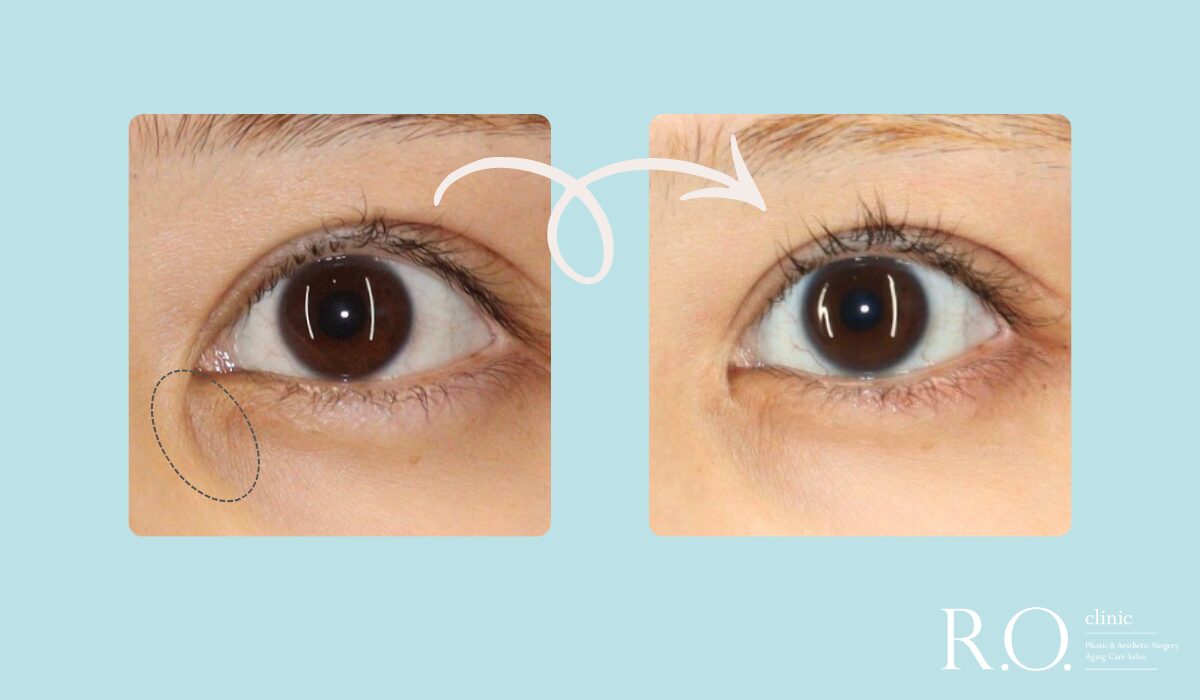
This is a case where the VY method of mongolian fold formation was performed. There is a prominent scar running vertically across the eye socket. By carefully peeling the scar under the skin during the mongolian fold formation, the scar has been made much less noticeable.
In some cases, cases that have undergone repeated surgeries or cases in which surgical manipulation is crude may leave a concavity at the eye socket. In cases where the indentation is noticeable, it can be improved by releasing the subcutaneous scar and injecting fat. Depending on the condition, multiple fat injections may be necessary.
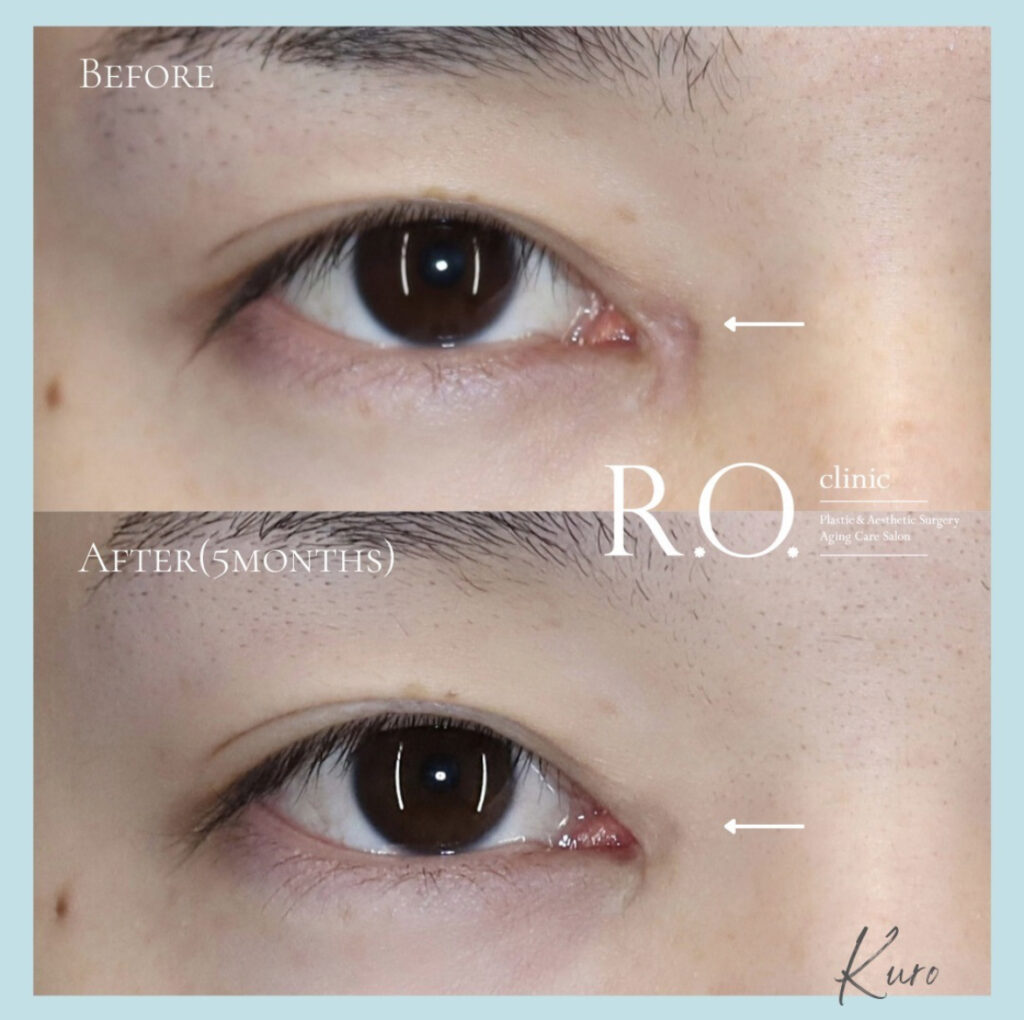
This case has undergone multiple craniotomy incisions and is 5 months after one subcutaneous scar peel and fat injection. The scar indentation has become shallower and the skin tone has improved.
summary
In this article, I explained the causes of prominent scars from craniotomy and their treatment.
Because we perform both mongolian fold formation and scar revision, we are careful every day to avoid creating prominent scars in our own craniotomy procedures.
Assistant Director Daiki Kuroda
# Dr. K's In-Depth Commentary Series
Supervisor of this article
vice president (of a hospital, clinic, etc.)
Daiki Kuroda
OHKI KURODA
Share Article