 Doctor's Column
 Staff Blog
 campaign
 News
News





2023.09.29
double incision
About Partial Incision Double Layer

Dr Kuroda
Counseling,
Can a partial incision be used to create a double fold?"
I would like to have a partial incision because I can't afford the downtime."
I prefer a partial incision because I don't want a scar."
It may be said.
CONTENTS
What is a partial incision?
The technique, known as partial incision or mini-incision, has the following characteristics
∙ Eyelid incision line is about 1 to 2 cm (no strict definition)
Short incisions and short downtime.
...Short scars are inconspicuous.
It seems like a very good thing to do.
I think it is applicable for those who can easily get a double fold by simulation and who want a slightly narrower double width.
However, as a rule, I do not use partial incisions for bifurcation.
The reasons for this will be explained.
Why we do not recommend partial incision
Reason #1: The double fold is more easily loosened than a full incision.
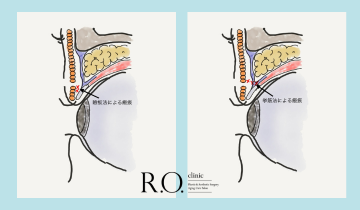
An incisional double fold is a surgical procedure that creates an adhesion between the tissue that pulls the eyelid in and the double fold line. Partial incisions create a smaller area of adhesion. Since the double fold line can loosen even with a full incision, we believe that the risk of a loose double fold is greater with a partial incision.
Reason #2: Skin excision is not possible.
In many cases, it is better to remove excess skin when creating a double fold to achieve a more beautiful result. Since skin excision is not possible with a partial incision, there is a difference in the appearance of the eyelash line compared to a full incision double fold.
Reason #3: Insufficient internal processing
When performing an incisional double fold, we pay attention to internal processing. Internal processing includes, of course, removal of the implantation threads and reduction of orbital fat, as well as removal of the appropriate amount of orbicularis oculi muscle if the double fold line is difficult to break, removal of tissue that resists the opening of the eyelid, and a wide variety of other procedures. The manipulation of the eyelid opening resistance is particularly important on the inner and outer corner of the eye, and it is difficult to perform these manipulations through the short incision line of a partial incision.
Reason 4: Scars are noticeable.
As explained in reason #1, partial incisions tend to loosen more easily than full incisions. To prevent loosening, it is necessary to create a strong adhesion under the skin. A lot of the orbicularis oculus muscle is removed or stitched to the anterior tissues of the eyelid plate to create a firm adhesion in a narrow area to create a double fold that is difficult to loosen. Compared to a full incision, in which there is just the right amount of penetration evenly from the inner corner of the eye to the outer corner of the eye, a partial incision may result in a short scar with pinpoint penetration, conversely making the scar more noticeable in some cases. Although you originally chose a partial incision because you did not want the scar to stand out, if the scar stands out, it is a complete disaster, isn't it?
Case of partial incision revision

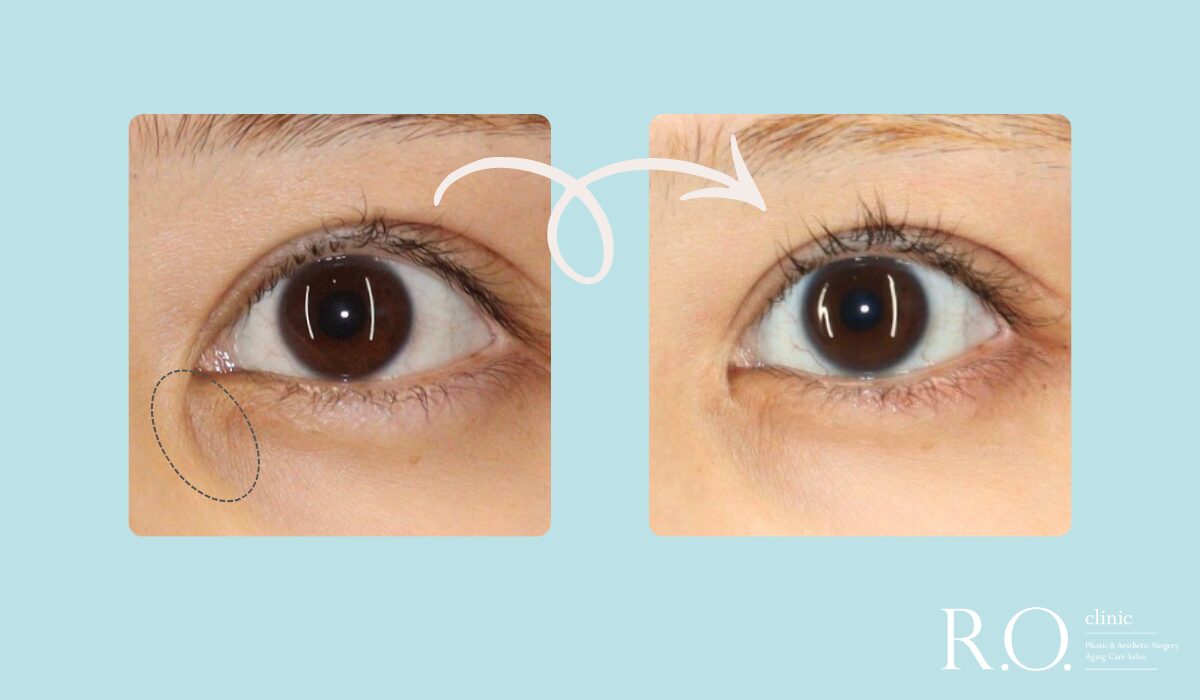
Let's look at a revision case of a patient who underwent a partial incision at another clinic. Before the surgery, the scar was short, but the scar was noticeable due to partial incision. We removed the partial incision including the scar and re-created a double fold using a full incision. What do you think? The scar is less noticeable after the surgery corrected with a full incision.
Of course, partial incisions (mini-incisions) can be beautifully done if the right indications are chosen and a good surgeon performs them. However, we believe that in many respects it is not as good as a full incision double fold.
Assistant Director Daiki Kuroda
Series of Frequently Asked Questions in # Counseling
See details of the treatment related to ▼ column here.

Supervisor of this article
vice president (of a hospital, clinic, etc.)
Daiki Kuroda
OHKI KURODA
Share Article