 Doctor's Column
 Staff Blog
 campaign
 News
News





2024.02.16
double incision
Upper eyelid sagging excision
unscheduled eyelid line

Dr Kuroda
Unscheduled BlepharoplastyAre you familiar with the
One of the postoperative complications of double-lid surgery is a condition in which the skin breaks off at a broader line than the planned double-lid line. The medical profession calls this an unscheduled double eyelid line, but the general public may be more familiar with the term mie. When an unscheduled eyelid line occurs, the skin of the eyelid does not cover the intended double fold line, resulting in a double fold.
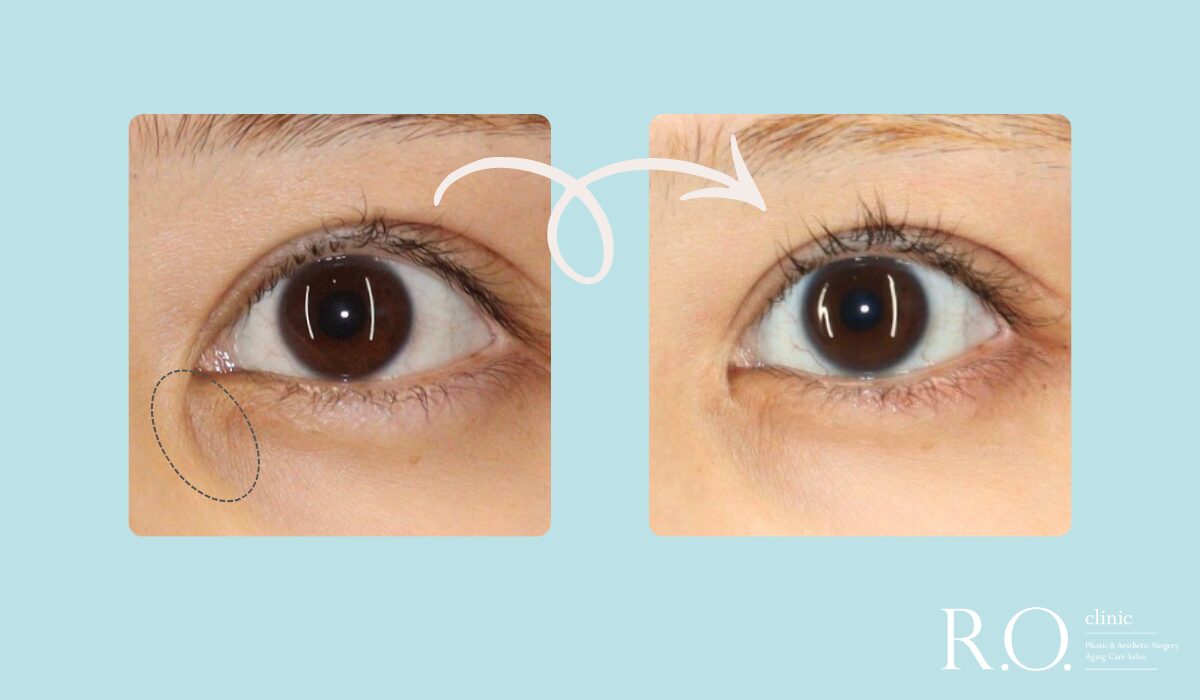
Seeing is believing, so please take a look at the photos of a case in which an unscheduled double eyelid line occurred.
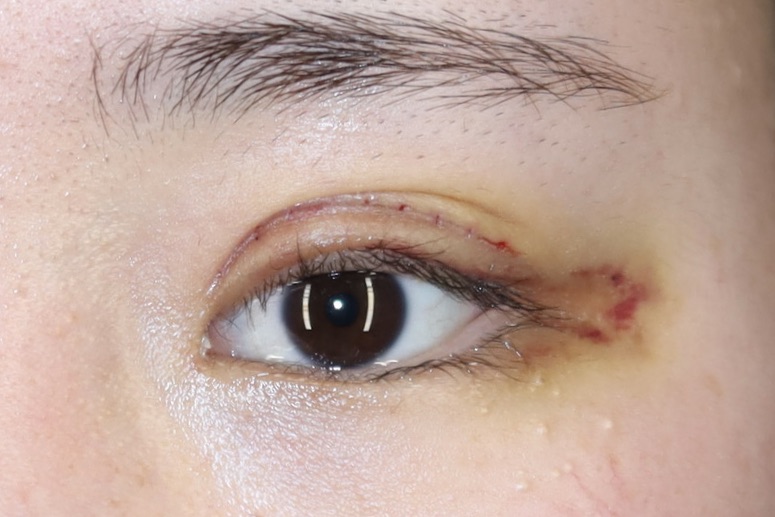
This is the state after suture removal one week after surgery. An unscheduled double eyelid line has occurred, and a double fold has not been created at the planned double fold line.
Unscheduled eyelid lines can occur for the following reasons
CONTENTS
Weak bite at the planned double line
Bifocal surgery is a procedure that transfers the power of the eyelid elevator muscles, which are pulled in along the eyeball, to the skin. The internal process creates an adhesion that allows the skin to be pulled in at the planned bifocal line, but if the adhesion is inadequate, the bite will be weak. If there is drooping of the eyelid and the ability to open the eyelid is weak, there may also be insufficient retraction of the planned double fold line. Because eye opening is temporarily compromised immediately after surgery due to swelling of the eyelid, an unscheduled double eyelid line may occur even in the absence of droopy eyelids. If the bite of the planned line is weak, the eyelid skin may fold of its own accord. The same logic applies to a double fold that has undergone implantation and then loosens, which can result in a crease in the wider line.
Little orbital fat
Orbital fat is fat located deep within the eyelid. This fat serves as a lubricant for the eyelid elevator muscles to glide smoothly. If there is not enough orbital fat or too much fat is surgically removed, the movement of the eye opening muscles may be transmitted to a line other than the intended one, causing an unintended double eyelid line.
The orbicularis oculi muscle on the brow side was taken from the incision line.
The orbicularis oculi muscle is a thick tissue that lies just under the skin. If the orbicularis oculi muscle is removed, the skin becomes flaky, and the possibility of an unscheduled double eyelid line increases when the orbicularis oculi muscle on the brow side of the incision line is removed. Preserving the orbicularis oculi muscle on the brow above the incision line is a basic rule for cosmetic surgeons. However, unintentional removal of the orbicularis oculus lateral to the brow is a common mistake. Immediately after the skin incision is made, the orbicularis oculi muscle is swollen under local anesthesia. It is possible that the orbicularis oculi muscle on the brow is not preserved when the swelling due to local anesthesia goes down, even if the surgeon thought he or she preserved the orbicularis oculi muscle on the brow while it was swollen.
Thin eyelid skin
There are individual differences in eyelid skin thickness. While people with thin eyelid skin have the advantage of being able to create a beautifully wide double fold, they also have the disadvantage of having the skin break easily in unplanned areas. For those with thin eyelid skin, the following principles must be strictly observed: do not remove orbital fat, and be sure to preserve the orbicularis oculi muscle on the brow side of the incision line.
Strong brow elevation habit.
In order to have a beautiful double fold, the planned double fold line must be drawn in and the skin on the eyebrow side must cover the planned line. If the eyebrows are raised for some reason, the skin on the eyebrow side will not be covered by the planned line, resulting in an unintended double fold, which may cause an unintended double lid line.
Thus, there is no single cause of unscheduled eyelid lines. There may be more than one of these causes involved. Although unscheduled eyelid lines are unpleasant, there are ways to manage them.
Coping: suture with bag binding
If an unscheduled double eyelid line is likely to occur immediately after surgery, a special suture called a "pouch-tie suture" is used. The skin is folded into a valley to ensure that the eyelid folds at the planned double fold line. This suture will prevent the occurrence of an unplanned double eyelid line in a significant percentage of cases. Some clinics routinely perform a pouch suture after incisional bifold surgery.
The disadvantage of baggy sutures is that they tend to leave thread marks on the eyelids. If baggy sutures are used, the sutures are removed on the third postoperative day. 3-day baggy sutures rarely leave thread marks. If the patient is too far away to come to the clinic on the third postoperative day, the baggy suture may be left in place until the suture is removed on the seventh postoperative day. Even in such cases, the thread marks seem to almost disappear after about one month.
There are subtle cases where an unscheduled double eyelid line is likely to occur immediately after surgery, but not enough to warrant bag-tie sutures. There are subtle cases where an unscheduled double eyelid line is likely to occur immediately after surgery, but not enough to warrant a bag over suture. In such cases, simply applying tape to the skin of the eyelid where the unscheduled eyelid line is likely to occur for a few days may be effective in preventing it.
Solution: Suspension and fixation
If an unscheduled eyelid line is present at the time of suture removal, a procedure called "suspension fixation" is performed. This procedure uses the threads used in the implantation technique to create a crease in the skin so that it breaks at the planned line. With lift fixation, the eyelid will not be able to close completely. Frequent eye drops should be applied during the day and eye ointment should be applied at bedtime at night to protect the eye from drying out. Although this is a stressful procedure for the patient, over 90% of unscheduled eyelid lines can be healed after one week of suspension and fixation.

This is a photograph of the suspension fixation. Although some of the threads are visible in the eyebrows, they are not noticeable because they are hidden by the eyebrows. The eyelid cannot be completely closed at the time of eyelid closure.
If one were to ask whether "bag sutures" or "suspension fixation" are absolutely necessary procedures, there are actually more cases in which the condition improves spontaneously.
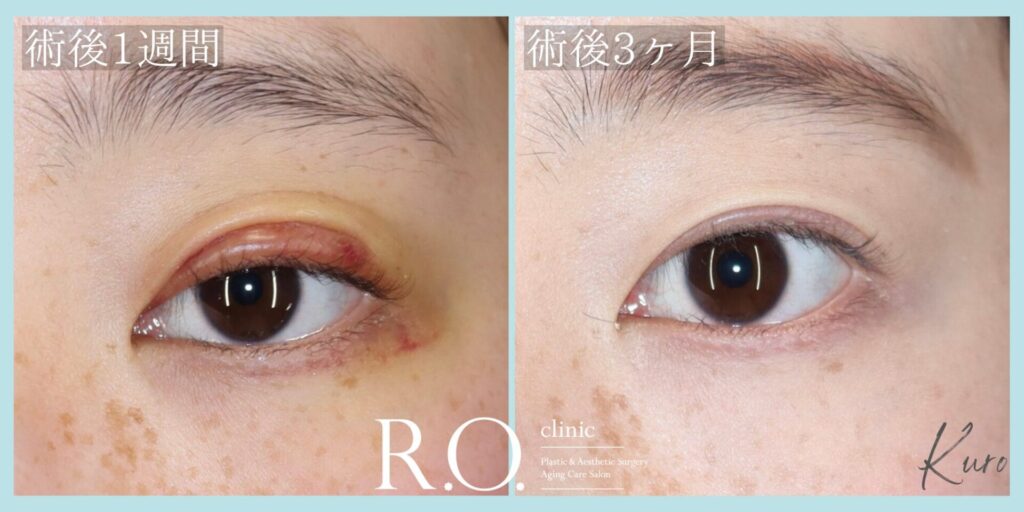
At the time of suture removal, this patient was in the process of developing an unscheduled double eyelid line. As the swelling subsided, the eyelid opening improved and the unscheduled bifid line disappeared.
Finally.
Patients who are deemed to be at high risk for unscheduled eyelid lines at the time of counseling are informed of the possibility of baggy sutures. Unscheduled eyelid lines are an occasional complication, but most of them can be managed without corrective surgery, so there is no need to worry more than necessary.
Assistant Director Daiki Kuroda
#Dr. K's In-Depth Commentary Series
See details of the treatment related to ▼ column here.
Supervisor of this article
vice president (of a hospital, clinic, etc.)
Daiki Kuroda
OHKI KURODA
Share Article