
 Doctor's Column
 Staff Blog
 campaign
 News
News





2024.10.25
breast augmentation
Anatomy of nipple and areola

Dr. Tatsuta
We often consult with our clients about the size and shape of the nipple and areola.
CONTENTS
Average nipple and areola data
According to past reports, a survey of nipple and areola size and shape among Japanese women revealed that the average areola diameter was 4.0 cm, the average nipple diameter was 1.3 cm, and the average nipple height was 0.9 cm. Regarding nipple shape, the most common shape was flat and not nippled (58.0%), while 3.8% had sunken nipples, and 0.5% had special forms such as polymastia or split nipples.
A comparison of nipple diameter, nipple diameter, and nipple height in women with and without previous childbearing experience showed that the average nipple diameter was 0.5 cm larger in those who had given birth than in those who had not.
Anatomy of nipple and areola
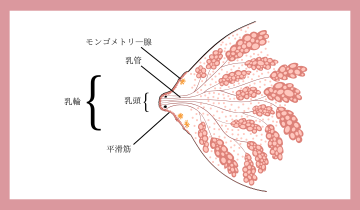
The skin of the nipple nipple area contains numerous sebaceous, eccrine, and apocrine sweat glands.
Montgomery's glands, a type of sweat gland, open into the nipple area, look like protuberances or warts, and may also secrete a milk-like substance.
The nipple skin is rich in elastic fibers and smooth muscle. The mammary glands are visible to the edges of the nipple.
The histological structure of the milk ducts in the nipple area is not yet fully understood. Anatomy textbooks list the number of ducts at the nipple as 15 to 20, but reports since 2000 indicate that the average number of ducts is about 25, and some people have as many as 50.
During pregnancy, nipple pigmentation becomes more intense and Montgomery glands are more prominent. Contact dermatitis due to nipple discharge and erosions (partial loss of skin surface) due to dryness may also occur.
If you have any concerns about the appearance of your nipples or areola, please do not hesitate to contact us.
Supervisor of this article
physician
Sayo Tatsuta
Sayo Tatsuta
Share Article