




For those who want to thin the tip of the nose.
Those who are concerned about the roundness of the tip of the nose.
Those who are concerned about their bulbous nose.
Those who are concerned about the size of the nasal apex.
Nasal tip reduction surgery is primarily aimed at thinning the tip of the nose.
The purpose is to improve the width of the tip of the nose when viewed from the front, the so-called "dumpling nose," and to make the tip of the nose thinner and cleaner.
However, there are many different causes of a lumpy nose.
The nasal tip has a foundation formed by cartilages such as the greater nasal wing cartilage, lateral nasal cartilage, and nasal septum cartilage, with soft tissues such as fat and connective tissue overlying the cartilages, which are then covered by skin.
Dumpling nose can be caused by cartilage shape, fat, or skin thickness, but in most cases it is not due to a single cause, but a complex combination of these causes.
Therefore, nasal apex reduction surgery is performed according to the individual's needs and the most appropriate surgical technique is selected for each individual.
-Surgical removal of the large lateral nasal wing cartilage and fat. A procedure to remove large, laterally stretched nasal wing cartilage and fat.
This procedure is performed on the large nasal wing cartilage that is stretched horizontally and the tip of the nose is spread horizontally. The open method is used.
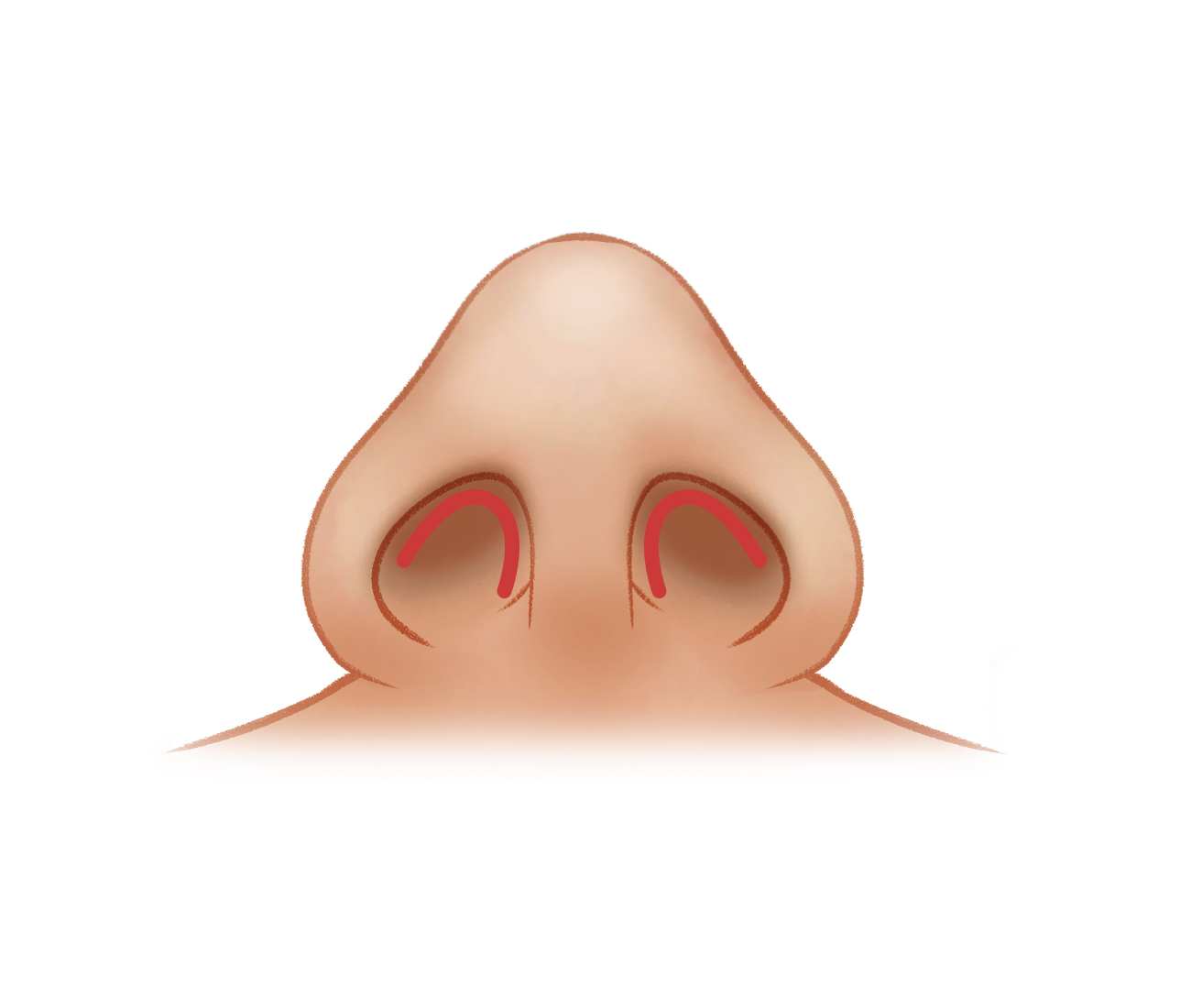
An incision is made in the nostrils on both sides, and the large nasal wing cartilage is excised and removed from the area where it protrudes laterally. If necessary, fat or connective tissue is added on top of the greater nasal wing cartilage and removed.
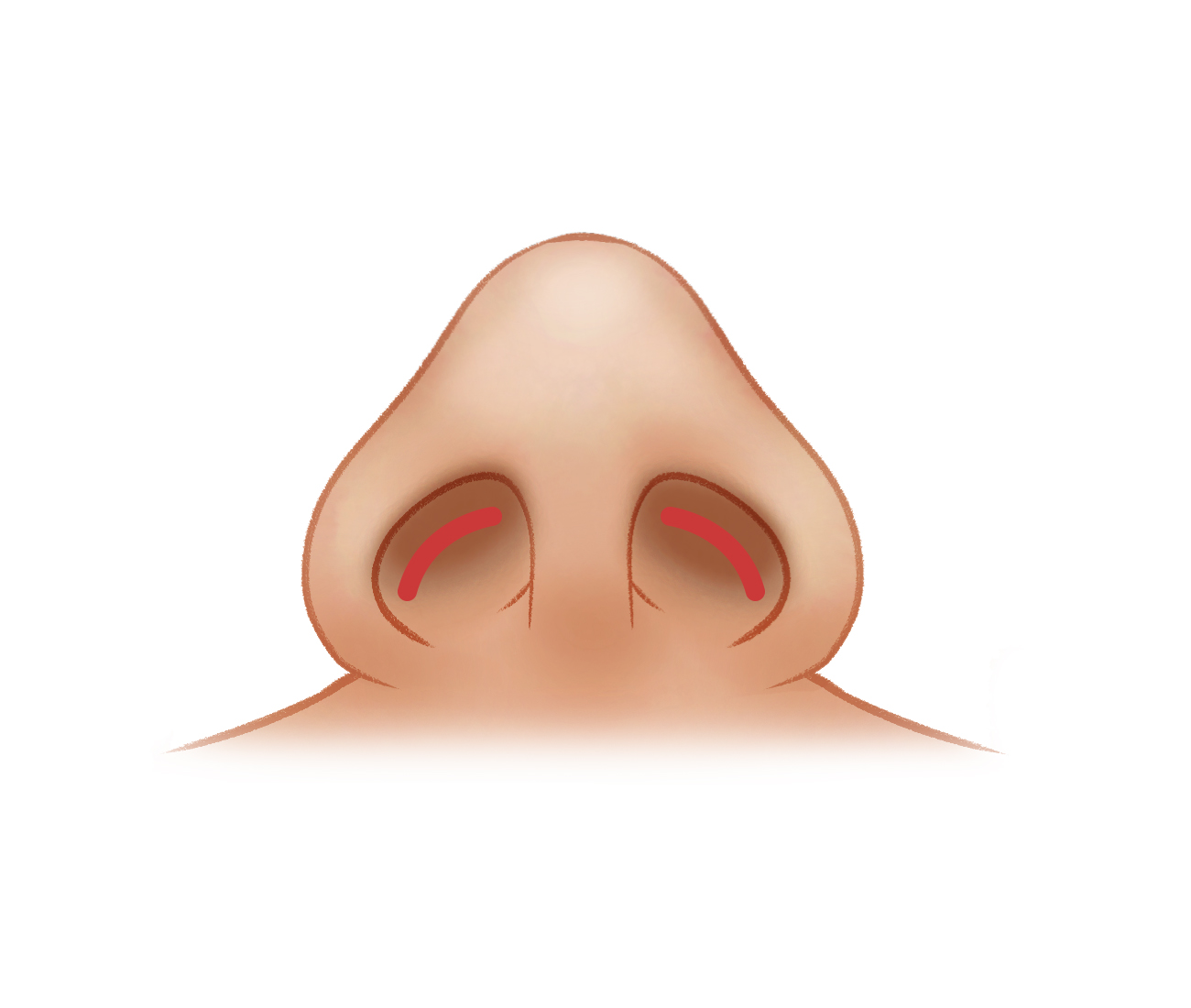
I. Incisions are made in the nostrils on both sides
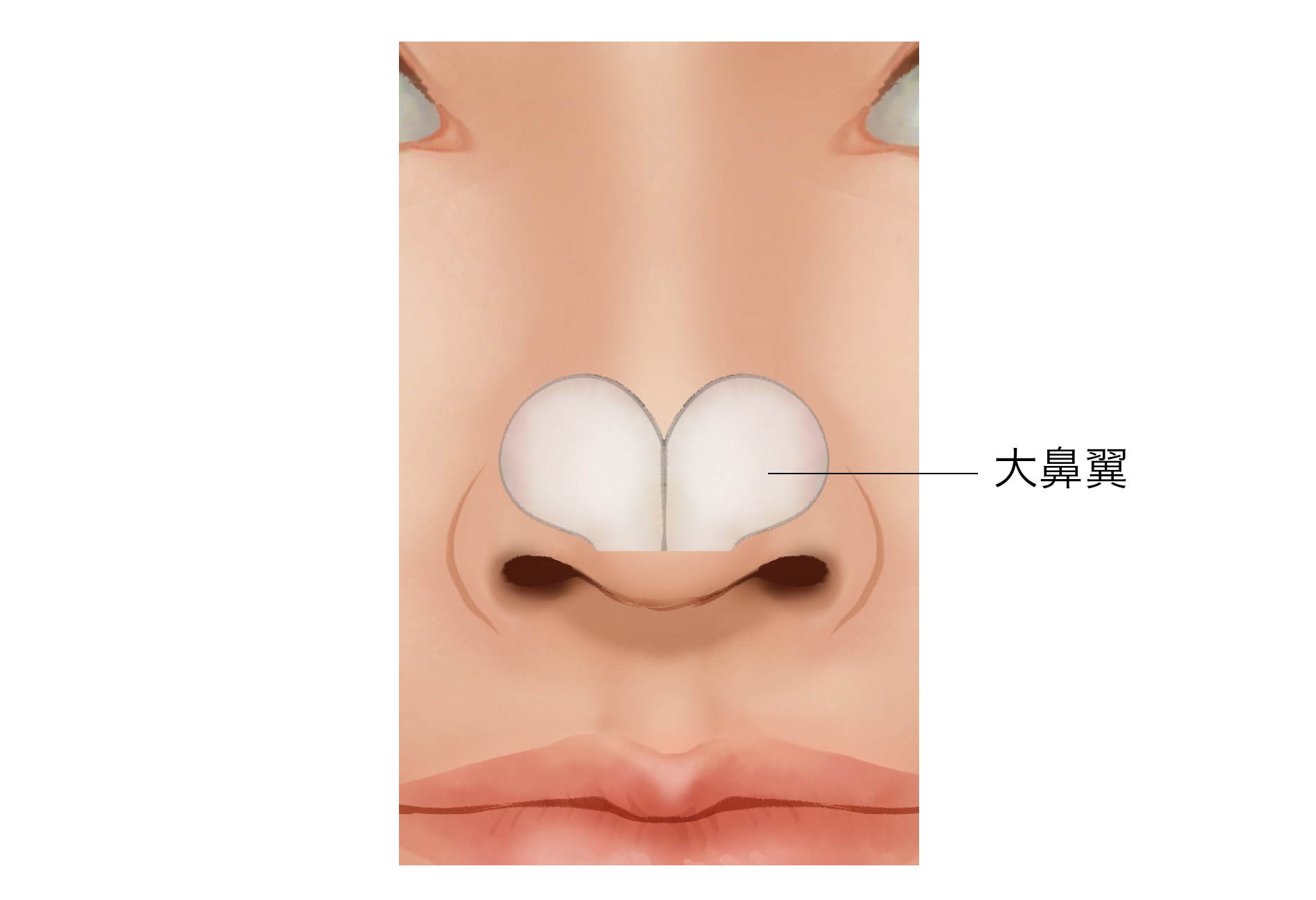
II. Excise and remove the large nasal wing cartilage from the area protruding laterally
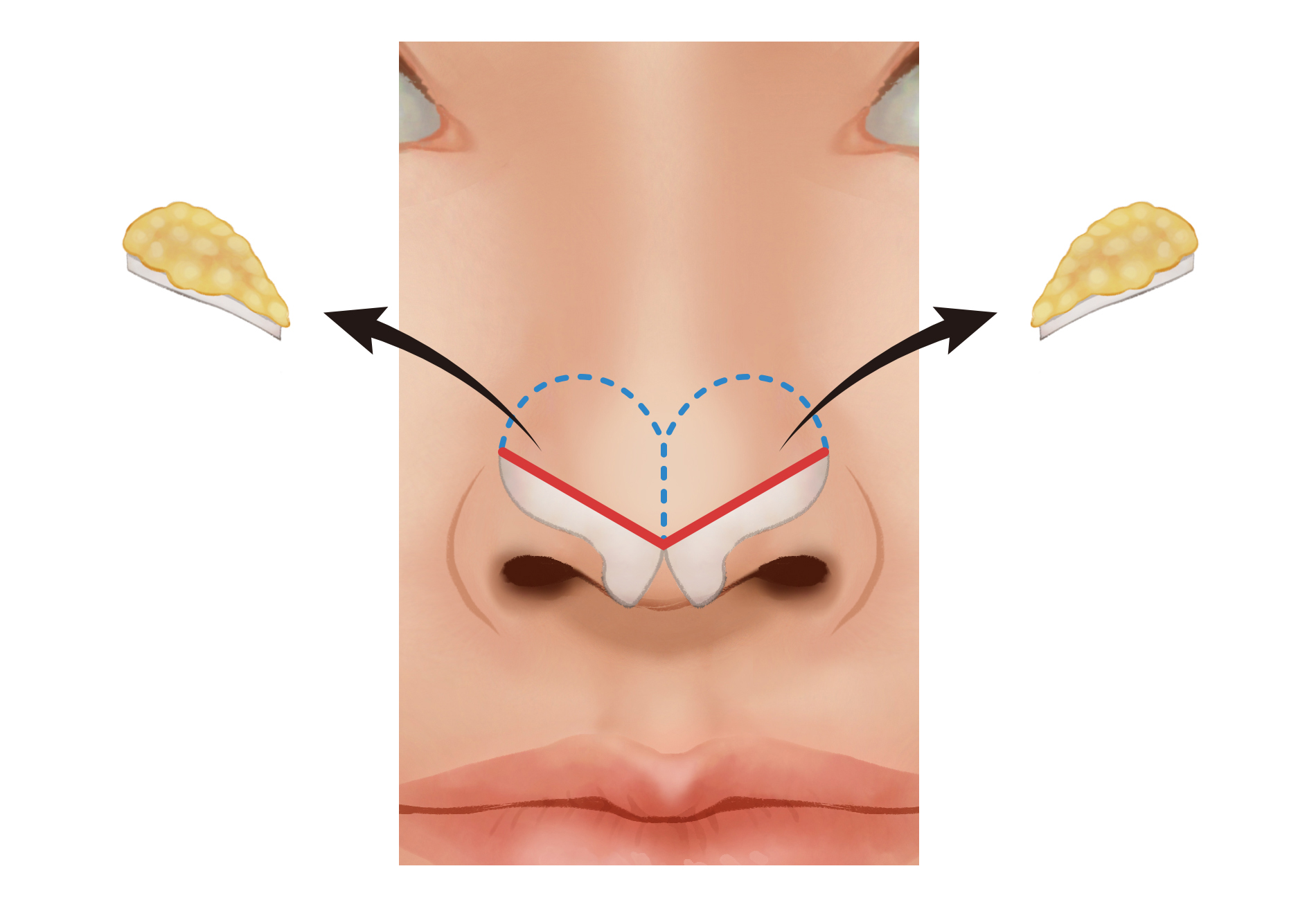
If necessary, remove the large nasal wing cartilage with fat and connective tissue on top.
-An open large nasal wing cartilage is sutured centrally. Suture the open large nasal wing cartilage in the center
This procedure is performed on the nose with the large nasal wing cartilages at the tip of the nose separated in the center. Right and left large nose
The soft tissue between the wing cartilages is lifted up and centered with intercondylar sutures.
Fat and connective tissue between the cartilage and skin can be removed if necessary.
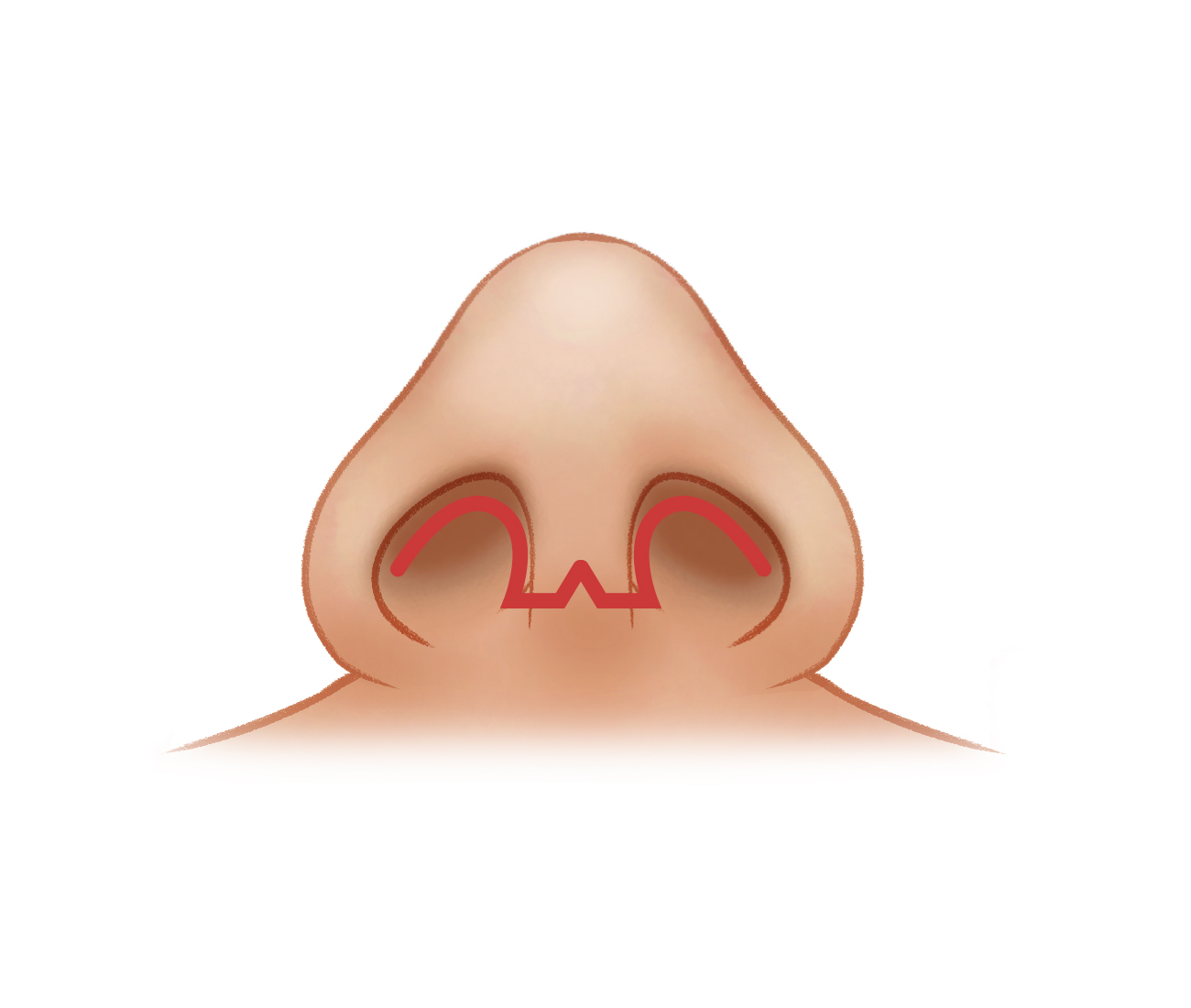
I. Open or closed incision depending on the patient's condition
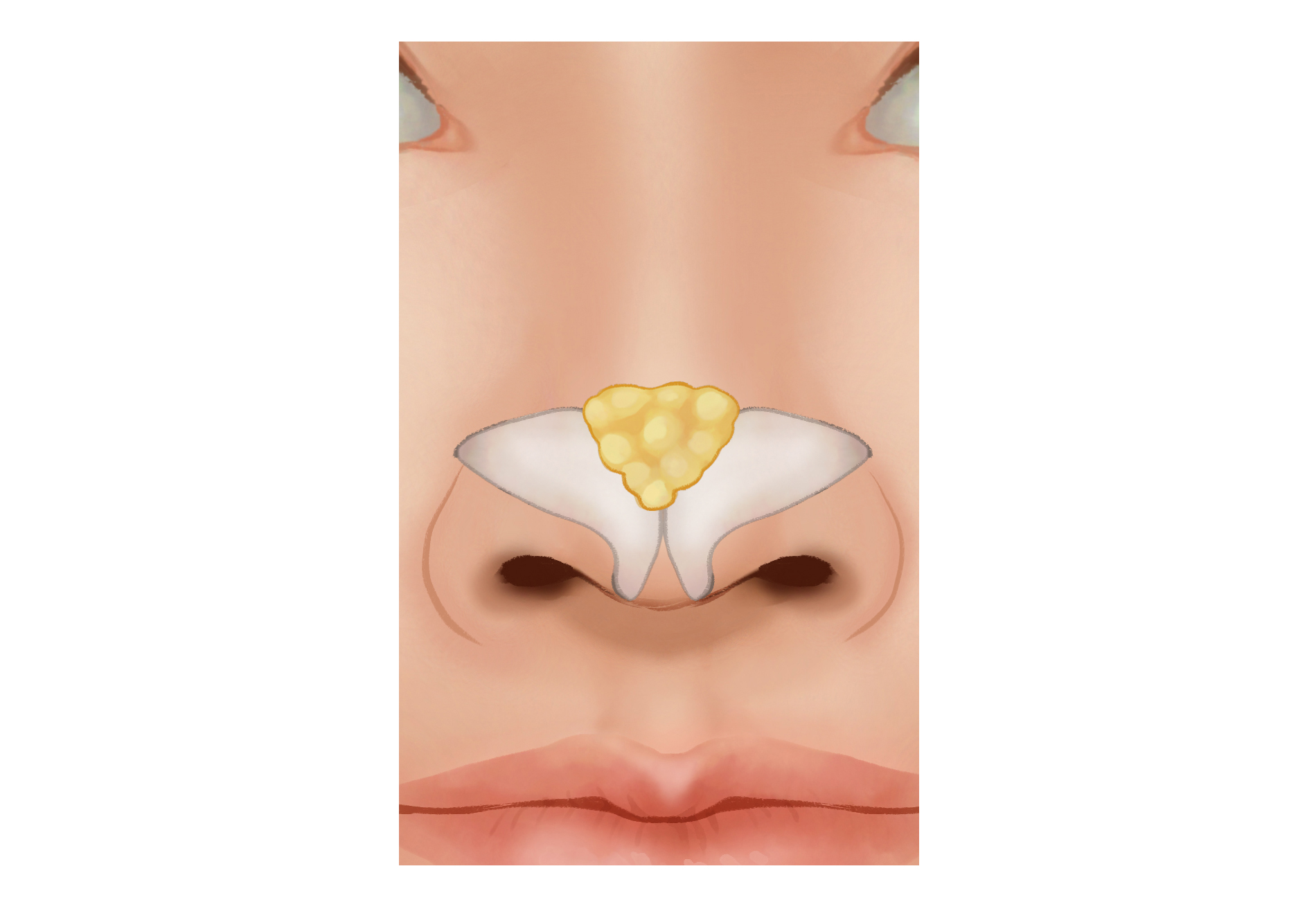
II. Resect fat if necessary

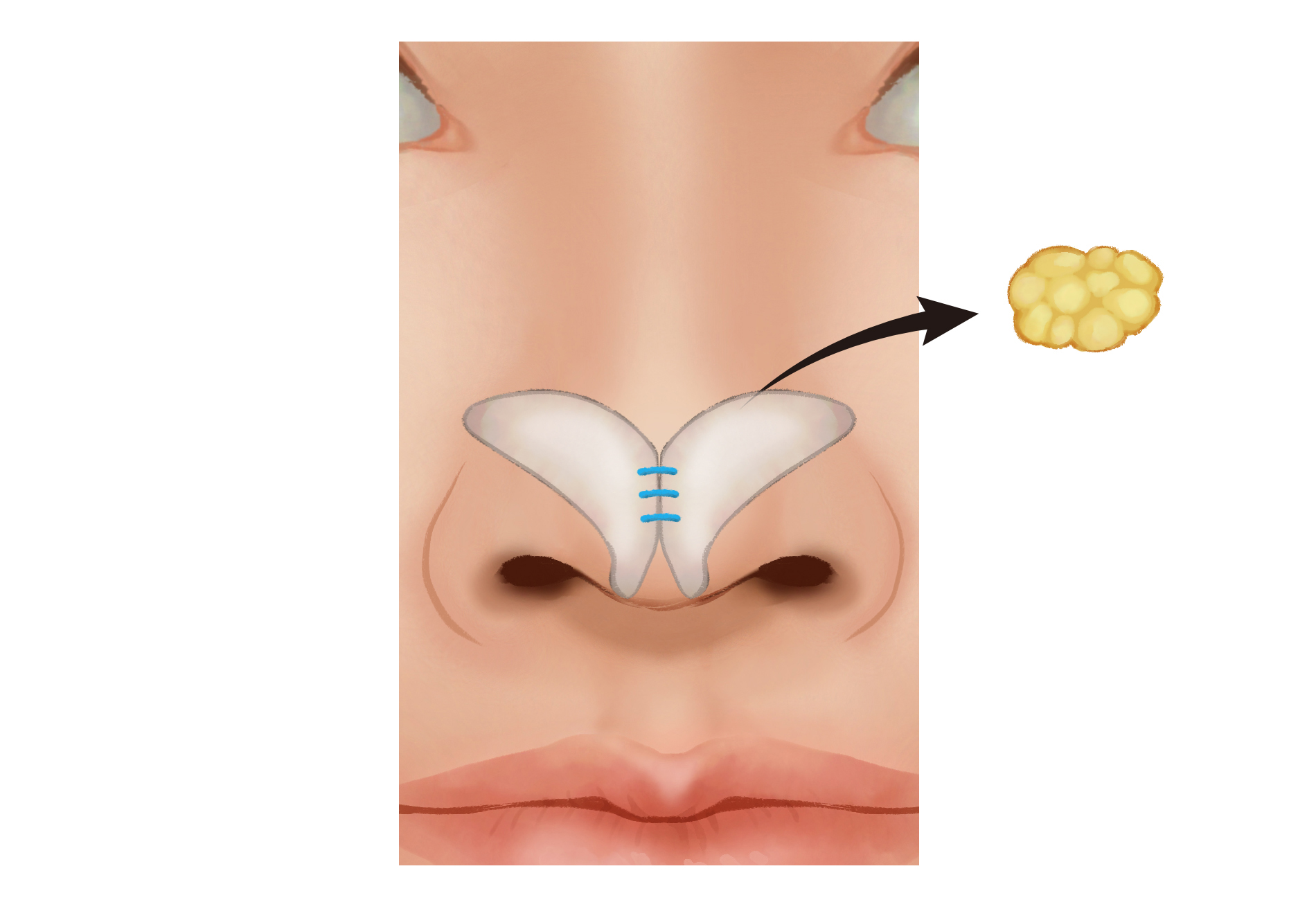
III. Suture the cartilage.
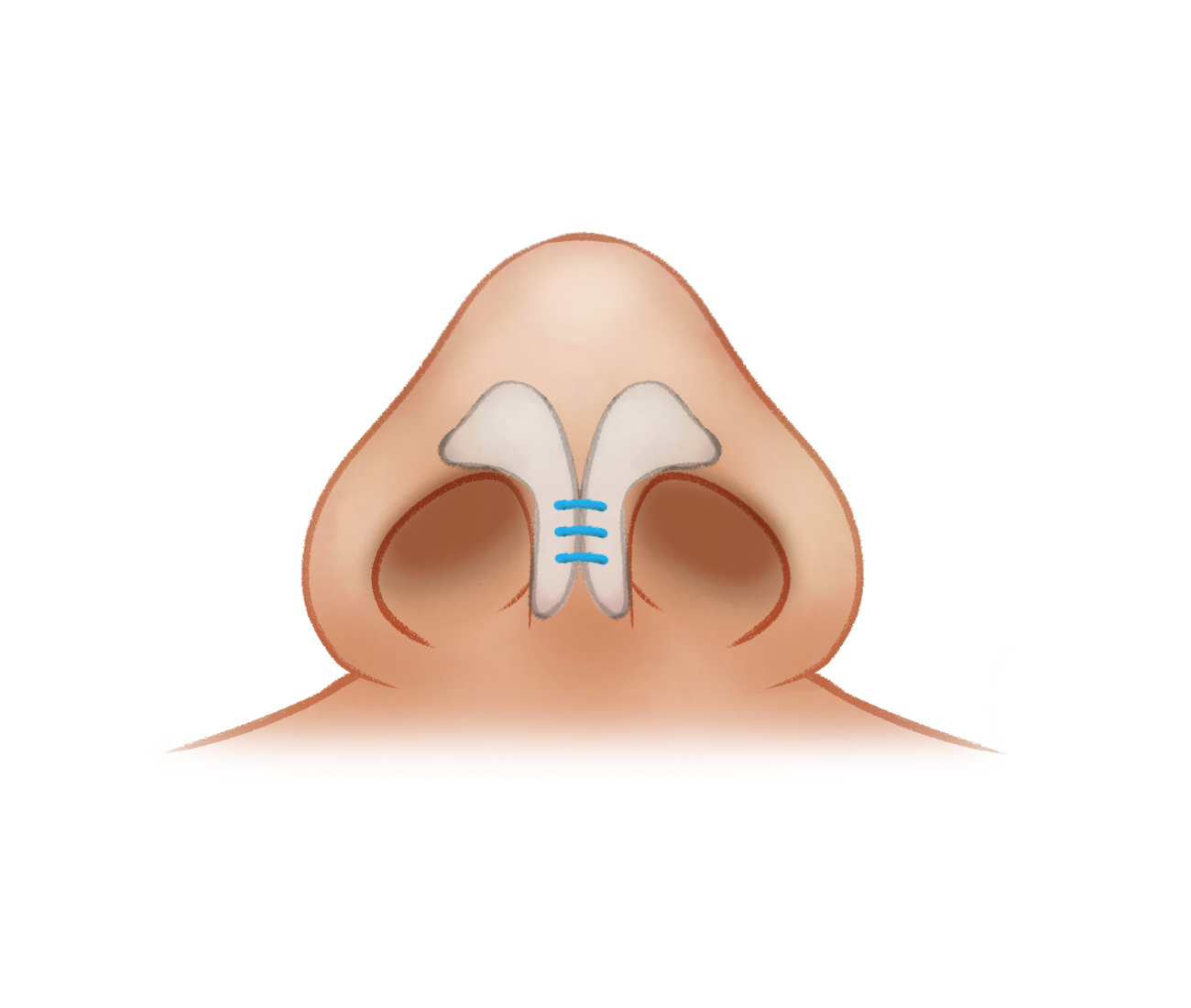
-Separate the large nasal wing cartilage and suture it centrally. Separate the large nasal wing cartilage and suture it in the center.
The left and right large nasal wing cartilages are separated and the medial portion is sutured centrally. Fat and connective tissue between the cartilage and skin can be excised if necessary.
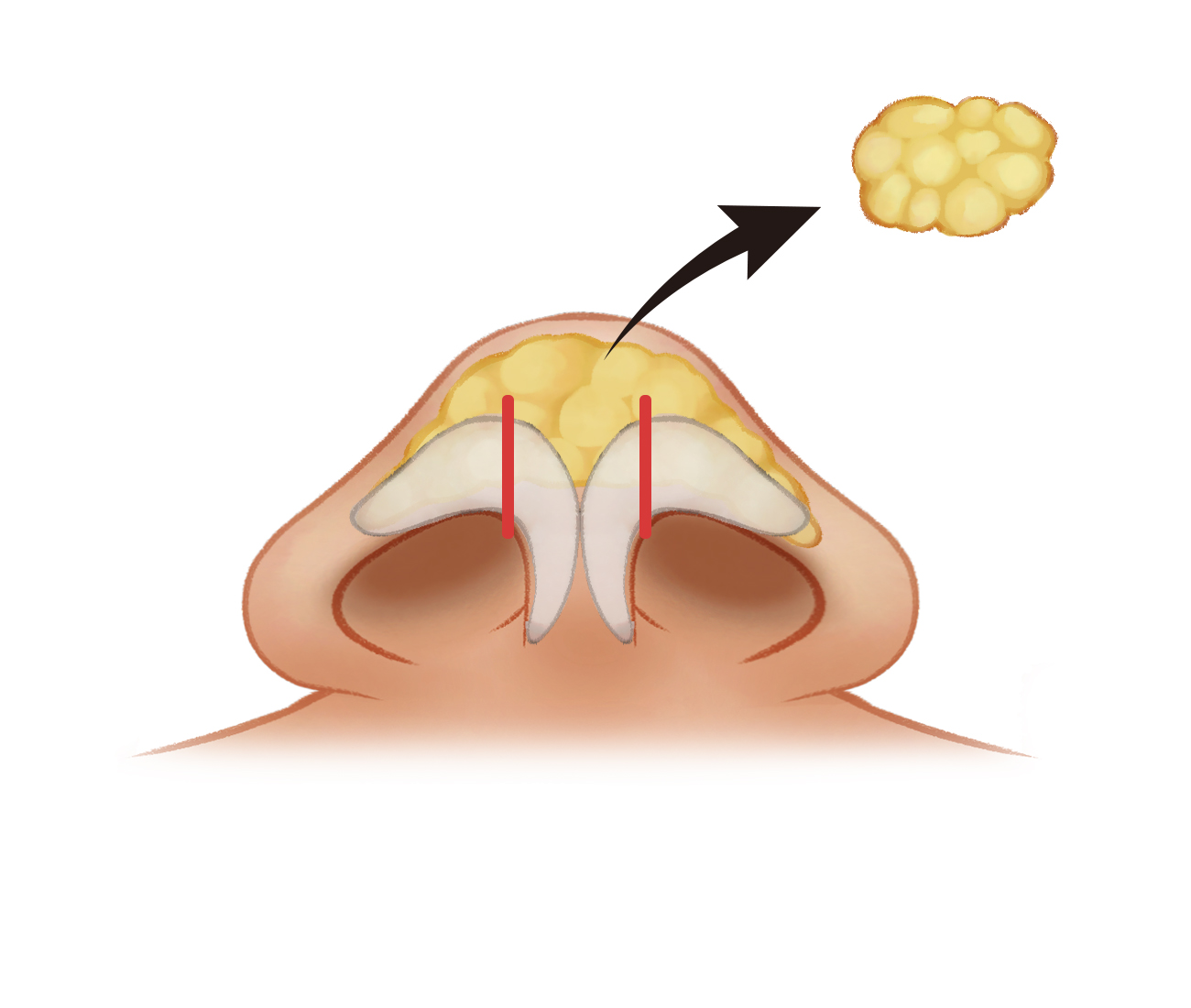
I. Disarticulation of the right and left large nasal wing cartilages
(remove fat, if necessary)
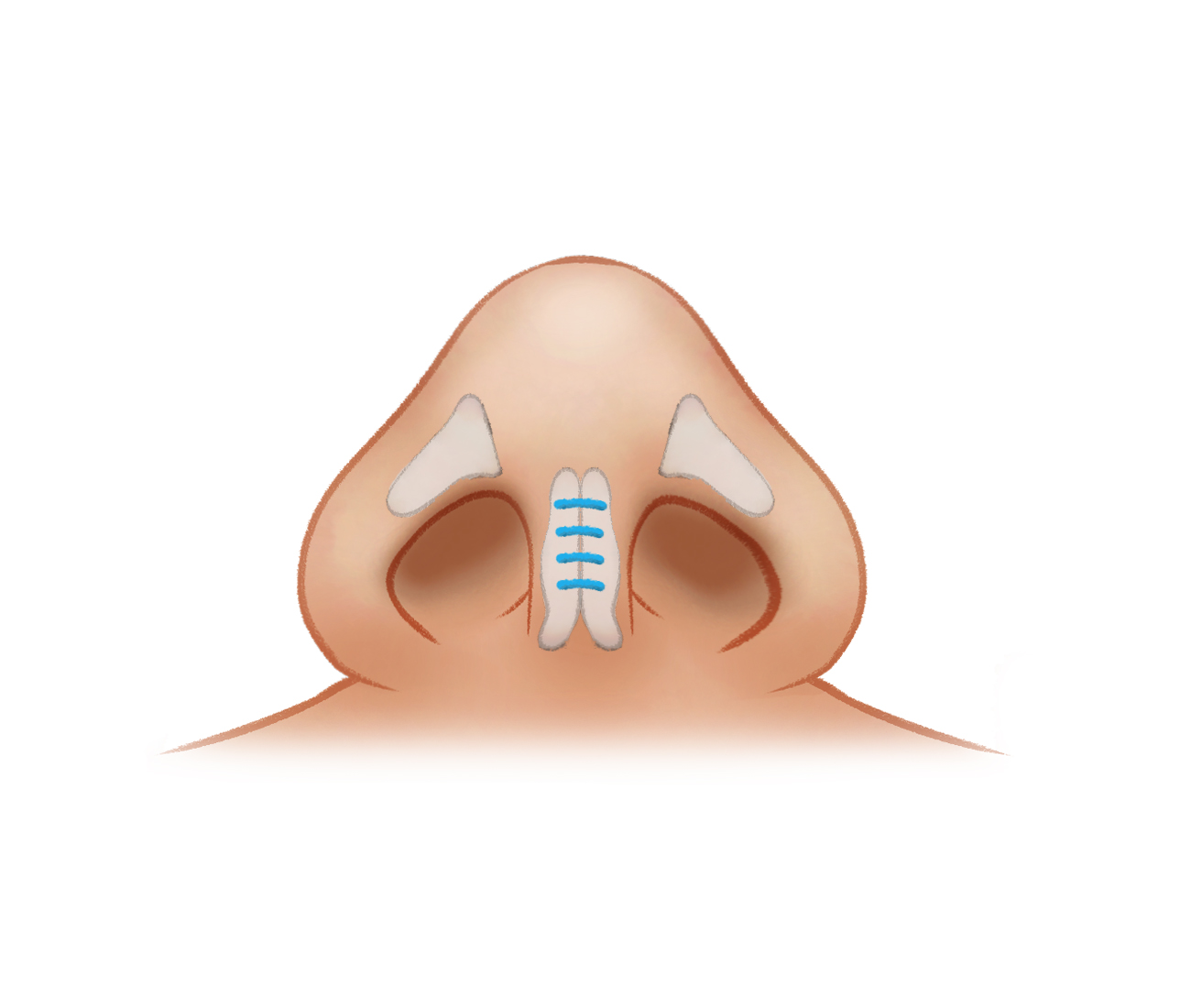
II. Stitch in the center.
-Select the right procedure for your patient Select the right procedure for each patient
There are many other types of nasal tip reduction surgery besides these three techniques, and we will select the most appropriate technique for the patient, taking into consideration the patient's nasal condition and his or her wishes.
Whether you choose one of these three standard surgeries, adjust the degree to which these surgeries are performed, combine these surgeries, or use a different technique, there are a variety of options and we will operate in the best way for the patient.
At our clinic, we use 3D simulation software "vectra" before the surgery to show you a 3D image of the postoperative result, so you can visualize the postoperative result to some extent before the surgery.
-Rhinoplasty (open method) Rhinoplasty (open method)
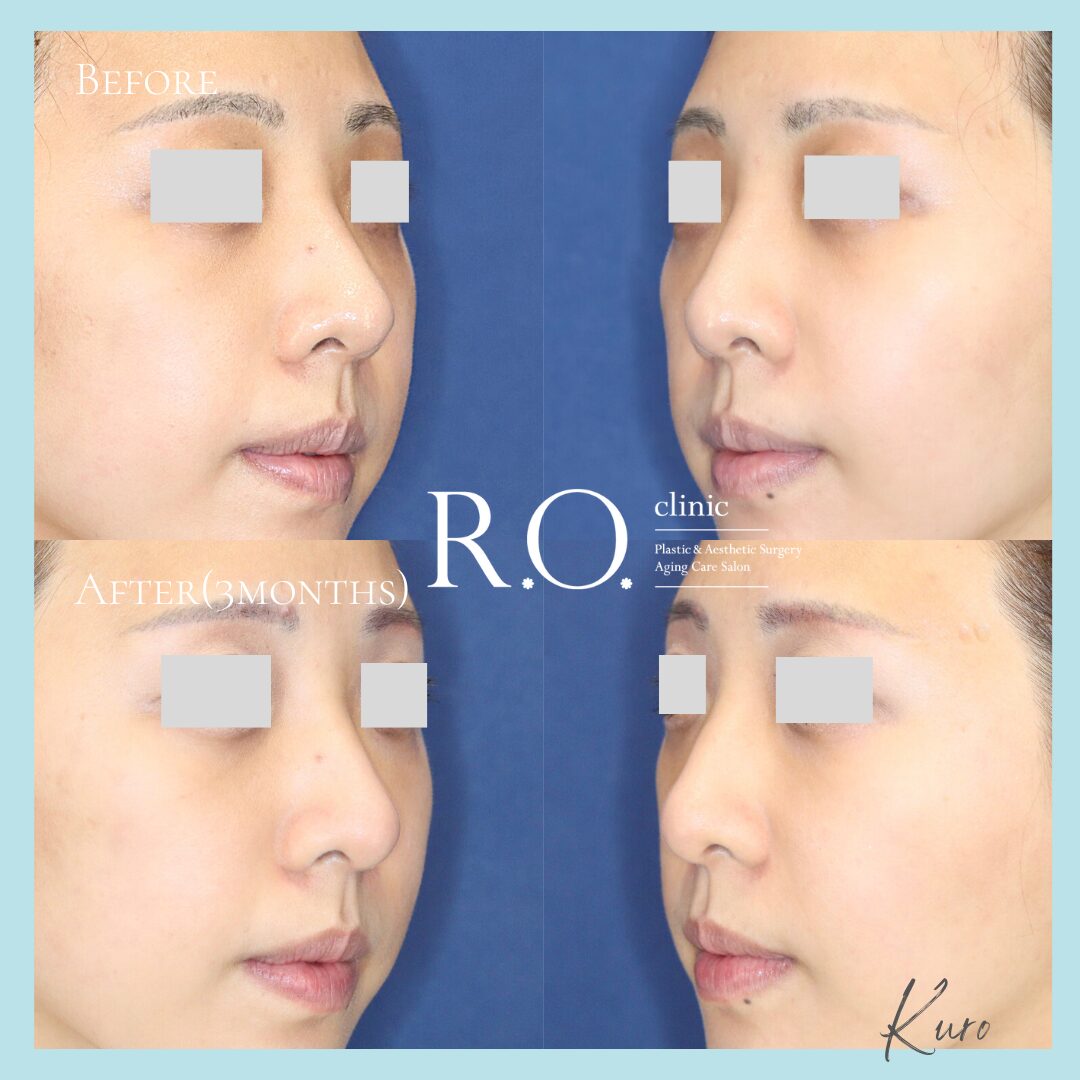
Upper: before surgery Lower: 3 months later
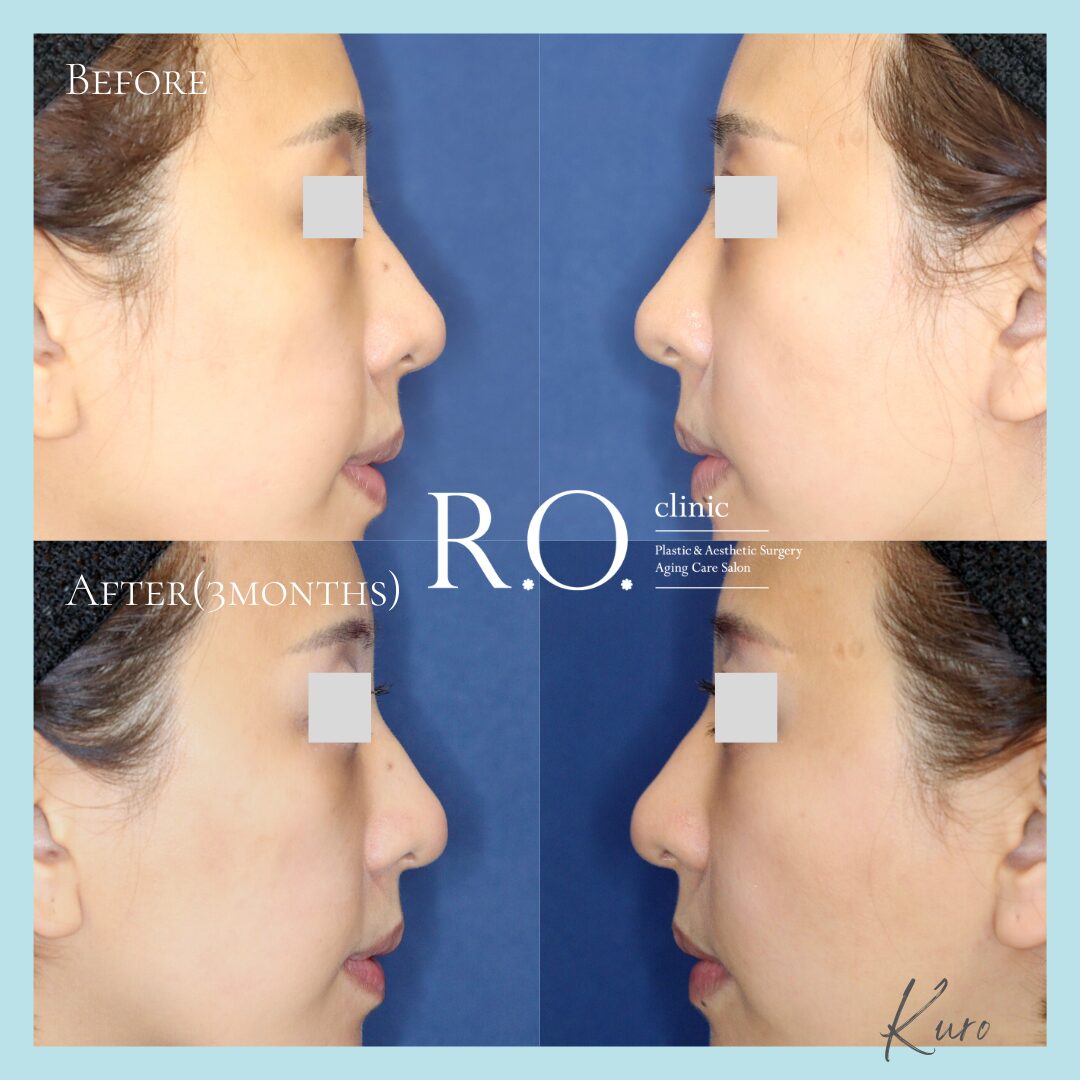
Upper: before surgery Lower: 3 months later
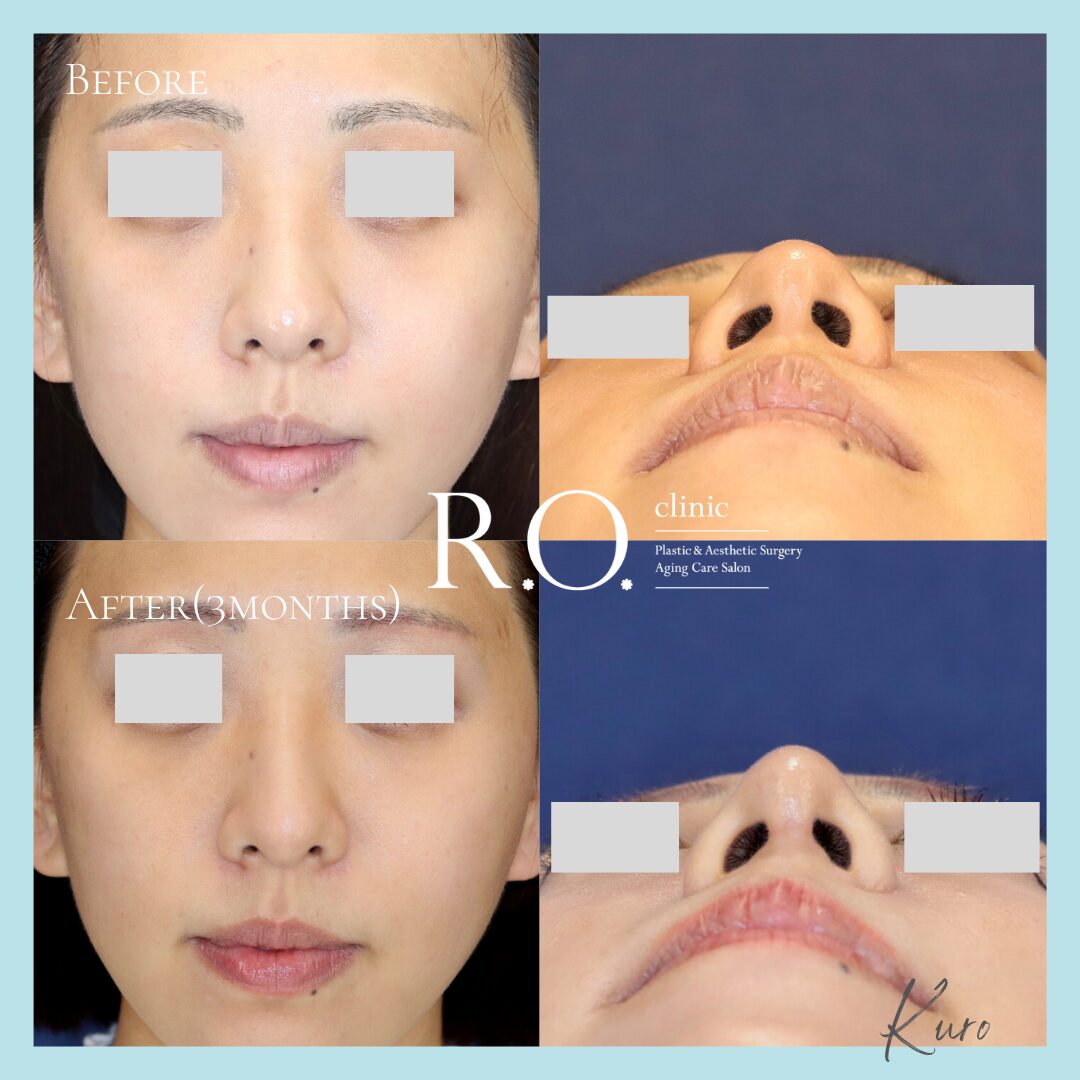
Upper: before surgery Lower: 3 months later
 Doctor's Column
 Staff Blog
 campaign
 News
News


